-
Courses
Courses
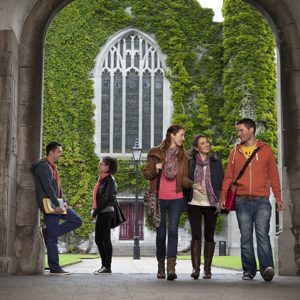
Choosing a course is one of the most important decisions you'll ever make! View our courses and see what our students and lecturers have to say about the courses you are interested in at the links below.
-
University Life

University Life
Each year more than 4,000 choose University of Galway as their University of choice. Find out what life at University of Galway is all about here.
-
About University of Galway
About University of Galway
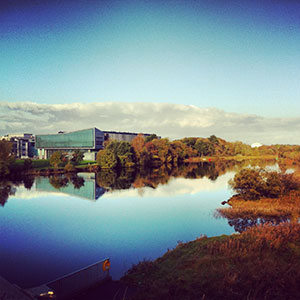
Since 1845, University of Galway has been sharing the highest quality teaching and research with Ireland and the world. Find out what makes our University so special – from our distinguished history to the latest news and campus developments.
-
Colleges & Schools
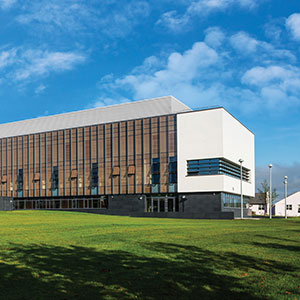
Colleges & Schools
University of Galway has earned international recognition as a research-led university with a commitment to top quality teaching across a range of key areas of expertise.
-
Research & Innovation
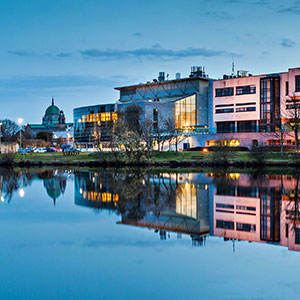
Research & Innovation
University of Galway’s vibrant research community take on some of the most pressing challenges of our times.
-
Business & Industry
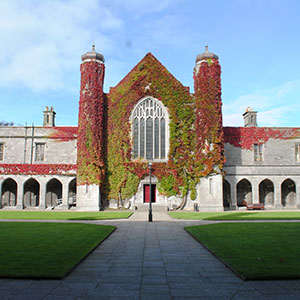
Guiding Breakthrough Research at University of Galway
We explore and facilitate commercial opportunities for the research community at University of Galway, as well as facilitating industry partnership.
-
Alumni & Friends
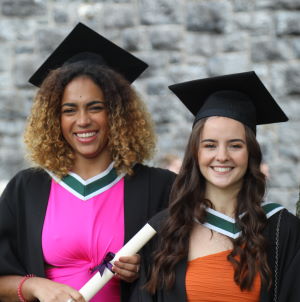
Alumni & Friends
There are 128,000 University of Galway alumni worldwide. Stay connected to your alumni community! Join our social networks and update your details online.
-
Community Engagement
Community Engagement
At University of Galway, we believe that the best learning takes place when you apply what you learn in a real world context. That's why many of our courses include work placements or community projects.
 Accessibility & Language
News & Events | Nuacht & Imeachtaí
Tuesday, 14 July 2026
Rannsachadh na Gàidhlig Glaschu 2026 Dr. Cassie Smith-Christmas delivered a plenary address entitled 'Embodying Saibhreas: Intergenerational Language Transmission in the Outer Hebrides and the Corca Dhuibhne Gaeltacht' at the Rannsachadh na Gàidhlig conference at the University of Glasgow in July. Rannsachadh na Gàidhlig is a biennial interdisciplinary conference focused Scottish Gaelic language and culture, and this year's conference of over 100 delegates was a particularly joyous gathering, as it was the first time the conference has been held in-person since Covid. For more information, please view https://rannsachadh2026.gla.ac.uk/
Friday, 10 July 2026
Basque, Occitan, and Irish within our Teacher Academies BOITA (Basque, Occitan, and Irish within our Teacher Academies) is an ENLIGHT+ funded initiative focused on education through minoritised languages. The research group includes partners from Ollscoil na Gaillimhe, Euskal Herriko Unibertsitatea, and l’Université de Bordeaux. In July 2026, we held a summer school in Donostia that brought together teacher educators, in-service and student teachers, and school inspectors to examine common challenges and opportunities across the various sociolinguistic contexts. Invited speakers included Clíona Murray, Seán Ó Grádaigh, Sinéad Ní Ghuidhir, and Roseann Uí Fhlatharta, lecturers on the Máistir Gairmiúil san Oideachas programme here in Galway. The project has secured funding for further activities this academic year and colleagues are welcome to join. For more information, please contact cliona.murray@universityofgalway.ie
Monday, 27 April 2026
PLURILINGMEDIA Workshop explores Minority Language Media Audiences A policy workshop within the COST Action Plurilingmedia brought together researchers, media practitioners and policymakers at the University of Galway this April. The workshop, organised by Verena Platzgummer, aimed to examine how changing consumption habits are reshaping minority language media across Europe. Discussions focused on multilingual audiences and evolving media practices, addressing perspectives from language policy and activism – on the basis of which a policy brief is now being developed. For more information, please view https://plurilingmedia.eu/
Thursday, 30 April 2026
CALM Seminar Series 2025-2026 During the 2025-26 academic year, the Centre for Applied Linguistics and Multilingualism (CALM) hosted a seminar series exploring bilingualism, language learning, language revitalisation, migration, and linguistic diversity in minority-language contexts. The programme included presentations on structural priming in Irish-English bilingual children, healthcare communication for migrants and asylum seekers, and the use of Didactic Audiovisual Translation to support language learning and terminology development. Several seminars focused on minority languages and language policy, including discussions of multilingual education in the Basque Country, the role of Article 8 in relation to the Irish language, and language revitalisation within Irish-speaking families. Further contributions examined historical and contemporary multilingualism, the sociolinguistic persistence of Monegasque, and the development of language-learning technologies. The programme also featured Oisín Ó Muirthile's research on Traveller languages, which explored linguistic connections and language contact among travelling communities in Ireland, Scotland, and the Iberian Peninsula.
Wednesday, 5 November 2025
Linguistic Equity in Multilingual Regions A team of CALM members, headed by Dr Verena Platzgummer, successfully applied for an ENLIGHT Thematic Network. Their network entitled “Linguistic Equity in Multilingual Regions” (LEMuR) brings together scholars, students and community partners committed to linguistic equity in four historically multilingual regions: the West of Ireland (University of Galway); the trans-Pyrenean Basque Country (UPV/EHU); Canton Bern (University of Bern); and Southern Estonia (University of Tartu). These territories share not only a long history of power struggles in which language is implicated, but also a more recent increase in their linguistic and cultural diversity due to international migration. The network’s purpose is to understand – and transform – how historical language regimes shape present-day opportunities for minoritised speakers, with the original perspective of considering both historically minoritised/indigenous communities and migrant communities. For more information, please view https://www.lemur.ie/
Thursday, 24 April 2025
CALM Seminar Series 2024-2025 The 2024-25 CALM seminar series brought together researchers from Ireland and abroad to discuss a range of topics related to multilingualism, language learning, translation, and migration and social inclusion. The series began with Andrea Ciribuco and Pilar Luz-Rodrigues presenting findings from fieldwork with migrants and refugees in rural Ireland, examining language use, community participation, and everyday multilingual experiences. Iker Erdocia continued this focus on migration by exploring the role of language in the inclusion of people who have migrated to Ireland, highlighting the ways in which linguistic and social factors intersect in shaping participation in society. Other seminars addressed barriers and supports for reading comprehension among English as a Foreign Language learners in Ireland and Saudi Arabia, and the potential of translation technologies to contribute to a more multilingual scholarly communication landscape. Professor Lynne Bowker (Université Laval) discussed both the possibilities and limitations of these technologies in research dissemination. Several talks focused on bilingualism and language development. Daniela Gatt (University of Malta) examined how social environment and caregiver input influence young children's bilingual vocabulary development, while the GAELFAM project team headed by Cassie Smith-Christmas shared initial findings on multilingual families in the Gaeltacht. The series concluded with Ciara Egan's eye-tracking research on reading strategies among Welsh-English bilinguals and its relevance for future research on Irish. Across the academic year, the seminars provided opportunities to engage with current research on language and multilingualism in a variety of social, educational, and community contexts.
Thursday, 31 March 2022
The Common European Framework of Reference for Languages at 20: What Have We Gained From It? The Common European Framework of Reference for Languages was developed by the Council of Europe in the 1990’s and published officially in 2001, with its principal aim being to establish transparency in language competency. While the CEFR is widely used throughout Europe and beyond, it is on occasion over-simplified, with people focusing on the one-page, six-level grid (A1 – C2) that describes the Framework, without really interrogating how it can be best used in language testing and assessment, and in authentic language learning. This talk hopes to move beyond the ‘grid’, and will focus on three aspects in particular of the CEFR and its influence over the past 20 years: language testing and self-assessment; language and cultural competences and lesser-spoken / heritage languages and the Framework. This investigation will help us to answer the question posed in the title of the talk: what have we gained from the CEFR?
Tuesday, 29 March 2022
Leading Minds #5 | Multilingualism In Episode 5 of the Leading Minds: Expert Voices podcast from the College of Medicine, Nursing & Health Sciences, host Jonathan McCrea discusses multilingualism and its importance with Dr. Stanislava Antonijevic-Elliott and Dr. Mary Pat O'Malley from the School of Health Sciences in University of Galway.
Thursday, 24 February 2022
From Fireside Stories to Bounded Texts The Flower/Ó Direáin Collection is an important primary source of linguistic and folklore material in Irish. Collected in 1933 by renowned scholar Robin Flower from Aran Islands storyteller Darach Ó Direáin, the collection is preserved in Robin Flower’s Nachlass in the National Folklore Collection, Dublin. My presentation explores the interdisciplinary process involved in transforming manuscript-form archive material into a more readily accessible text for both an academic and general readership. I examine the detailed editing process and linguistic analysis involved in producing a folklore text that aims to uncover and retain the dialectal characteristics of the storyteller. A further examination of the construction process of this collection, in terms of positioned roles and discursive histories, reveals the multiple voices and socio-historical discourses that constitute a folklore text from the West of Ireland. Dr. Marion Ní Mhaoláin has a PhD in Modern Irish and Anthropology from Maynooth University and taught Irish for many years in that university. She has also spent time as a linguist with an aboriginal community in Western Australia and is currently working in the Department of Speech and Language Therapy, University of Galway, on a project about assessment of narrative in children attending Gaeltacht and non-Gaeltacht Irish-medium schools.
Thursday, 3 February 2022
Back to the Future: Linguistic Emergence in Usage and the Psychological Mechanism of Learning In this talk, Petar Milin will present work as part of the Out of our Minds team [https://outofourminds.bham.ac.uk/]. This group operationalizes the usage-based linguistic notion of emergence from use through psychological principles of learning. He will pay special attention to the hybrid methodology we are developing and using, which combines corpus analysis, computational modelling, and experimentation. The presentation will investigate how corpus analysis and computational modelling of learning can constrain one another to provide insights for both, the necessary and sufficient linguistic abstractions as well as the necessary and sufficient learning functionality, to meet the requirement of cognitive commitment and plausibility that is finally tested in the lab. The project is in harmony with Poggio’s (2012) addition to Marr’s (1982) three level of analysis, in which learning represents a self-sufficient level of explanation, and where the dynamic pressure of language-in-use constrains what emerges and how it gets learned.
Thursday, 20 January 2022
Language Contact Phenomena in an Italian Community in the UK Guest speaker Valentina Del Vecchio (G. d’Annunzio” University of Chieti-Pescara, Pescara, Italy) discusses language contact and code switching in an Italian community in the UK. Migration is a phenomenon that has a crucial impact on the linguistic repertoires of the people involved. It usually brings about the emergence of different language contact phenomena due to the contact between a community’s heritage language and the language spoken in the host country. Among these, in the last few years, special attention has been paid to code-switching (CS), which, as a general term, refers to the common practice in bilingual communities of using two or more languages in the same conversation. This talk aims at analysing the impact that a specific migration context – that of an Italian community in the UK – has on the patterns of CS found in conversations among speakers of different generations of migrants.
Thursday, 25 November 2021
The Devil is in the Detail: Irish-Language Phraseology and Linguistic Theory Talk by Dr. Katie Ní Loingsigh as part of the Centre for Applied Linguistics and Multilingualism (CALM) Seminar Series. Phraseology has developed as a broad and varied field of linguistics over the past twenty years. This talk aims to provide an overview of the study of phraseology, the study of usual or typical turns of phrase, in the Irish language. There is an urgent need to document and undertake phraseological research on endangered languages and the link between phraseology in Irish and its cultural context will be examined. Firstly, a brief outline of the development of phraseology as an interdisciplinary field of research will be given. Idioms, often thought the prototypical phraseological category, in Irish will provide the principal focus of analysis in this talk. Idioms are considered carriers of culture and this research aims to build on prior phraseological research focusing on cultural phenomena.
Thursday, 28 October 2021
Bilingual Language Use and Acquisition Bilingual Language use and acquisition: Motion event description by English-French sequential and simultaneous bilinguals. Motion is an ubiquitous daily human activity and described regularly in language. However, the way motion events are described varies cross-linguistically. This talk will explore how such differences can impact language acquisition and use. Specifically, the talk will focus on language usage in French - English adult sequential and simultaneous bilinguals. This talk will first present what sequential and simultaneous bilinguals are and how motion events are typically encoded in French and English. Then, results from experiments involving French - English adult sequential and simultaneous bilinguals will be discussed. The results will highlight specific difficulties inherent to each language that impede the use and acquisition of typical motion event descriptions. In this talk, applications will also be suggested for the teaching and learning of motion event description in different languages.
Thursday, 30 September 2021
Intergenerational Language Transmission in Irish-, Kurdish- and Polish-Speaking Families This first seminar in the CALM 2021 Series by Dr. Cassie Smith-Christmas will explore a model developed to give a holistic account of caregivers' goals for successful intergenerational language transmission, referred to as the 'Saibhreas' model. This model was developed within an autochthonous minority language context (Irish in Corca Dhuibhne, co. Kerry with the 'Sustaining Minoritized Languages in Europe' initiative), but the talk will show the relevance of the model to conceptualising intergenerational transmission of heritage languages in Ireland through the project 'Languages, Families, and Society'. The talk will outline the various challenges families encounter in reaching their goals for successful intergenerational language transmission and will discuss possible societal interventions that could help mitigate these causes.
Thursday, 2 September 2021
We are delighted to annouce the CALM Seminar Series for 2021-2022. With the support of the Moore Institute, there will be 6 online seminars during the academic year on topics of relevance to our research centre. Links to the events will be provided in individual posts on this site and on social media channels.
Tuesday, 22 June 2021
Imagining Inclusivity: The Role of Language in an Increasingly Diverse Ireland This workshop is designed to facilitate dialogue between academics, policymakers, practitioners, and NGOs in imagining a more inclusive Ireland, and the role that language plays in how we envisage this inclusivity. The event stems from the project Languages, Families, and Society (LaFS) at University of Galway, which uses an ethnographic approach to understand more about the everyday lived experiences families who speak Irish as a home language, Polish as a home language, and Kurdish as a home language, and how these experiences intersect with language policy and support (or lack thereof) at the wider level. The event is organised by Dr. Cassie Smith-Christmas of Roinn na Gaeilge, University of Galway and Research Fellow with LaFS. It is hosted by the project ‘Languages, Families, and Society’ (Grant no.: 794800) at University of Galway, in conjunction with the Moore Institute and the Centre for Applied Linguistics and Multilingualism (CALM). Further information and registration link here.
Thursday, 15 April 2021
Corpus Linguistics Tools in Language Acquisition Research This talk, by Prof. Anna Bączkowska (University of Gdansk), will explore the benefits of corpus linguistics tools in language teaching research and practice. Prof. Bączkowska will talk about the CHILDES database, which is a repository of transcripts of conversations held among adults and children. The data illustrate developmental changes occurring in language acquisition in monolingual and bilingual children. Some corpus and NLP tools which allow one to extract material from the database as well as some statistical information available through different software programs will be demonstrated. Examples will be shown and analysed by resorting to the data of bilingual and multilingual children.
Thursday, 18 March 2021
Prosody and Language Acquisition In this seminar, Dr. Francesca Nicora of University of Galway will join CALM Co-Director Dr. John Walsh to discuss the prosodic features of speech in the context of teaching and learning foreign languages, particularly regarding the role of intonation and its relevance in speech communication. She will also present the overarching conceptual framework underpinning the teaching of foreign language prosody, including current models of intonational analysis, second language theories as well as didactic methods and approaches.
Thursday, 18 February 2021
Mincéirí Tori: Conversations on Irish Traveller Language Join Traveller activist and Gammon language advocate Oein DeBhairduin and John Walsh (Co-Director of CALM) as they explore the history, uses, evolving contexts and celebrations of Gammon-Cant, the Irish Traveller Language.
Thursday, 10 September 2020
Artificial intelligence Approaches to Multilinguality In this webinar, Dr. John McCrae, Lecturer at Data Science Institute and Insight Centre for Data Analytics, University of Galway, will talk about the use of artificial intelligence for issues in multilinguality. The talk will give an overview of AI applications, including machine translation, that are useful for this and a particular focus will be on the application of AI to minority languages and historical linguistics. We will also cover work on the development of computer-assisted language learning systems. This webinar was broadcast live on Zoom, and via the Moore Institute's Facebook page, on 10th December, 2020. Useful Links: http://john.mccr.ae/ Moore Institute
Tuesday, 24 November 2020
Making Research Meaningful for Multilingual Parents Featuring Dr. Mary-Pat O’Malley Keighran, Lecturer in Speech & Language Therapy, University of Galway. In this webinar, Mary-Pat will talk about ways in which research into multilingual speech and language development and disorders can be made accessible and meaningful to parents faced with persisting myths about raising multilingual children. For more information about Mary-Pat’s work, see www.talknua.com.
Thursday, 2 July 2020
Language in a Health Crisis: Navigating COVID-19 in a Multilingual Ireland This webinar addresses key sociolinguistic dimensions of the COVID-19 crisis in Ireland, looking at Irish and immigrant languages. Panellists will explore challenges posed by the crisis for speech and language therapy services and EAL (English as an additional language) provision, the role of the state in providing public health information in languages other than English, and surprising opportunities that have emerged in terms of home language maintenance and language learning.
Monday, 15 June 2020
Bilingualism and Specific Language Impairment (Developmental Language Disorder) Bi-SLI 2020, to be held from 15-18 June 2020, is the 3rd Bi-SLI conference focussing on research related to language acquisition in bi/multilingual children with SLI/DLD, as compared to language acquisition in typically developing (TD) bi/multilingual children. Conference website here. Confirmed keynote speakers at Bi-SLI 2020 are: Prof. Sharon Armon-Lotem (Bar-Ilan University) Prof. Elma Blom (University of Utrecht) Prof. Theo Marinis (University of Konstanz) The Conference is organised by the Discipline of Speech & Language Therapy at University of Galway and is supported by the Moore Institute and CALM.
Wednesday, 1 April 2020
Research Seminar | Seimineár Taighde "A Mincéir's view of the Gammon revival: Irish Traveller language from within": a talk by Traveller researcher and activist Oein de Bhairduin in association with Galway Traveller Movement and Fulbright Ireland-USA Commission. This seminar will be held on 1 April 2020, 5.30pm in seminar room G011, Hardiman Research Building. We regret that this seminar has to be cancelled due to the COVID-19 crisis. We will reschedule as soon as possible.
Thursday, 6 February 2020
Launch of CALM | Seoladh CALM CALM was launched on February 6 2020 at 5.00pm in seminar room G011 in the Moore Institute, Hardiman Research Building by the President of NUI Galway Prof. Ciarán Ó hÓgartaigh. The launch was followed by our inaugural lecture delivered by Prof. Helen Grech of the University of Malta who spoke on 'Sociolinguistics and Education Policy in the Maltese Islands: Implications for Speech and Language Therapy'. Seoladh CALM ar 6 Feabhra 2020 ar 5.00pm i seomra seimineáir G011 in Institiúid de Móra, Áras Taighde Hardiman. Is é Uachtarán OÉ Gaillimh an tOllamh Ciarán Ó hÓgartaigh a dhein an seoladh. I ndiaidh an tseolta thug an tOllamh Helen Grech ó Ollscoil Mhálta an léacht tionscnaimh 'Sociolinguistics and Education Policy in the Maltese Islands: Implications for Speech and Language Therapy'.
Thursday, 6 February 2020
Irish Research Network in Childhood Bilingualism and Multilingualism A research seminar of this network was be held in seminar room G011 in the Moore Institute on February 6th 2020 to coincide with the launch of CALM. For further information see https://childbilingualismresearch.com/. Reáchtáladh seimineár taighde de chuid an ghréasáin seo i seomra seimineáir G011 in Institiúid de Móra ar 6 Feabhra 2020 mar chuid de sheoladh CALM. Chun tuilleadh eolais a fháil féach https://childbilingualismresearch.com/.