-
Courses
Courses
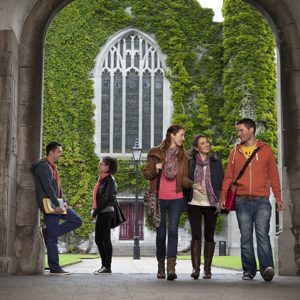
Choosing a course is one of the most important decisions you'll ever make! View our courses and see what our students and lecturers have to say about the courses you are interested in at the links below.
-
University Life
University Life
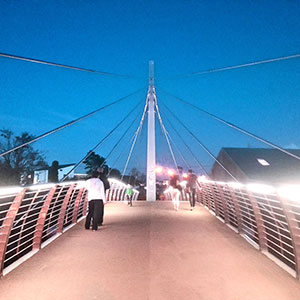
Each year more than 4,000 choose University of Galway as their University of choice. Find out what life at University of Galway is all about here.
-
About University of Galway
About University of Galway
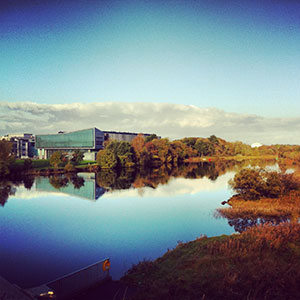
Since 1845, University of Galway has been sharing the highest quality teaching and research with Ireland and the world. Find out what makes our University so special – from our distinguished history to the latest news and campus developments.
-
Colleges & Schools
Colleges & Schools
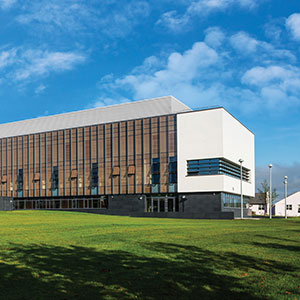
University of Galway has earned international recognition as a research-led university with a commitment to top quality teaching across a range of key areas of expertise.
-
Research & Innovation
Research & Innovation
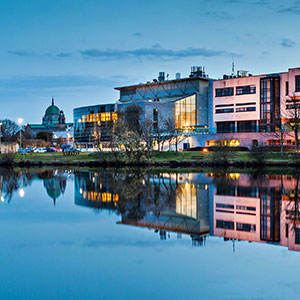
University of Galway’s vibrant research community take on some of the most pressing challenges of our times.
-
Business & Industry
Guiding Breakthrough Research at University of Galway
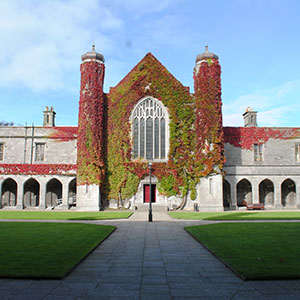
We explore and facilitate commercial opportunities for the research community at University of Galway, as well as facilitating industry partnership.
-
Alumni & Friends
Alumni & Friends
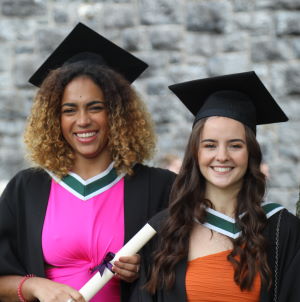
There are 128,000 University of Galway alumni worldwide. Stay connected to your alumni community! Join our social networks and update your details online.
-
Community Engagement
Community Engagement
At University of Galway, we believe that the best learning takes place when you apply what you learn in a real world context. That's why many of our courses include work placements or community projects.
 Accessibility & Language
News & Events
Monday,
19
October
2026
Four generations of women share a University of Galway connection
A family’s connection with University of Galway spans more than 90 years and four generations of women. Hannah Clarke, from Banagher, Co Offaly, graduated today with a Bachelor of Arts in History and Politics. She follows in the footsteps of her great-grandmother, grandmother and mother. Her great-grandmother, Mary C. Whyte, later Mary Dwyer, from Tuam, Co Galway, graduated with a Bachelor of Commerce in 1934. Her grandmother, Margaret Moloney, also from Tuam, received a Certificate in Social Studies in 1996, while her mother, Anne Clarke, from Banagher, Co Offaly, graduated with a First-Class Honours Executive MBA in 2025. After the ceremony, the family visited the University Library, where they were shown Mary C. Whyte’s signature in the student register from when she first enrolled at the University. Hannah said: “Today I became the fourth generation of my family to study here at University of Galway. The women who came before me have been a true inspiration. Walking around the college over the last three years, knowing that my great grandmother, grandmother and mother walked the same paths that I did, every day, was an inspiration.” Margaret Moloney, Hannah’s grandmother said: “My mother graduated from here in 1934 with a BComm and she went on to work in accountancy for Coca Cola in Tuam, and I graduated from here in 1996 with Social Studies. My mother was a very unassuming and humble person. She never bragged about anything, and she loved education. Today is the first time I ever saw her name here in the register in University of Galway and it brought tears to my eyes to see her name because we always knew about it, but she never bragged. She let us all choose our own paths and what we did. There were six of us and our father died when we were young, so she had to work and provide for us. In fact, she worked two jobs to rear us. She was a wonderful woman.” Hannah’s mother Anne Clarke said: “I graduated from University of Galway last year, so I am third generation of Dwyer women to graduate here. It was a really emotional day to see my mom crying seeing her own mother’s name in the book. Our grandmother has always been our aspiring hero, because from a very young age we knew she’d been in college. Third-level education was a given. There was no finishing at Leaving Cert. We were all going to college. To follow, and to know that you stand on the shoulders of the legacy of the women who went before you, is truly humbling and amazing.” Ends
News Archive
Monday,
19
October
2026
Tús le comhpháirtíocht straitéiseach don chultúr agus don oideachas idir an Ollscoil agus an Músaem
Monday,
19
October
2026
University and Museum unveil strategic partnership for culture and education
Thursday,
15
October
2026
Ollscoil na Gaillimhe ag ceiliúradh agus beagnach 2,800 duine ag fáil a gcéime ag na searmanais bhronnta
Thursday, 15 October 2026
University of Galway will celebrate the achievements of almost 2,800 graduates as its autumn conferring ceremonies begin today. Thousands of graduates, their families and friends are being welcomed to campus, with ceremonies running from today through Tuesday October 20th and continuing again on Friday October 23rd. Graduates from across the University’s four Colleges will receive awards ranging from Bachelor, Masters and PhD degrees. Professor David Burn, President of University of Galway, said: “It is a great pleasure to celebrate this important milestone with our graduates and their families and friends. Graduation is the culmination of years of hard work, dedication and commitment, and I congratulate every graduate on their achievement. “These graduates are the next generation of professionals, researchers, leaders and changemakers, and we look forward to seeing the contribution they will make in the years ahead. I wish each of them every success as they begin the next chapter of their lives.” The full schedule for the 2026 autumn conferring ceremonies is available at https://www.universityofgalway.ie/conferring/conferring-information/autumn-conferring/ Ends
Wednesday, 14 October 2026
University of Galway has been recognised for its international reputation for marine and ocean research with the award of the Jean Monnet Centre of Excellence for Ocean Futures, Science and Diplomacy. The recognition from the European Commission has been announced following the Atlantic Summit Galway 2026, an international gathering of leading ocean strategists, researchers, policymakers, innovators and representatives of Atlantic communities jointly organised by University of Galway, the Marine Institute and Atlantic Technological University. The Jean Monnet Centre of Excellence seeks to strengthen understanding of the European Union’s role in shaping the future of Atlantic and global ocean and coasts through integrated education, research and policy engagement. Professor Frances Fahy, Director of the Ryan Institute at University of Galway, said: “We are honoured to have been awarded the Jean Monnet Centre of Excellence for Ocean Futures, Science and Diplomacy. This prestigious European recognition builds on decades of marine, ocean and coastal research excellence at the Ryan Institute in University of Galway and recognises our position as a leading hub for research, education and collaboration in this field. ”The Centre also looks firmly to the future, directly supporting the University’s strategic ambition for ocean research. It also provides an important new platform through which to build on our expertise, strengthening the impact of ocean and coastal research on society, policy and business; creating new opportunities for teaching and intergenerational learning; and deepening collaboration between researchers, policymakers, communities and international partners. ”As a leading research-intensive university, we have a distinctive opportunity, and responsibility, to connect world-class research with policy, diplomacy and society, and to help shape a sustainable and inclusive future for our ocean and coastal communities. The Jean Monnet Centre of Excellence will play a huge role in that.” Sieglinde Gruber, Chair of the International Advisory Board for the Jean Monnet Centre for Ocean Futures and former Director-General for Research and Innovation of the European Commission, said: “Jean Monnet understood that Europe is built not simply by institutions, but by bringing people together around common challenges. The ocean reminds us that this task has no borders - and intergenerational cooperation reminds us that it has no age. European added value lies precisely there: in connecting countries, knowledge and generations to achieve together what none of us can achieve alone.” The Jean Monnet Centre of Excellence for Ocean Futures, Science and Diplomacy at University of Galway is led by Professor Louise Allcock in Zoology and Dr Stefan Fritz, Adjunct Professor. It will bring together academics from across the university’s research disciplines, enabling University of Galway to further develop its international profile and leadership in ocean research by creating a unique space within the EU to teach, research and debate the roles of marine and coastal sciences in global ocean and coastal policy processes. It will also support the EU’s capacity to respond coherently to complex global challenges that intersect climate and biodiversity change, human pressures such as migration and maritime security and the pursuit of peaceful international relations. Professor Louise Allcock, Co-Director of Centre at the University of Galway, said: “The Jean Monnet Centre of Excellence for Ocean Futures, Science and Diplomacy will provide learning opportunities in ocean science, ocean governance and Atlantic policy-making, equipping a new generation of ocean leaders to build a sustainable and socially equitable ocean.” Dr Stefan Fritz, Co-Director of the Centre and Adjunct Lecturer at the Ryan Institute, University of Galway, said: “With the generous support of the EU and the University of Galway, we are working with local and international partners to make Galway a hub for science that supports peaceful, sustainable and community-led coastal and ocean futures across the Atlantic and beyond.” The Atlantic Summit was held over two days at University of Galway, as an Associated Event of Ireland’s Presidency of the Council of the European Union 2026, supported by the Department of Further and Higher Education, Research, Innovation and Science. It explored how research, data, technology, education and collaboration can progress the ambition of the EU Ocean Pact, adopted in 2025. It sets out a vision to restore ocean health, strengthen maritime security, support coastal communities and unlock sustainable economic opportunities at sea. Delivering on that vision will require a strong, well-resourced and connected marine knowledge system. Ends
Tuesday, 13 October 2026
University of Galway is to lead a European research initiative exploring how supporting parents and strengthening parenting capacity can contribute to protecting children and promoting their wellbeing. Coordinated by the UNESCO Child and Family Research Centre at University of Galway, the project, Supporting Parents to Protect Children (SUPAR), will bring together universities from Spain, Portugal, the UK, Serbia and Norway, alongside public bodies and organisations across Europe. Funded through the European Union's Horizon Europe programme, the €4.24 million SUPAR project will establish the first Doctoral Network dedicated specifically to parenting support in child protection and welfare. Over four years, the Doctoral Network will train 14 PhD researchers across a range of disciplines and professional contexts, providing structured research and training opportunities to develop specialist expertise through international and cross-sectoral collaboration. A central focus will be on collaborative and co-produced research, incorporating the experiences of parents, children, young people and practitioners, alongside translating research findings into policy and practice. Dr Carmel Devaney, Scientific Coordinator of SUPAR and Head of Discipline of Applied Social Science, UNESCO Child and Family Research Centre, University of Galway, said: “SUPAR is particularly significant as the first Doctoral Network to focus specifically on supporting parents to protect children. I am fortunate to be collaborating with colleagues from across Europe to advance knowledge on how best to protect children and promote their wellbeing by supporting parents and strengthening parenting capacity. “This work is especially timely given the complex challenges facing parents, children and young people today.” Professor Laoise McNamara, Vice-President for Research and Innovation at University of Galway, said: “I would like to congratulate Dr Carmel Devaney and her international partners on being awarded Horizon Europe funding for this important research. Leading the coordination of this Doctoral Network reflects the research excellence being delivered by the UNESCO Child and Family Research Centre at University of Galway. "This award is strongly aligned with the University’s Strategy through the Creativity, Culture and Society research pillar and the work of the Centre in the Institute for Lifecourse and Society. The research will advance the University's commitment to generating knowledge that improves lives, informs public policy and contributes to more inclusive and resilient societies." The Marie Skłodowska-Curie Actions Doctoral Network is funded through Horizon Europe and implement doctoral programmes in partnerships with organisations from different sectors across Europe and beyond to train highly skilled PhD researchers, stimulate their creativity, enhance their innovation capacities and boost their employability. Read more about the project here. Ends