-
Courses
Courses
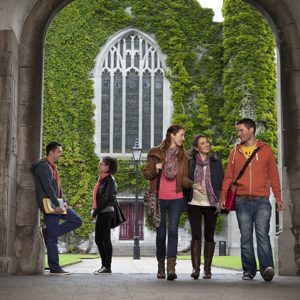
Choosing a course is one of the most important decisions you'll ever make! View our courses and see what our students and lecturers have to say about the courses you are interested in at the links below.
-
University Life
University Life
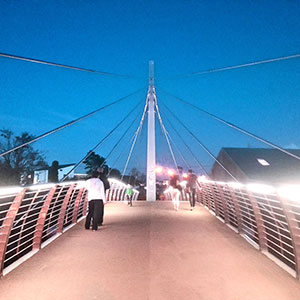
Each year more than 4,000 choose University of Galway as their University of choice. Find out what life at University of Galway is all about here.
-
About University of Galway
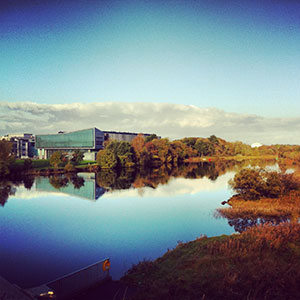
About University of Galway
Since 1845, University of Galway has been sharing the highest quality teaching and research with Ireland and the world. Find out what makes our University so special – from our distinguished history to the latest news and campus developments.
-
Colleges & Schools
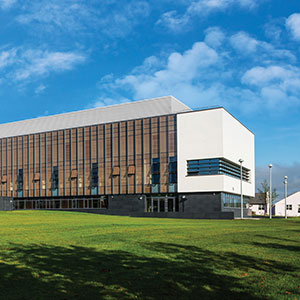
Colleges & Schools
University of Galway has earned international recognition as a research-led university with a commitment to top quality teaching across a range of key areas of expertise.
-
Research & Innovation
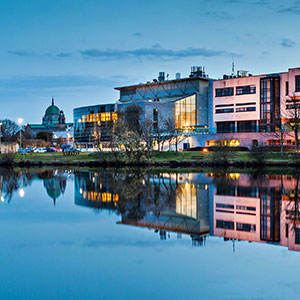
Research & Innovation
University of Galway’s vibrant research community take on some of the most pressing challenges of our times.
-
Business & Industry
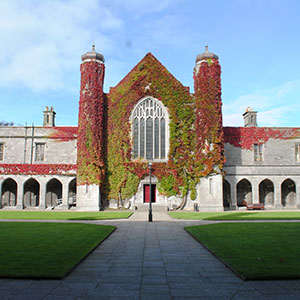
Guiding Breakthrough Research at University of Galway
We explore and facilitate commercial opportunities for the research community at University of Galway, as well as facilitating industry partnership.
-
Alumni & Friends
Alumni & Friends
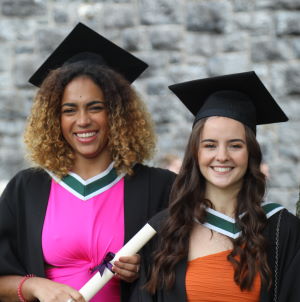
There are 128,000 University of Galway alumni worldwide. Stay connected to your alumni community! Join our social networks and update your details online.
-
Community Engagement
Community Engagement
At University of Galway, we believe that the best learning takes place when you apply what you learn in a real world context. That's why many of our courses include work placements or community projects.
 Accessibility & Language
HOMeAGE

Call For Applicants
HOMeAGE is a new, nine country, Marie Skłodowska Curie (MSCA) Doctoral Network Programme on Advancing Research and Training on Ageing, Place and Home which is funded by the European Commission. HOMeAGE seeks to recruit 12 Doctoral Researchers (DRs) on a full-time basis over three years starting in September 2023.
HOMeAGE institutes an interdisciplinary, intersectoral and international programme of doctoral training and research that drives the development of new leaders in excellence for the advancement of evidence-based innovation on ageing in place.
The Doctoral Researchers will be hosted by one of the following beneficiary organizations in the HOMeAGE network, and will be supported by associated partner organizations. HOMeAGE beneficiaries and partners represent the key intersectoral actors in the field, comprising: leading research units, major intergovernmental organisations, international civil society actors, governmental and non-governmental organisations, public advisory agencies and innovation bodies. HOMeAGE delivers a unique employability and skills development process for DRs ensuring that they can lead the response to current research and policy deficits.
Host Organisations
| Country | Host Organisation | Division/Unit | Primary Supervisor |
|---|---|---|---|
| Ireland | University of Galway (UoG) | Irish Centre for Social Gerontology | Kieran Walsh |
| Czech Republic | Masarykova Univerzita (MU) | Faculty of Social Studies | Lucie Vidovicova |
| Belgium | Vrije Universiteit Brussels (VUB) | Deparment of Adult Educational Science | Liesbeth de Donder / An-Sofie Smetcoren |
| Germany | Johann Wolfgang Goethe-Universitaet Frankfurt Am Main (GUF) | Interdisciplinary Ageing Research (IAW) | Frank Oswald |
| Italy | Instituto Nazionale di Riposo e Cura Per Anziani (IRCSS INRCA) | Centre for Socio-Economic Research on Ageing | Giovanni Lamura |
| Netherlands | Open University (OU) | Faculty of Humanities | Alexander Peine |
| Finland | Tampereen Korkeakoulusaatio SR (TAU) | Faculty of Social Sciences | Anu Siren |
| United Kingdom | The University of Manchester (UoM) | Manchester Institute for Collaborative Research on Ageing | Tine Buffel |
| Switzerland | Fachhochschule Nordwestschweiz (FHNW) | Institute for Social Planning, Organisational Change and Urban Development | Matthias Drilling |
This project has received funding from European Union’s EU Framework Programme for Research and Innovation Europe Horizon Europe (HORIZON) Marie Skłodowska-Curie Actions Doctoral Networks (MSCA-DN) under the grant agreement 101073506.