-
Courses
Courses
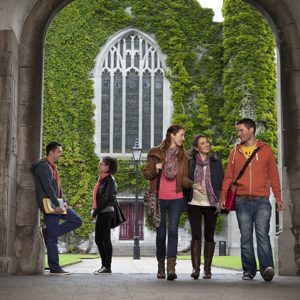
Choosing a course is one of the most important decisions you'll ever make! View our courses and see what our students and lecturers have to say about the courses you are interested in at the links below.
-
University Life
University Life
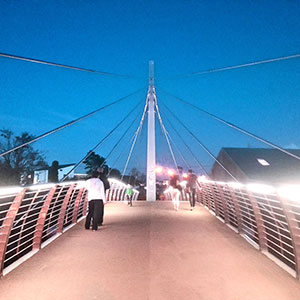
Each year more than 4,000 choose University of Galway as their University of choice. Find out what life at University of Galway is all about here.
-
About University of Galway
About University of Galway
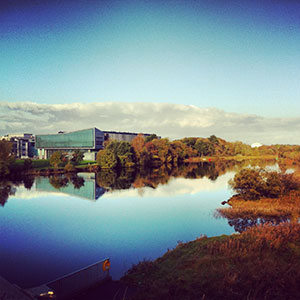
Since 1845, University of Galway has been sharing the highest quality teaching and research with Ireland and the world. Find out what makes our University so special – from our distinguished history to the latest news and campus developments.
-
Colleges & Schools
Colleges & Schools
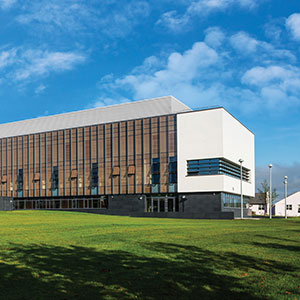
University of Galway has earned international recognition as a research-led university with a commitment to top quality teaching across a range of key areas of expertise.
-
Research & Innovation
Research & Innovation
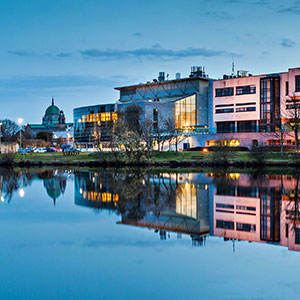
University of Galway’s vibrant research community take on some of the most pressing challenges of our times.
-
Business & Industry
Guiding Breakthrough Research at University of Galway
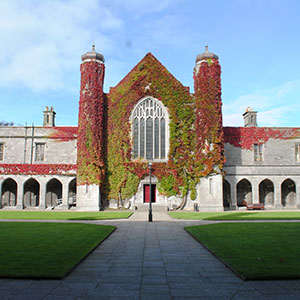
We explore and facilitate commercial opportunities for the research community at University of Galway, as well as facilitating industry partnership.
-
Alumni & Friends
Alumni & Friends
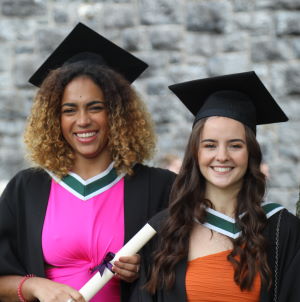
There are 128,000 University of Galway alumni worldwide. Stay connected to your alumni community! Join our social networks and update your details online.
-
Community Engagement
Community Engagement
At University of Galway, we believe that the best learning takes place when you apply what you learn in a real world context. That's why many of our courses include work placements or community projects.








 Accessibility & Language
News Archive
Tuesday, 14 April 2026
University of Galway and TE Connectivity have marked their partnership with a naming ceremony of a key facility for the BioInnovate Ireland programme. The TE Connectivity Meeting Room has been unveiled as part of the Ian Quinn Centre for Health Technology Innovation on the University campus, in recognition of the company’s commitment to supporting health technology innovation, talent development and industry–academic collaboration through BioInnovate. President of University of Galway, Professor David Burn, said: “Our partnership with TE Connectivity is symbolic of how University of Galway focuses on the translation of research and innovation into real-world impact. The naming of the space in the Ian Quinn Centre is a permanent and visible reminder of the inspiration of Ian Quinn and the support of TE Connectivity for our ambition to ensure we have collaborative facilities to enable ideas to move from concept to application.” Pat Duane, Senior Vice President and General Manager, Medical, TE Connectivity, said: “At TE, we are taking an active role in the creation of a strong pipeline of innovators and engineers ready to take the helm at companies like ours in the future. We support BioInnovate Ireland, and programmes like it all around the world, to inspire the next generation.” Dr Sinead Walsh, Programme Director at BioInnovate Ireland, said: “Dedicated innovation spaces matter. The TE Room will be a place where BioInnovate fellows and partners can work together, challenge assumptions and progress ideas. It also reflects the strength of our relationship with TE Connectivity, and the importance of sustained university–industry collaboration for the region.” The Ian Quinn Centre for Health Technology Innovation was officially launched at University of Galway in May 2024 in honour of the late Ian Quinn who was central in establishing Galway as a global medtech hub. Ian Quinn was a visionary in medical device design and innovation. Having witnessed the decline of the IT hardware industry and other industries in Ireland, he set about ensuring that the medical device industry would not suffer the same fate. Ian Quinn founded Creganna with his brother Niall, which went on to become TE Connectivity following its acquisition in 2016. The TE Connectivity Meeting Room will be used by BioInnovate Fellows, alumni, clinicians, researchers and industry partners as a dedicated environment for collaboration, ideation and project development. The naming of the space reflects TE Connectivity’s continued engagement with BioInnovate through mentorship, site visits and knowledge exchange, and its broader support for innovation-led growth within the medtech sector. Ian Quinn was a driving force behind the establishment of BioInnovate Ireland in 2011, bringing the BioDesign model to Ireland in partnership with Enterprise Ireland and University of Galway. It is Europe's only affiliate of Stanford Biodesign and Ireland’s national healthcare device innovation training programme. Over the last 15 years it has played a central role in strengthening Ireland’s medtech ecosystem. The programme has trained 170 Fellows and led to the creation of 35 companies, 24 of which are alumni-led high potential start-ups. The Ian Quinn Centre for Health Technology Innovation builds on this success by providing co-working space, mentorship and global connections for emerging health technology ventures, while also serving as a hub where industry, clinicians and campus-based innovators can come together to accelerate the development of new solutions. BioInnovate Ireland is supported under the Innovators’ Initiative Programme, co-funded by the Government of Ireland and the European Union through the Northern and Western Regional Programme 2021–2027. Ends
Tuesday, 14 April 2026
University of Galway in partnership with the RCSI University of Medicine and Health Sciences has received Government funding to establish a new national centre of excellence in medical device innovations. The Medical Device Innovation Network (MeDiNet) aims to strengthen Ireland’s position as a global leader in medtech and support the development of life-changing healthcare solutions. The project is one of nine key infrastructure projects funded through the Taighde Éireann-Research Ireland Infrastructure Programme to drive national priorities in health innovation, sustainability and economic resilience. Awarded almost €2 million in funding, MeDiNet will provide shared national facilities to help researchers, clinicians and companies design and test new medical devices more quickly, safely and affordably by providing access to the latest equipment, expert support, and a collaborative space for innovation. The Government investment will enable University of Galway to expand its activity as part of the new Medical Device Prototype Hub, which is supported by medical device company Medtronic and launched in February this year as part of the five-year €5million signature innovation partnership between Medtronic and the University, announced in 2023. The Medical Device Prototype Hub is managed by the Technology Services Directorate at University of Galway and focuses on three pillars: developing the MedTech ecosystem, STEM engagement and research. MeDiNet’s integrated approach combines design, prototyping, anatomical simulation and clinical engagement, by offers 3D printers and simulation tools that will create realistic models of the human body, allowing medical devices to be tested in lifelike conditions before reaching the patient. In partnership with RCSI, MeDiNet will be led by Dr Eimear Dolan from the College of Science and Engineering at University of Galway. Dr Eimear Dolan, Research Ireland Royal Society University Research Fellow Associate Professor in Biomedical Engineering, University of Galway, said: “This funding will enable us to fill an important gap in the Irish medtech ecosystem. It will enhance our reputation as a global hub for the sector by granting medical device innovators access to the latest equipment, expert support and a collaborative space for innovation. We are excited about working so closely with RCSI as this collaboration is greater than the sum of its parts.” Professor Claire Condron, RCSI University of Medicine and Health Sciences, said: “I am delighted to collaborate with the University of Galway on MeDiNet, which represents a significant step forward for Ireland’s medtech design landscape. As one of Europe’s leading simulation centres, RCSI SIM brings unique expertise that will add real value to the efficient design and validation of medical devices and instrumentation, while strengthening connections between researchers, clinicians and industry to deliver meaningful advances in patient care.” Dr Diarmuid O’Brien, Chief Executive of Research Ireland, said: “We are enabling researchers across the country to pursue ambitious ideas, deepen collaboration and accelerate breakthrough discoveries by providing access to truly world-class infrastructure. The awards announced today are a key step in delivering on Research Ireland’s strategy to strengthen national research capacity, future-proofing our research ecosystem and ensuring Ireland remains a global leader in high-impact research.” The Research Ireland Infrastructure Programme funding will enable the installation of state-of-the-art equipment and facilities across the country, strengthening Ireland’s research capacity in strategically important areas such as advanced materials, MedTech, AI, semiconductors and quantum technologies. The programme is designed to ensure that Irish researchers can access the specialised equipment needed to compete on the global stage. Ends
Monday, 13 April 2026
The triumphs and endeavours of athletes, sports clubs and coaches have been celebrated at the 41st annual University of Galway Sports Awards. Among the winners were under-23 World Rowing Bronze medallist Donagh Claffey, senior county hurler Sam O’Farrell and Carrie Dolan, All-Ireland winning captain of the Galway Senior Camogie team. Sam O’Farrell and Carrie Dolan were named Sports Persons of the Year, while Donagh Claffey from the Rowing Club won Individual Performance of the Year for his bronze medal at the World Rowing Under-23 Championships. Other winners included Ronan Sheppard and Matthew Kennedy of the Sailing Club, who received the Unsung Hero Award, Eveline Nee, for her contribution to University of Galway Archery Club over her four years as an undergraduate student, and the Mountaineering Club for the Best Event of the Year. Sponsored by Bank of Ireland, the awards ceremony was held at the Radisson Red Hotel Galway and hosted by RTÉ Sport’s Darren Frehill. Professor David Burn, President of University of Galway, said: “The University of Galway Sports Awards are a celebration of the dedication, resilience and community spirit that define sport across our campus. This year’s recipients have demonstrated not only exceptional achievement in competition, but also leadership, teamwork and a commitment to supporting one another. We are immensely proud of all our students, clubs and coaches who continue to foster an inclusive and vibrant sporting culture within the University.” Des Ryan, Director of Sport and Physical Wellbeing, University of Galway, said: “Our Sports Awards are a celebration of our sporting high performance achievements and our sport for all achievements in the University of Galway. The awards recognise the performances, achievements and hard work of our athletes, players, teams, coaches, committee members and volunteers. Our mission in the University of Galway Sports Unit is to be the most progressive and caring University sports programme on the island of Ireland. All the nominees and award winners are helping us on that mission. “This year our winners range from Senior Camogie All Ireland winning Captain to Clubs who have doubled membership this year, and we are very grateful to the Bank of Ireland for their sponsorship and support. Our university sports club members contribute great social capital to our environment. For us in the Sports Unit, it is an honour and a pleasure to work with so many talent young adults and to support all those involved in Clubs. It is a wonderful event where all the different sports club celebrate together all those who have greatly contributed to sport in the University of Galway.” The University of Galway Sports Awards recognise performance, leadership and participation, as well as those that contribute to the running and development of the clubs. They also celebrate remarkable final-year students who have made an outstanding and sustained contribution to sport; demonstrated an impeccable example of sportsmanship and a high level of performance and achievement; served as excellent ambassador within the University and for student sport; and competed at a regional level or above. University of Galway is now home to more than 40 active sports clubs, which are student-led and organised, with approximately 6,000 students participating in sport and activity daily at the University. 2026 Sports Award Winners Best Event of the Year 50th Anniversary of the Maamturks Challenge - Mountaineering Club Captain of the Year Áine Kavanagh (Calry, Co. Sligo) Hockey, Emma Jane Inns (Bundoran, Co. Donegal) Sub Aqua Club of the Year Swimming and Waterpolo Club Coach of the Year Matt Lockett (Galway City) Athletics Most Improved Club Gaelic Games Club (Includes Camogie, Hurling, Ladies Gaelic Football, Men’s Gaelic Football) Fundraising of the Year Boxing in Pink – Boxing Club Individual Performance of the Year Donagh Claffey (Fardrum Athlone, Co. Westmeath) Rowing University Honours Mohammad Zajeer Ahmed, (India) Cricket and Table Tennis Eveline Nee (Rosmuc, Co. Galway) Archery Ailbhe Folan (Galway City) Hockey Naoise O’Donnell (Moycullen, Co. Galway) Athletics, Swimming, Cycling, and Triathlon Sports Person of the Year - Male Sam O’Farrell (Nenagh, Co. Tipperary) Hurling Sports Person of the Year - Female Carrie Dolan (Clarinbridge, Co. Galway) Camogie Unsung Hero Ronan Sheppard (Moycullen, Co. Galway), Matthew Kennedy (Galway City) Sailing Team of the Year Women’s Senior 8 - Rowing Student’s Union Club Captains Choice – Female Orla Murphy (Enniskillen, Co. Fermanagh) Ladies Gaelic Football Student’s Union Club Captains Choice – Male Storm McDonald (Easkey, Co. Sligo) Sub Aqua Dean of Student Award Katia Tuck (France), Rory McDonnell (Beaufort, Co. Kerry) Table Tennis Caoimhe Gilligan (Rossinaver, Co. Leitrim) Surf, Sub Aqua Laoise Gillic (Galway City) Fencing Oscar Choo (Strandhill, Co. Sligo) Surf Neasa Ní Ainiféin (Ennis, Co. Clare) Athletics Mark Deegan (Galway City), Bernie Grealish (Galway City), John Folan (Galway City) Hockey Director of Sports Award Emer Jackson (Castletown Geoghegan, Co. Westmeath) Camogie Ben Haverty (Athenry, Co. Galway) Men’s Gaelic Football, Hurling David Lynch (Tralee, Co. Kerry) Men’s Gaelic Football Andrew Egan (Galway City), David Mannion (Ballindereen, Co. Galway) Athletics Declan Gbinigie (Galway City), Fortune Igbokwe (Galway City) Basketball Amy O’Sullivan (Ennis, Co. Clare) Volleyball Oisin Murray (Ballyard, Co. Kerry) Athletics Niamh Ní Lochlain (Galway City) Judo Matthew Thompson (Galway City) Men’s Gaelic Football Gradam Gaelach Award Swimming and Waterpolo Club Ends
Wednesday, 8 April 2026
University of Galway and FeelTect partner on study supported by Government’s Disruptive Technology Innovation Fund A groundbreaking clinical trial led by researchers at University of Galway is set to transform how a chronic and debilitating vein condition is treated. Forty patients who suffer from venous leg ulcers (VLUs) are being enrolled in the trial in Ireland, which is being coordinated through the University’s Institute for Clinical Trials, enabling clinicians to monitor and direct treatment remotely, in real-time. The trial is being carried out in partnership with FeelTect, a medical technology start-up based in Spiddal, Co. Galway, as part of funding through the Government’s Disruptive Technology Innovation Fund, managed by the Department of Enterprise, Trade and Employment and administered through Enterprise Ireland. Patients will be treated using advanced pressure monitoring technology. FeelTect has created a wearable, pressure-sensing device, Tight Alright®, which when paired with a mobile app, can enable clinicians to measure and remotely monitor sub-bandage pressure applied during compression therapy. This supports more consistent compression application with the potential to improve healing rates, reduce treatment costs and enhance patient quality of life. Professor Fidelma Dunne, Director of the Institute for Clinical Trials, University of Galway, said: "This trial reflects the role of the Institute for Clinical Trials as a national centre of excellence in the design and delivery of innovative studies. By integrating decentralised, patient‑centred approaches, we are strengthening Ireland’s clinical research capabilities and supporting the national objective to retain and grow trial activity. Through the Government’s DTIF support, this collaboration with an Irish start-up demonstrates how innovation developed in Ireland can be tested, validated and scaled within our own health system through academic-industry collaborative partnerships.” Dr Andrew Cameron, Chief Executive of FeelTect, said: “We are delighted to see the commencement of this valuable research, assessing data-driven, connected-health solutions for improving the treatment of venous leg ulcer patients. FeelTect is extremely fortunate to be working with our valued partners in University of Galway, including the Institute for Clinical Trials and Clinical Trials Corrib Research Centre, as well as world class clinicians, ensuring the quality and successful execution of the study. The broader implications of the study relate to the optimisation of compression therapy - a fundamental, first-line treatment for a host of venous and lymphatic diseases.” Over a 90-day period, the research team will assess healing rates of patients, their quality of life and how the FeelTect Tight Alright™ device is used and how the compression treatment is applied. The trial is enabling remote monitoring and data collection - either at home or in local primary care centres. This reduces the need for frequent hospital visits, improves patient comfort and reduces unnecessary clinical visits - an approach which is particularly beneficial for patients with mobility challenges while also allowing clinicians to better understand treatment effectiveness outside a clinical facility. The study is supported by the Institute for Clinical Trials at University of Galway through its Trials Accelerator programme, which provides early-phase setup support. Patients are recruited through Merlin Park Vascular Outpatients clinic, HSE West North West, and community centres in the region. Clinical delivery is being carried out by the CORRIB Core Lab at University of Galway which is responsible for the operational and clinical execution of the trial. Ends
Monday, 6 April 2026
University of Galway has announced a first-year science student from Co Galway as the recipient of the inaugural Complete Laboratory Solutions (CLS) Excellence Scholarship for Science. Mia McHugh from Milltown, Co Galway is studying for a Bachelor of Science, a flexible degree which enables students to explore a broad range of scientific disciplines before specialising in their chosen area. The CLS Excellence Scholarship for Science aims to remove barriers to, and through, higher education by supporting high-achieving and promising full-time undergraduate students to study Science at University of Galway. Complete Laboratory Solutions (CLS) is a leading Irish provider of laboratory testing and analytical services, sponsors the scholarship. With accredited facilities in Galway City, Ros Muc and Dublin, CLS provides services to the pharmaceutical, medical device, food and environmental sectors, with expertise spanning microbiological and analytical testing, regulatory consultancy, quality system support and specialist training. Mia McHugh, the inaugural recipient of the CLS Excellence Scholarship, said: “I have always had a deep love for science and always knew that that was where my future lay. I would like to sincerely thank CLS for awarding me the Excellence Scholarship. I am so grateful for this opportunity, and it will make a real difference in supporting my education.” Dr Ann Ryan, Director of Strategic Development, College of Science and Engineering at University of Galway, said: “We are truly delighted to announce Mia as the recipient of the inaugural CLS Excellence Scholarship for Science. Mia’s passion for science, her determination, zest for learning and future ambitions for a career in STEM were all evident from her application. We are extremely grateful to CLS for establishing this Excellence Scholarship, which recognises excellence and will support highly-talented students to achieve their potential.” Evelyn O’Toole, CEO of Complete Laboratory Solutions, said: “Supporting emerging scientific talent is an investment in our industry’s future and in the communities we serve. CLS is proud to sponsor the Bachelor of Science Scholarship, helping to empower the next generation of scientific leaders. By investing in aspiring science students, CLS is fostering innovation, advancing skills development, and creating meaningful career pathways within Ireland’s growing life sciences sector. The partnership with University of Galway reflects a shared commitment to academic excellence, research, and strong industry collaboration.” Ends
Thursday, 2 April 2026
A new international study led by University of Galway suggests that having higher levels of vitamin D in middle age is associated with lower levels of tau protein in the brain, which is a sign of dementia, years later. The study does not prove that vitamin D levels lower the level of tau in the brain or the risk of dementia; it only shows an association. The findings have been published today in Neurology Open Access, an official journal of the American Academy of Neurology. Study findings Higher vitamin D levels are associated with lower levels of the Alzheimer’s biomarker, tau protein in the brain, years later. Higher vitamin D levels may protect against dementia. The study does not prove cause and effect; it only shows an association. The results need to be confirmed with additional studies. The study was led by Professor Emer McGrath and Dr Martin Mulligan, from the College of Medicine, Nursing and Health Sciences at University of Galway and Galway University Hospital. It was carried out in collaboration with Boston University, the Framingham Heart Study and University of Texas San Antonia. Senior author, Professor Emer McGrath, Associate Professor in Medicine, University of Galway and Consultant Neurologist, Galway University Hospital, said: “This study demonstrates an association between higher vitamin D in mid-life and a lower burden of abnormal tau protein in the brain, a marker of Alzheimer’s disease. Vitamin D in mid-life could be an important factor to protect future brain health. While previous research has linked low vitamin D in adults over 70 with an increased risk of dementia, this study is among the first to look at younger adults at mid-life, around the average age of 39. Low vitamin D in mid-life may be an important target to reduce the risk of early signs of preclinical dementia in the brain. “However, while these findings are very interesting, they only demonstrate an association between vitamin D and early signs of dementia in the brain. Further studies, for example a clinical trial, will be required to determine if vitamin D supplements could prevent dementia." Lead author, Dr Martin Mulligan, PhD researcher at University of Galway, said: "We found that higher vitamin D levels were associated with lower tau deposition in regions of the brain that are known to be affected earliest in Alzheimer's disease. These results suggest that higher vitamin D levels in midlife may offer protection against developing these tau deposits in the brain and that low vitamin D levels could potentially be a risk factor that could be modified and treated to reduce the risk of dementia. However, these results need to be further tested with additional studies.” The study involved nearly 800 people with an average age of 39 who did not have dementia. All participants had the level of vitamin D in their blood measured at the start of the study. They had brain scans an average of 16 years later that measured levels of tau and amyloid beta proteins in the brain, which are both biomarkers for Alzheimer’s disease. A high level of vitamin D was defined as greater than 30 nanograms per milliliter (ng/mL) and a low level was less than that number. A total of 34% of participants had low levels of vitamin D and 5% were taking vitamin D supplements. The results took into account other factors that could affect tau levels, such as age, sex and symptoms of depression. The results showed that higher vitamin D levels are associated with lower levels of the Alzheimer’s biomarker tau protein years later. Dr Mulligan added: “These results are promising as they suggest an association between higher Vitamin D levels in early middle age and lower tau burden on average 16 years later. Mid-life is a time where risk factor modification can have a greater impact.” A limitation of the study is that the blood level of vitamin D was measured only once. Professor McGrath added: “The findings do support the need for clinical trials to determine if Vitamin D supplementation in younger adults could delay or help prevent the onset of dementia." The Framingham Heart Study is the longest running longitudinal cohort study worldwide. It started in 1948 with the recruitment of 5,200 adults from the town of Framingham in Massachusetts, Boston, with approximately 15% of the participants of Irish ancestry. The study was supported by the National Institute on Aging, National Institute of Neurological Disorders and Stroke, Irish Research Council and Health Research Board of Ireland. The full study can be read here. Ends
Wednesday, 1 April 2026
University of Galway’s Shannon College of Hotel Management has announced a new partnership with The Address Collective, a family-run hospitality group with seven hotels across Ireland and the UK. At the centre of the partnership is The Address Collective Excellence Scholarship, which will support full-time undergraduate students who qualify for SUSI funding and are studying hospitality, business or related disciplines. The scholarship reflects a shared commitment between Shannon College and The Address Collective to support students pursuing careers in hospitality by providing financial assistance and opportunities to connect with the industry. The Address Collective employs a number of Shannon graduates across its hotels, including The Address Connolly, The Address Cork, The Address Glasgow, The Address Sligo and The Address Citywest, as well as two upcoming properties, The Address Capel and The Address Wren. The partnership aims to build on this relationship and support student career opportunities in the hospitality sector. The Address Collective provides training, mentoring and development opportunities for staff, with many employees progressing from entry-level roles to supervisory and management positions. The group is also actively engaged in community partnerships and charitable initiatives across the areas where it operates. Cathal McGettigan, Director at The Address Collective, said: “At The Address Collective, we are passionate about supporting the future of the hospitality industry. Shannon College has a long-standing reputation for producing exceptional graduates who bring professionalism, creativity and leadership into the sector. We are proud to partner with the college to launch The Address Collective Excellence Scholarship, helping talented students access the education and opportunities they need to build successful careers in hospitality. As Shannon Alumni ourselves, Michaela and I are delighted to be here today. Many Shannon graduates are already valued members of our team across our hotels, and we look forward to welcoming many more in the years ahead.” Adrian Sylver, Head of Shannon College of Hotel Management, said: “We are delighted to launch this annual scholarship in partnership with The Address Collective, and it is particularly special to mark this with Cathal McGettigan and Michaela Hegarty, both graduates of Shannon College of Hotel Management. At Shannon we take great pride in seeing our alumni go on to make such a strong impact in the hospitality industry and to support future students through this generous initiative. This partnership speaks to the enduring strength of the Shannon community and the importance of giving back.” Professor Alma McCarthy, Executive Dean of the College of Business, Public Policy and Law at University of Galway, said: “This partnership with The Address Collective strengthens the career pathways available to students at Shannon College of Hotel Management. Students will have the chance to gain experience with an Irish family run hotel group that operates across Ireland and the UK, supporting their transition from study into a sector that continues to grow and diversify.” More information on The Address Collective Excellence Scholarship is available here. Ends
Wednesday, 1 April 2026
A law professor and former president of University of Galway are among new appointees to the Council of State by President of Ireland Catherine Connolly. Professor Donncha O’Connell of the School of Law is one of seven nominees alongside Ciarán Ó hÓgartaigh, who was president of the University between 2018 and 2024. The Council of State is the constitutional body that advises the President on the exercise of certain powers such as the referral of Bills to the Supreme Court under Article 26 of the Constitution. President of University of Galway, Professor David Burn, said: “My congratulations to all of the President Catherine Connolly’s nominees, in particular our Professor O’Connell and one of my predecessors in the role of President, Ciarán Ó hÓgartaigh. It is a great tribute to the esteem in which they are held as individuals and also to University of Galway. I wish them well in supporting and advising the President.” Professor O’Connell joined the staff of University of Galway in 1993 and became an Established Professor in 2013. A native of Swinford, Co Mayo, he has served terms as Dean of the Faculty of Law and Head of the School of Law. He also served two terms as a Commissioner of the Law Reform Commission and was a member of the Commission on the Future of Policing in Ireland and a board member of the Legal Aid Board. More recently, he was a member of the Independent Review Group to consider the Offences Against the State Acts. He has served on the boards of a number of human rights organisations including, INTERIGHTS, FLAC and Amnesty International – Ireland, and was, while on leave of absence from the University, the first full-time Director of the Irish Council for Civil Liberties (ICCL). He was the Irish member of the EU Network of Independent Experts on Fundamental Rights and, later, the Senior Irish member of FRALEX, the legal expert group that advised the EU Fundamental Rights Agency based in Vienna. He also served for over nine years on the board of the internationally-acclaimed Druid Theatre Company. Ciarán Ó hÓgartaigh is a former Professor of Accounting and Dean of the business schools at UCD. A Galway native and an alumnus, he was appointed president of University of Galway in 2018 where he led a new strategic vision for a university with values, and a university for the public good. He was also Chairperson of Universities Ireland, encouraging co-operation between the universities on the island of Ireland. He has a PhD from the University of Leeds and was a Fulbright Scholar at Northeastern University in Boston. Mr Ó hÓgartaigh is on the board of the National Library of Ireland, on the Council of the Economic and Social Research Institute and on the editorial board of Studies. Scríobhann sé alt as Gaeilge ó am go chéile don Irish Times. Professor O’Connell is one of a number of University of Galway staff to have served on the Council of State while working at the University. They include: the late Professor Emer Colleran who was appointed by President Mary Robinson; Professor Ruth Curtis who was appointed by President Mary McAleese; and Professors Gearóid Ó Tuathaigh and Gerard Quinn who were appointed by President Michael D Higgins. The former chair of Údarás na hOllscoile, Judge Catherine McGuinness, also served on the Council of State of Presidents Patrick Hillery and Michael D Higgins. Ends
Friday, 29 May 2026
University of Galway report examines “mate crime”, safeguarding, and access to justice A major new research report examining the experiences of disabled people subjected to targeted exploitation and abuse in Ireland has been launched at University of Galway. The report, Living Independently & Free from Targeted Abuse (LIFT): Understanding Mate Crime and the Experiences of Disabled People, presents findings from a national research project funded by Research Ireland in partnership with the Policing and Community Safety Authority. The report examines the issue commonly referred to as “mate crime”, where individuals are befriended and manipulated for the purposes of exploitation, coercion, abuse, or criminal activity. It highlights their experiences including financial exploitation, online targeting, misuse of accommodation, coercive control, sexual exploitation and barriers faced by disabled people when seeking support or reporting concerns. Participants in the research described experiences involving online scams, financial exploitation, grooming, coercion, social isolation and situations where individuals posing as friends gradually exploited trust. A recurring theme across the interviews and focus groups was that many participants did not initially recognise what was happening to them as abuse or exploitation, while others were reluctant to report experiences due to shame, fear of losing friendships or relationships, concerns about not being believed, or worries about Garda and justice system responses. Participants and stakeholders also identified the absence of a specific criminal offence or formal recognition of mate crime in Ireland as contributing to the issue remaining largely hidden. Participants described experiences of exploitation leading to financial hardship, loss of confidence, fear, emotional distress, social isolation, and significant negative impacts on independent living and participation in their community. Stakeholders and participants strongly agreed that the issue remains significantly underreported. Dr Charles O’Mahony, Associate Professor in the School of Law at University of Galway and Principal Investigator of the project, said: “This research highlights that many disabled people in Ireland are experiencing serious forms of exploitation and abuse that frequently remain hidden. What makes this particularly complex is that the abuse often develops within relationships presented as friendship, support, care, or trust. The findings demonstrate the need for better safeguarding responses, better awareness, a more accessible justice system, and greater community understanding of how mate crime can occur.” Helen Hall, Chief Executive of the Policing and Community Safety Authority, said: “The PCSA is delighted to have funded this innovative project, which illustrates the value of bringing academics, practitioners and people with lived experience together to bring real insight into community safety issues. I hope that this research contributes to improving policing services for those at risk of exploitation and abuse by people they trust, by highlighting the need for greater awareness, improved reporting, and a consistent, effective and multi-agency response to a problem that is often invisible.” Breda Golden, Head of Safeguarding, Corlann, said: “At Corlann, we see how disabled people can be placed at risk simply because they are seeking connection, support, or community. Disabled people in Ireland are being targeted, exploited, and harmed in ways that are too often dismissed or ignored. Mate crime is not a misunderstanding, it is abuse. We need increased awareness and coordinated safeguarding action so disabled people are no longer left to navigate danger alone. Corlann is proud to support this research.” The research involved key interviews with stakeholders from disability services, advocacy organisations, safeguarding teams, policing, and the justice sector, alongside a national survey and focus groups with disabled people and people supporting individuals in the community across Ireland. The report includes recommendations relating to disability awareness training, safeguarding legislation, accessible reporting mechanisms, online safety, and stronger coordination between disability organisations, advocacy groups, community services, and An Garda Síochána. The launch event included a private screening of a short film developed in collaboration with Blue Teapot Theatre Company titled MateCrime. The film was informed directly by the lived experiences and themes emerging from the research. Petal Pilley, Director at Blue Teapot Theatre Company, said: “On occasion complex social and world issues can be met by art and in the alchemy of that encounter be distilled into forms that communicate truths with immediacy beyond words. We hope this film is one such encounter.” The event also featured discussion on safeguarding, disability rights, community safety, and access to justice for disabled people in Ireland. The full report is available here. Ends
Thursday, 28 May 2026
Ward & Burke Centre for Infrastructure Research and Innovation to be established as University unveils new Signature Partnership with company University of Galway has today announced the establishment of the Ward & Burke Centre for Infrastructure Research & Innovation following a significant investment from leading engineering multinational Ward & Burke. The investment is being made as part of a new Signature Partnership between Ward & Burke and the University, building on many years of research collaboration. The commitment from Ward & Burke, a world-leading engineering company with its head office in Kilcolgan, Co Galway, will allow for significant advancement of research, impact and innovation in sustainable, intelligent and resilient infrastructure at the University. As part of the Signature Partnership, the new Ward & Burke Centre for Infrastructure Research & Innovation is being established to build on existing strengths at the University’s School of Engineering across civil and mechanical engineering, water and wastewater research, geotechnics, construction innovation and data driven engineering technologies. Some of the focus of the new research centre’s work will be on water systems, underground construction, climate resilience and digital engineering. Alongside the new research centre a new civil engineering professorship has been created, with Established Professor Brian Sheil, an alumnus of University of Galway, appointed as the first to hold the role. The research centre will be led by Professor Sheil and Professor Eoghan Clifford, Head of Civil Engineering. It will enable the University to attract new world-leading faculty, researchers, postdoctoral researchers and PhD students. The Signature Partnership with Ward & Burke will also see the establishment of a new, ambitious scholarship programme to build the pipeline of talented and innovative engineering students. Padraig Burke, Director at Ward & Burke, said: “We are delighted to build on our long-standing relationship with University of Galway through this investment in establishing the Ward & Burke Centre for Infrastructure Research & Innovation. At Ward & Burke, we’ve always believed that the future of engineering lies in solutions that are not just technically excellent but genuinely sustainable- from lowering carbon footprints to building infrastructure that stands the test of climate change. This Centre will accelerate collaboration between industry and research, helping to drive innovation that delivers real, long-term environmental and societal benefits. We’re proud to support this initiative and look forward to seeing the transformative impact it will have.” The Signature Partnership was unveiled at a day-long event hosted at University of Galway on the anniversary of the birthday of one of the University’s greatest engineering graduates, Michael Maurice O’Shaughnessy, whose distinguished legacy lives on in San Francisco through water, rail and other major infrastructure projects, as well as the Golden Gate Bridge. Professor David Burn, President of the University of Galway, highlighted the wider impact of the initiative: “This transformational philanthropic commitment from Ward & Burke marks a major milestone for University of Galway and for the future of civil and infrastructure engineering in Ireland. The new Ward & Burke Centre for Infrastructure Research & Innovation spans three of the University’s four research pillars and is a powerful demonstration of strategic investment in our people, teaching and research. By attracting world-leading faculty and establishing a new Civil Engineering Professorship, this partnership will educate the next generation of engineers and drive innovation with real-world impact.” Professor Laoise McNamara, Head of the School of Engineering and incoming Vice-President Research and Innovation at University of Galway, said: “The establishment of the Ward and Burke Centre for Infrastructure Research & Innovation reflects the longstanding collaboration in research and education with the company and Civil Engineering at University of Galway. We are proud that Ward and Burke was founded by our engineering graduates who, over the past 25 years, have grown it into one of the most innovative infrastructure companies driving wastewater treatment, energy infrastructure and urban regeneration solutions worldwide. Today, the company employs more than 1,200 people, across Ireland, the UK, Canada and the US. The establishment of this Centre will enable us to recruit and develop world leading researchers and deliver impactful research, benefiting large-scale infrastructure projects in Ireland and internationally.” Ends
Wednesday, 27 May 2026
Research from University of Galway suggests that the impact of social media on the health and well-being of teenagers is less than is often feared. While the study recognises that time spent on social media is linked to a range of health outcomes, the analysis reveals that its influence is relatively modest and smaller than what we assume. The analysis of surveys of teenagers also showed that the impact of social media was relatively small when compared to other social and environmental factors in young people’s lives. Professor Eoin Whelan, who led the research at University of Galway’s J.E. Cairnes School of Business and Economics, said the study highlights the limitations of attributing teenage mental health and well-being primarily to social media use. Professor Whelan said: “The findings of this study are consistent with other prior studies which report that overall, the harmful effects of social media use on adolescent well-being may be smaller than often assumed.” The research, published in Acta Psychologica, shows that factors such as feeling safe in school, supportive relationships with parents and caregivers and financial ability to participate in activities are more important predictors of adolescent health outcomes. The study used data from almost 3,000 teenagers aged 15-16 who were living in the West of Ireland and who completed the Planet Youth survey. The analysis involved an advanced method known as specification curve analysis to examine more than 50,000 possible links between social media use and health outcomes. The study found that: Social media use is associated with small differences in adolescent health outcomes. Associations between social media use and mental health outcomes tended to be higher for girls, though the overall effect remained small. Spending more time on social media was most strongly linked to higher levels of anger difficulties in boys, and to alcohol use and vaping in both boys and girls, though these links were still relatively modest. Overall, social media use was not among the strongest predictors of adolescent health outcomes. Unlike much previous research, the study directly compares social media use with other known influences on adolescent health, such as school safety and parental support, allowing the relative importance of these factors to be assessed more clearly. The findings suggest that policymakers and caregivers may benefit from focusing on a broader range of factors affecting young people’s health, rather than treating social media as a primary cause of harm. The study also aligns with a recent consensus report from the American National Academies of Science, Engineering, and Medicine, which found insufficient evidence to conclude that social media causes changes in adolescent health across the wider teenage population. Professor Whelan continued: “While analysis of information reported by teenagers shows that the negative impact of social media may be overstated, this does not mean that social media is harmless or without risk. Social media can present risks for young people, and those do deserve attention. “Although there have been thousands of studies investigating the impacts of social media on the lives of young people, we do not have a complete picture. Most research, like my own, has to rely on self-reported data, which has limitations. “To really find out how social media is impacting young people, researchers need access to data on how teenagers are actually using social media. The EU Digital Services Act requires online platforms to make this data available to vetted researchers. However, the data held by social media companies is difficult to obtain, and when provided, is often incomplete. This hampers the independent scrutiny of the impact of social media platforms - one of the central goals of the Digital Services Act.” The full study, published in Acta Psychologica, is available to read here Ends
Tuesday, 26 May 2026
Researchers have solved a long-standing mystery about why physical forces slow cancer growth – and the answer could reshape how the disease is treated. A multidisciplinary team from University of Galway, CÚRAM, the Taighde Éireann-Research Ireland Centre for Medical Devices, and KU Leuven in Belgium built an innovative AI accelerated computational model to test the theory. The research findings suggest that learning to harness the pressure of physical force on a tumour could open an entirely new role for treatments known as mechanotherapies in the fight against cancer. The study was published in Proceedings of the National Academy of Sciences at https://www.pnas.org/doi/10.1073/pnas.2523159123 Dr Irish Senthilkumar, postdoctoral researcher and a lead on the study, said: "Cancer cells are known to bypass many of the body's normal growth controls, but tumours still respond to mechanical pressure. Until now we haven't understood why this happens, so our aim was to investigate the underlying mechanics at a cellular level." Dr Eóin McEvoy, senior researcher with CÚRAM and Associate Professor of Biomedical Engineering at University of Galway, said: "As we understand more about how cell compression and compaction affect things like drug penetration and efficacy, the work has important implications for improving drug responses and designing new mechanotherapy treatment regimens.” The research highlighted how, for decades, scientists have noticed that tumour cells seem to respond to one thing that chemicals cannot easily override, physical pressure - put enough physical pressure on a tumour, and its growth slows down. But the reason was not fully understood. The key lies in how cells grow in the first place. Before a cell can divide, it has to get bigger. It does this by manufacturing complex biological molecules (proteins, lipids, and other building blocks) which draws water into the cell through osmosis, inflating it like a tiny balloon. Once the cell reaches a critical size, it can split in two. Under normal circumstances, this swelling process works smoothly. But when a tumour becomes physically confined by the surrounding tissue pressing in on it, something disrupts that process. The external mechanical load creates high hydrostatic pressure, that fights against the osmotic swelling from the inside. The result? Cells can no longer reach the size needed to trigger division. Growth stalls. In other words, the physical architecture of a tumour is not just a passive backdrop, it's an active participant in the disease. Dr McEvoy added: “The implications stretch well beyond explaining an interesting biological process. Many cancer drugs work by targeting cell division. If a tumour's mechanical environment is already suppressing growth, understanding that interaction could reveal why some drugs work better in certain tumour types or locations, and why others fail.” The AI accelerated computational model developed by the research team runs complex calculations, simulating how thousands of individual cells collectively grow and reorganise under mechanical stress or the pressure of having no room to grow bigger. Without the AI model, simulations would be impossibly slow. The researchers validated the model’s predictions against real laboratory experiments using breast cancer spheroids - small, ball-shaped clusters of cancer cells grown in 3D cultures that closely mimic how tumours behave inside the body. The results showed that the predictions matched the experimental results, giving the scientists confidence that they had identified the genuine mechanism underlying how pressure slows cancer growth. Ends
Monday, 25 May 2026
Tá ceiliúradh déanta ag Ollscoil na Gaillimhe ar na móréachtaí atá bainte amach acu siúd ar bronnadh Gradam Alumni orthu ag mórshearmanas bronnta ar an gcampas. Tugann na gradaim aitheantas do chéimithe den scoth ar roghnaíodh iad as pobal alumni na hOllscoile ar fud an domhain. Tá céim bainte amach ag breis agus 145,000 duine ó bunaíodh an Ollscoil sa bhliain 1845. Tarraingíonn na gradaim aird ar an tsárobair atá déanta ag na halumni seo ina réimsí éagsúla féin a n-áirítear leo na dána, gnó, dlí, seirbhís phoiblí, eolaíocht, sláinte, spórt agus ceannaireacht nua, agus tá faighteoirí na ngradam tar éis tionchar nach beag a imirt ag an leibhéal áitiúil, náisiúnta agus idirnáisiúnta. Seo a leanas na daoine ar bronnadh Gradam Alumni Ollscoil na Gaillimhe 2026 orthu: Gradam Alumni do na Dána, an Litríocht agus an Léann Ceilteach An tOllamh Fran O’Rourke, Ollamh Emeritus, Coláiste na hOllscoile, Baile Átha Cliath Gradam Alumni don Ghnó agus an Tráchtáil – Urraithe ag Banc na hÉireann Michael Lohan, Príomhfheidhmeannach, GFT Éireann Gradam Alumni don Ghaeilge Deirdre Ní Choistín, Ard-Stiúrthóir TG4 Gradam Alumni don Dlí, an Beartas Poiblí agus an tSochaí – Urraithe ag RDJ Katie Mannion, Aturnae Bainistíochta, Ionad Dlí Chomhairle Teifeach na hÉireann Gradam Alumni don Innealtóireacht, an Eolaíocht agus an Teicneolaíocht – Urraithe ag Analog Devices An tOllamh Patrick Farrell, Ollamh le hAnailís Uimhriúil, Ollscoil Oxford Gradam Alumni don Leigheas, an tAltranas agus na hEolaíochtaí Sláinte – Urraithe ag Medtronic An tOllamh James Meaney, Ollamh le Raideolaíocht agus Stiúrthóir, Ionad Thomas Mitchell d’Ardíomháú Leighis (CAMI), Ospidéal San Séamas agus Coláiste na Tríonóide, Baile Átha Cliath Gradam Alumni don Rannpháirtíocht sa Spórt Fiona Murtagh, Rámhaí a bhfuil Curadh an Domhain bainte amach aici Gradam Alumni do Cheannairí Nua – Urraithe ag BioInnovate Ruth Mackey agus David Mackey, lucht bunaithe Mbryonics Dúirt an tOllamh David Burn, Uachtarán Ollscoil na Gaillimhe: “Ceann de na hócáidí is tábhachtaí i bhféilire na hOllscoile is ea na Gradaim Alumni, áit a dtagaimid le chéile chun ceiliúradh a dhéanamh ar an tionchar ollmhór atá ag ár gcéimithe ar fud an domhain. Léiríonn gach duine d’fhaighteoirí na bliana seo tallann, uaillmhian agus luachanna Ollscoil na Gaillimhe, agus táimid an-bhródúil as a gcuid éachtaí. Léiriú is ea rath na bhfaighteoirí seo ní hamháin ar a mbarr feabhais féin ach, anuas air sin, ar a láidre is atá ár bpobal alumni ar fud an domhain, agus nasc an phobail sin leis an Ollscoil.” Críoch
Monday, 25 May 2026
University of Galway has celebrated the achievements of its 2026 Alumni Award honourees at its gala award ceremony on campus. The awards recognise outstanding graduates from across the University’s global alumni community. Since the establishment of the University in 1845 more than 145,000 people have graduated. The awards highlight exceptional contributions from our alumni across a range of fields including the arts, business, law, public service, science, health, sport and emerging leadership, with recipients making a significant impact at local, national and international level. The 2026 University of Galway Alumni Award recipients were: Alumni Award for Arts, Literature and Celtic Studies Professor Fran O’Rourke, Emeritus Professor, University College Dublin Alumni Award for Business and Commerce - Sponsored by Bank of Ireland Michael Lohan, Chief Executive Officer, IDA Ireland Gradam Alumni don Ghaeilge Deirdre Ní Choistín, Director General of TG4 Alumni Award for Law, Public Policy and Society – Sponsored by RDJ Katie Mannion, Managing Solicitor, Irish Refugee Council Law Centre Alumni Award for Engineering, Science and Technology - Sponsored by Analog Devices Professor Patrick Farrell, Professor of Numerical Analysis, University of Oxford Alumni Award for Medicine, Nursing and Health Sciences – Sponsored by Medtronic Professor James Meaney, Professor of Radiology and Director, Thomas Mitchell Centre for Advanced Medical Imaging (CAMI), St James’s Hospital and Trinity College Dublin Alumni Award for Contribution to Sport Fiona Murtagh, World Champion Rower Alumni Award for Emerging Leader - Sponsored by BioInnovate Ruth Mackey and David Mackey, founders of Mbryonics Professor David Burn, University of Galway President, said: “The Alumni Awards are one of the most important occasions in our university calendar, as we come together to celebrate the extraordinary impact our graduates are making across the world. Each of this year’s recipients embodies the talent, ambition and values of University of Galway, and we are immensely proud of their achievements. Their success reflects not only their individual excellence, but also the strength of our global alumni community and its continued connection to the University.” Ends
Wednesday, 20 May 2026
Childhood disability congress launches campaign for inclusion and positive change A nationwide call has been launched asking clubs, businesses, schools and community organisations and groups to join the #Every1Counts initiative and make one positive change for people with disabilities. The campaign is being undertaken ahead of the annual European Academy of Childhood-onset Disability (EACD) Congress which is hosted by University of Galway from June 3rd to 6th in partnership with Enable Ireland, Central Remedial Clinic and Children’s Health Ireland. The mission of #Every1Counts is to promote and strengthen the efforts of individuals, clubs, and organisations across Ireland to include people with childhood-onset disabilities, by making one meaningful and practical change to improve inclusion. Dr Hazel Killeen, President of the EACD Annual Congress 2026, and Assistant Professor in Occupational Therapy, University of Galway, said: “It is very important to all of us to be included equally with our peers. Communities all over the country are making great efforts to make that a reality for people with all levels of ability. With that energy in mind, we are launching an important call to action as part of EACD 2026 - we are asking every club, business, school and community in Ireland to make one positive change for people with disabilities. This is about one action now in the lead up to the congress rather than in dreaming of big things to do out in the future. “You may think one change in your club may not make a huge difference but collectively around Ireland we can make a powerful change, demonstrating with clear action that #Every1Counts.” The deadline for submitting #Every1Counts initiatives is Wednesday, June 3rd with submissions made on https://www.eacd2026.com/get-involved A number of initiatives which have already been taken have been highlighted as a means to inspire communities to take up the call to action: Ability West and Connacht Rugby are running Camp Ability, inclusive rugby summer camps in Galway for children with intellectual disabilities. Tallaght Athletics Club in Dublin has become the first in Ireland to integrate Frame Running, an international adaptive sport and recreational activity for people with limited mobility. Reels on Wheels is offering céilí dancing for wheelchair users in Limerick. Awards for the best initiatives will be presented during the EACD congress. The theme of the congress is ‘Mol an Óige agus Tiochfaidh Siad’ - Encourage the young, and they will flourish. The programme includes an Experience Village, which runs alongside the four-day congress and offers a showcase of inclusive sports, adapted water sports, accessible gaming and personalised creativity, led by organisations and charities all over Ireland. These include: Adapted surfing demos and try-outs and Swim Ireland's Para Athlete Support Programme - hosted by West Coast Surfing, Liquid Therapy Donegal, and Swim Ireland Frame Running demos and come try sessions - hosted by Enable Ireland and frame.runningireland Accessible Gaming Arcade - hosted by Enable Ireland’s National and Regional Assistive Technology Services Wheelchair Hurling exhibition match and come try session - hosted by Enable Ireland and Connacht GAA for All in collaboration with Munster GAA for All Reels on Wheels Ceilí Dancing - hosted by AllIrishDance Para Rowing – hosted by Paralympian, Katie O’Brien, Paralympic Rowing Ireland Coaches and Get Going Get Rowing Make your own tools: Intro to 3D design – hosted by University of Galway’s MakerSpace Inclusive Mobile Cycling Hub – hosted by Variety Ireland Margaret McGrath, Children Disability Network Manager, Enable Ireland, said: “I’m truly excited that this co-designed experience village brings together lived experience and expert knowledge to create something special. We invite everyone to come along and discover new experiences in sports, gaming, and personalised creativity. It will also be a great opportunity to learn about the incredible work of organisations, clubs, and individuals across Ireland who are championing inclusion and participation for people with disabilities and to become part of it.” Rory O’Sullivan, Head of Strategy & Innovation, Central Remedial Clinic, said: “At CRC, we are proud to support EACD 2026 and the #Every1Counts Hub, which so clearly reflects our shared commitment to inclusion, participation, and empowering people with disabilities to reach their full potential. The call for every organisation, club, and community to make one meaningful change is both practical and powerful, real inclusion is built through everyday actions. This initiative aligns strongly with our strategy to enable access and opportunity across the lifespan, and we encourage all partners to play their part in creating communities where every child and young person can flourish.” Dr Aoife Mahony, Consultant in Paediatric Neurodisability, Childrens Health Ireland, said: “Healthcare extends beyond clinical settings — it is also about ensuring children and young people can fully participate in their schools, sports clubs, communities, and everyday lives. The Every1Counts Hub highlights the collective responsibility we all share in creating a more inclusive Ireland. We are delighted to support EACD 2026 in these exciting initiatives that empower children with disabilities to thrive.” Along with a cutting-edge scientific programme, Fáilte Ireland is partnering with EACD 2026, using its new social impact framework, to help measure the impact of the Every1Counts initiative over time. This collaboration supports Ireland’s Business Events Strategy 2030, which positions international conferences hosted in Ireland as catalysts for social change, and long-term legacy. Paul Mockler, Head of Commercial Development, Fáilte Ireland, said: “Fáilte Ireland is delighted to welcome the EACD Congress 2026 to Galway this June. We are proud to partner with EACD on an intentional impact project, designed to define and measure the social impact of the conference. This collaboration supports Ireland’s Business Events Strategy 2030, which positions international conferences hosted in Ireland as catalysts for social change, and long-term legacy.” More information about the European Academy of Childhood-onset Disability (EACD 2026) Congress is available at https://www.eacd2026.com/. Ends
Tuesday, 19 May 2026
A postgraduate researcher exploring disabled women’s sexual rights has won the top prize and the Audience Choice Award at University of Galway’s Threesis 2026, showcasing the very best in research communication. Grace Barnes earned first place ahead of 10 fellow finalists at the Threesis Grand Finale, a research communication competition challenging postgraduate researchers to present their work in just three minutes, using three slides. The finalists showcased research topics ranging from cancer biology, neuroscience and medical innovation to air quality, education and social justice, highlighting both the diversity and real-world impact of research underway at the University. Aengus Parsons, Acting Vice-President for Research and Innovation at University of Galway, said: “Threesis continues to be a standout event in our academic calendar, showcasing the exceptional talent of our postgraduate researchers. The ability to communicate complex ideas clearly and engagingly in just three minutes is no small feat, and this year’s finalists demonstrated remarkable skill, creativity and insight. My congratulations to the winners and finalists, and to all those who took part.” Originally from Devon in England, Grace Barnes is a PhD researcher at the University’s Centre for Disability Law and Policy, under the supervision of Professor Eilionóir Flynn and Hardiman Scholar funded by Research Ireland. Her Threesis presentation focused on disabled women’s sexuality within the European Court of Human Rights and how this shapes access to sexual rights and identity. Drawing on analysis of case judgments and engagement with disabled women, she explained how legal frameworks can shape both rights and self-identity. Her presentation combined compelling storytelling with sharp insight and resonated strongly with both the judges and audience members, securing both first place and the Audience Choice Award. Second place went to Adam Collison, a PhD researcher from Dromineer, Co Tipperary. A physics graduate of the University, he is now based in the School of Natural Sciences, where he aims to help shape retrofit practices that deliver both lower carbon emissions and healthier spaces for building occupants. Third place went to Sienna Stucke, a Pharmacology PhD student, originally from Minnesota in the US, whose research explores the therapeutic potential of parasitic worms, known as helminths, in treating neuroinflammatory and neurodegenerative diseases. The judges for this year’s competition, which attracted 65 entries, were Kevin Murray, 2025 Threesis winner, Audrey Bleach, Senior Culture and Operations Leader at Cisco, and Professor Dónal Leech, Dean of Graduate Studies at University of Galway. Ends
Monday, 18 May 2026
Study reveals strong worker commitment alongside ongoing concerns over pay, conditions and wellbeing A new survey of hospitality workers in Ireland has found strong levels of pride and commitment, but breaches of employment rights and high levels of stress, burnout, and poor workplace conditions across the sector. The findings are based on 736 responses collected from hospitality workers in Ireland in 2025 – the largest independent study of its kind to date. The research was led by University of Galway and forms part of a wider global project examining hospitality working conditions across multiple countries. Despite positive attitudes towards work and strong confidence in skills, the survey reports continued breaches of basic employment rights among some workers, including pay below the minimum wage, unpaid hours and missing employment documentation. The data suggests a persistent gap between the demands of the industry and the supports available to workers, reflecting long-standing issues affecting retention, wellbeing and performance. Dr Deirdre Curran, J.E. Cairnes School of Business and Economics at University of Galway, led the research: “These results will be of direct interest to policymakers, employer representative bodies, trade unions, employers, students and teachers of hospitality and employment relations, and those working in hospitality. “Our intention is to provoke evidence-based discussions leading to positive change for all. We have a responsibility to the people who shared their experiences with us, to ensure their voices are heard and their needs are placed at the centre of discussions on the future of the sector.” Key findings include: Despite Ireland’s suite of employment legislation, results show that some hospitality workers continue to lack basic employment rights: 6% of respondents stated they were paid below the minimum wage 11% claimed that they were not paid for every hour worked 22% had not received a written statement of the terms of their employment 13% did not receive regular detailed pay slips Respondents reported high levels of engagement with their work, alongside significant wellbeing challenges. 96% agreed/strongly agreed that they ‘care about being useful and productive’ 91% agreed/strongly agreed that they had ‘the skills to do their job with confidence’ 73% agreed that they ‘enjoy their work environment’ 72% felt they were ‘treated with dignity and respect by their managers’ (less so by customers) 64% agreed/strongly agreed that they felt ‘emotionally drained’ by their work 71% stated that they felt ‘used up’ at the end of their workday 53% had witnessed bullying or harassment 38% said they had experienced bullying or harassment The report also examines the types of behaviour reported, along with who is most likely to be responsible and how incidents are handled in the workplace. The report covers the full range of working conditions in hospitality, including the demands placed on both employees and employers, as well as factors that attract workers to the sector and those that contribute to turnover. While the findings are indicative rather than representative, they provide a strong evidence base and the report includes recommendations aimed at addressing systemic issues and supporting more sustainable working conditions for both employees and employers. The research team was led by Dr Deirdre Curran at University of Galway’s J.E. Cairnes School of Business and Economics, and includes Dr Maeve O’Sullivan, Dr Áine Ní Léime and Olaiwola Ogunpaimo, University of Galway; Anastasia Kulichyova, Queen’s University Belfast; and Kevin Ward, Technological University of the Shannon. The project is part of the Global Hospitality Research Alliance, which examines working conditions in hospitality sectors across the Global North and Global South. The full report is available at https://researchrepository.universityofgalway.ie/server/api/core/bitstreams/391e4cb7-1d0f-4f63-8200-930df80fc579/content Ends
Thursday, 14 May 2026
Pilot spearheaded at University of Galway offers blueprint to position Ireland as a global hub for clinical research University of Galway’s Institute for Clinical Trials has hosted a national clinical research innovation day to examine how Ireland can strengthen its capabilities in clinical trials and enhance its position as a global MedTech hub. To coincide with the event, the Institute launched a White Paper on the Hypercare initiative – a pilot project which demonstrates a blueprint for dramatically faster regulatory approvals for clinical trials and significant improvements in efficiency. Hypercare is designed to support and improve Ireland’s capability, predictability, and competitiveness in medical device clinical investigations. The White Paper outlines three different cases which achieved authorisation to go to clinical trial significantly faster than the standard average of 73 days – with one case going from end-to-end regulatory review in half the time. President of University of Galway, Professor David Burn, said: “The work of the Institute for Clinical Trials at University of Galway is a clear signal about the value of working together with a shared vision and towards a shared goal. The work of the team, our partners in the Health Service Executive, and industry has helped us to create this blueprint to position Ireland as a European and global leader in clinical trials.” Professor Fidelma Dunne, Director of the Institute for Clinical Trials, said: “The findings from the Hypercare initiative demonstrate that targeted coordination and early engagement can make Ireland a more predictable and attractive environment for clinical research. This has implications not only for innovation, but for regional development and the long-term growth of the sector.” The national clinical research innovation day, hosted by the University’s Institute for Clinical Trials, was organised in collaboration with the Health Products Regulatory Authority (HPRA), National Office for Research Ethics Committees (NREC), Data Protection Commission (DPC), Health Research Consent Declaration Committee (HRCDC), and the Health Service Executive (HSE). Representatives from regulatory bodies, healthcare services, academia, industry and patient groups attended. The focus of the one-day event was on practical and regulatory aspects of conducting trials, including sessions on ethics, governance, and data protection. It featured insights from real-world clinical trial studies, conducted through the Hypercare initiative. Contributions were made by InterVene, an international SME based in the US; Luminate Medical, a University of Galway spin-out; and Medtronic, which has a five-year €5million signature innovation partnership with University of Galway focuses on developing the MedTech ecosystem, STEM engagement and research. Hypercare enabled the three companies to navigate the complexities of the pathway to authorisation for a clinical trial with different medical devices and investigation strategies. Findings published in the White Paper include: Increasing clinical research activity within hospitals contributes directly to the wider health system, supports job creation and skills development and enables earlier access to new and potentially life-enhancing treatment for patients. The single point of contact created in the Hypercare initiative was a key driver of efficiency, removing administrative fragmentation and allowing their teams to focus on clinical execution rather than logistics. The Health Protection Regulatory Authority reported that Hypercare significantly improved sponsor readiness and application quality and proactive early engagement helped streamline the process without compromising the rigor required for safety and performance. Further scaling and investment in coordinated supports, could see Ireland significantly increase its share of global medical device clinical trials, strengthening both regional economies and national research infrastructure Attracting and retaining clinical investigation activity can generate substantial regional economic benefits and further position Ireland as a globally competitive hub for MedTech innovation. The White Paper can be read in full at https://www.universityofgalway.ie/instituteforclinicaltrials/ tbc The national clinical research innovation day aimed to support knowledge-sharing and collaboration across the sector, with a particular focus on improving trial readiness, reducing barriers to innovation, and enabling earlier patient access to new treatments. Professor Tom Melvin, Institute for Clinical Trials at University of Galway, said: “The initiation of a clinical study relies on the coordinated contribution of multiple organisations. The Hypercare pilot demonstrates that complex clinical study pathways can be streamlined for medical technologies. This supports the translation of scientific discoveries into enhanced patient care. This also supports our health service, by providing earlier access to medical technologies designed to address unmet medical need.” John Kilmartin, Adjunct Professor, Institute for Clinical Trials at University of Galway, said: “I believe that this collaborative partnership stands as a model for academic–industry collaboration, advancing innovation while upholding the highest clinical and regulatory standards. Aligned with the mission of the Institute for Clinical Trials, this project drives excellence, inclusivity, and need-driven research to improve health outcomes for Irish patients. The Hypercare project aims to highlight positive changes in the delivery of clinical research in Ireland, attracting further interest and investment from MedTech stakeholders nationally and internationally." Professor Donal Reddan, Director of Research, HSE West and North-West Region, said: “The Hypercare initiative clearly demonstrates how a coordinated approach across regulators, ethics committees clinical site teams and the wider public health system can significantly accelerate the opening of clinical studies. By enabling early engagement, parallel processes and a single point of coordination, it is helping to reduce study start-up timelines without compromising regulatory standards, supporting faster access to innovative treatments for patients across the public health system.” Ends
Wednesday, 13 May 2026
New undergraduate degree in Global Luxury and Experience Management launched to coincide with celebrations Shannon College of Hotel Management has today marked 75 years of hospitality education with a milestone anniversary celebration and the launch of a new undergraduate degree - Bachelor of Business Studies (BBS) in Global Luxury and Experience Management. The event was centred around the launch of a new ambitious vision for the future of Shannon College, including an outline of plans for a new purpose-built, state-of-the-art learning building. Founded in 1951 by Dr Brendan O’Regan, Shannon College of Hotel Management has grown from an ambitious idea in the Shannon region to become a world-renowned school as part of University of Galway which has a distinctive place in Irish and global hospitality education. The 75th anniversary event brought together alumni, students, staff, friends of Shannon College, members of the community and industry partners to reflect on its long-standing contribution to the national and international hospitality sector, while also looking ahead to the future of hospitality education. Professor David Burn, President of University of Galway, said: “It is a privilege to be part of a 75th anniversary celebration which so clearly shows the strength of the bond between students, staff, graduates and the region, while also demonstrating the impact of the Shannon College globally. We look forward to greater successes in hospitality education as ambitions for the future become a reality.” Adrian Sylver, Head of Shannon College of Hotel Management, said: “Over the past 75 years, Shannon College has adapted to changing times while holding firmly to its defining values. This approach has helped generations of graduates build successful careers. The new degree programme launched today - Bachelor of Business Studies in Global Luxury and Experience Management - will continue to build on that legacy, while opening new pathways for students into dynamic and growing global industries.” Professor Alma McCarthy, Executive Dean of the College of Business, Public Policy and Law at University of Galway, said: “The launch of the new BBS in Global Luxury and Experience Management degree programme reflects our commitment to developing future leaders with the skills and insights to thrive in an increasingly experiential-focused hospitality landscape.” Shannon College’s new BBS in Global Luxury and Experience Management combines business knowledge with specialist capability in luxury markets, digital engagement, service excellence and international brand environments. It has been designed to equip graduates for roles that require the ability to design, deliver and manage high-value customer experiences in a wide range of settings. The 75th anniversary celebrations included conversations, billed as Down Memory Lane, with graduates including Daniel McLoughlin, founder of RockSalt; former Deputy Head of School Kate O’Connell; and current third-year student, Erin Brady. Graduates of Shannon College Nicky Logue, General Manager Intercontinental Hotel Dublin, Ruth Scanlon, Marketing Director Reignwood UK, and Christine Murphy, Founder of Urban Aran, also took part in the event, reflecting on their careers and the opportunities presented by the new degree. The celebrations also included the launch of a Shannon College 75th Anniversary Commemorative Whiskey, produced in collaboration with Co Clare Whiskey Bonder JJ Corry. The Shannon College brand is carried across the world by a global alumni community of more than 3,000 graduates in senior roles including chief executive officers of international hotel groups, leaders of global hospitality brands, chairs of major tourism destinations, and presidents and chairpersons of national and international hospitality organisations. Its practice-led approach combines academic study, professional training, immersion in language, international experience and close industry engagement, helping generations of graduates build careers across hotels, tourism, luxury hospitality, financial services, destination management, events, enterprise and other sectors. Shannon College has maintained a 100% employment record for undergraduate programmes since 1951, reflecting the enduring strength of the Shannon education and the values of professionalism, integrity, service excellence and warmth that continue to define the “Shannon Family”. Ends
Wednesday, 13 May 2026
Exercise science researchers at University of Galway have revealed how careful consideration of the timing and intensity of training will benefit muscle health. The study examined the effects of exercise on muscle, and in particular whether shorter bursts of very intensive exercise or longer periods of less intensive exercise were more effective at improving muscle health. Dr Enda Murphy, an exercise scientist working at CÚRAM – the Research Ireland Centre for Medical Devices based at University of Galway, led the international collaboration, with scientists from Dublin City University and Toulouse University in France. In order to fully assess the impact of exercise on muscle health, the researchers took muscle biopsy samples from participants before and after exercise. They also took very precise measures of metabolic health, including “insulin sensitivity” – a measure of how well insulin can control the flow of glucose and other fuels around the body. This made it possible to analyse very precisely the effects of exercise on metabolism within the muscle itself. Dr Enda Murphy said: “The findings were interesting and unexpected. There were much bigger improvements in muscle function after the short, intensive exercise bouts compared to the longer bout of less intensive exercise, even though the overall workload with the short intensive bout was much lower. “Our analysis also showed improvements in insulin sensitivity – which relates to how effectively the body’s cells respond to insulin in order to absorb glucose from the bloodstream and regulate blood sugar levels.” The research involved young, healthy, active men involved in training or exercising at least twice a week. In order to assess how their bodies responded to the exercise, they were assessed 24 hours after sprint intervals (7x30 second high intensity sprints over 40 minutes), cycling over 1 hour (continuous moderate intensity), and while not exercising. The full research can be read in the American Journal of Physiology - Endocrinology and Metabolism. Dr Cedric Moro, part of the research team based in the Institute of Metabolic and Cardiovascular Diseases (I2MC) INSERM/Toulouse University France, said: “Whether the findings apply to other groups such as women, older people or those with chronic medical conditions like obesity, needs further study. However, the fact that we were able to quantify very precisely the changes in insulin sensitivity, as well as the changes in muscle at a molecular and microscopic level with the biopsy samples makes us confident that what we are seeing is real.” Professor Francis Finucane, part of the research team and Consultant Endocrinologist, Galway University Hospitals and University of Galway, said: “This study shows the power of collaboration between specialists in metabolism, muscle function and exercise science. We know that exercise is really important for metabolic health, and making exercise interventions as effective as possible will help our patients with obesity and related disorders. This study is a small but important step on that journey.” Ends
Monday, 11 May 2026
University of Galway hosts unique event for 5th year students studying Drama, Film and Theatre Studies University of Galway hosted a pioneering exploration day to support the first students in Ireland to study the new Leaving Certificate subject Drama, Film and Theatre Studies. More than 70 fifth year students and teachers from Clifden Community School, Coláiste Bhaile Chláir, Galway Community College, Galway Educate Together Secondary School and Merlin College took part in the event. These five schools are among the first nationwide to deliver the newly introduced Leaving Certificate subject, which commenced in September 2025, marking a significant milestone in the rollout of creative arts education in Ireland. The exploration day was co-designed by secondary school teachers and academic staff from the University’s College of Arts, Social Sciences and Celtic Studies, ensuring close alignment with the new curriculum and the needs of students encountering the subject for the first time. Students engaged directly with key elements of the curriculum, including theatre and film interpretation and creativity in practice, through a programme of hands-on workshops, interactive analysis sessions, technical training delivered by university experts and performances and screenings by University of Galway students. A highlight of the day was a guest talk from Fran Keaveney, of Creative Ireland’s Creative Careers initiative, offering insights into career pathways in the creative industries and demonstrating how their studies can translate into future opportunities. Fran Keaveney said: “I was extremely impressed by the Exploration Day at University of Galway. It gave students and teachers valuable insight into theatre, film and the wide range of careers in the sector. The students were engaged, curious and eager to learn, and it would be great to see more initiatives like this supporting those considering creative career paths.” The Drama, Film and Theatre Studies Exploration Day highlights University of Galway’s commitment to early engagement with schools and to building strong collaborations with educators and creative sector partners. Darren McDonagh, Drama, Film and Theatre Studies teacher in Merlin College, Galway, said: “This was a highly valuable event for both students and teachers, bringing theory and practice together in a meaningful way. It clearly highlighted the subject’s potential, from the Creativity in Practice project to future study and career pathways, while also giving students the chance to connect with like-minded peers. We look forward to continued collaboration with University of Galway as the subject develops.” By introducing students to an on-campus learning environment, the initiative highlights pathways from school to higher education and careers in the creative arts. Dr Seán Crosson, Head of Discipline in the Huston School of Film and Digital Media at University of Galway, said: "Our exploration day reflects our strong commitment to working with schools and showcasing clear pathways into film, creative arts and teaching. This is further supported by our Creative Europe-funded Film Corner Clubs project, which is providing innovative resources to support the teaching of the Drama, Film and Theatre Studies Leaving Certificate subject.” Dr Ian Walsh, Head of Discipline Drama and Theatre Studies at University of Galway, said: 'It was wonderful to meet students of the new Leaving Certificate subject in Drama, Film and Theatre and to share some of our expertise with such an enthusiastic and creative cohort as well as show them around our state-of-the art facilities in the O’Donoghue Centre for Drama, Theatre and Performance.” Students interested in studying in this area at University of Galway can choose from a range of undergraduate programmes that offer pathways into the creative industries and to teaching in Drama, Film and Theatre Studies, including: Bachelor of Arts (Film & Digital Media) (GY127); Performance and Screen Studies (within GY101); and Bachelor of Arts (Drama, Theatre and Performance Studies) (GY118). Further information, including how to apply, is available at https://www.universityofgalway.ie/colleges-and-schools/arts-social-sciences-and-celtic-studies/ba-degrees/ Ends
Tuesday, 5 May 2026
A new Irish-language documentary commission has been announced as part of Science on Screen, an initiative supporting the development of films that explore scientific research for wider public audiences. The initiative will support the production of a 25-minute Irish-language documentary focused on STEM (science, technology, engineering and mathematics) which will have a festival run before broadcast on TG4. The project forms part of the STEM as Gaeilge initiative, a two-year national programme funded by Taighde Éireann – Research Ireland through the Discover Programme, led by Dr Fintan Hegarty and Professor Cathal Seoighe at University of Galway. STEM as Gaeilge aims to increase engagement with science, technology, engineering and mathematics within Irish-speaking communities and to support pathways for Irish speakers in STEM education and careers. The successful production team will be awarded €40,000 to complete the film by March 2027. Dr Fintan Hegarty, STEM as Gaeilge Project Lead, said: "It’s great to have the opportunity to be involved in this Science on Screen initiative. By bringing filmmakers together with Irish-speaking researchers, this commission offers a unique opportunity to develop compelling STEM stories through the distinct perspective of the Irish language. It’s a chance to open up new ways of seeing and sharing science, while supporting deeper engagement with STEM within Irish-speaking communities and beyond." Science on Screen is a partnership between CÚRAM, the Taighde Éireann – Research Ireland Centre for Medical Devices at University of Galway, and production company Ardán. The initiative supports the production of documentaries that explore scientific research through film and animation. To date, 10 documentaries have been produced on subjects including Parkinson’s disease, stroke prevention and diabetes research, reaching global audiences of almost 2 million people and achieving 13 television broadcasts. An information session for filmmakers will take place on Friday May 15th from 10am to 1pm at CREW Creative Enterprise West in Wellpark, Galway City. The event will bring together Irish-speaking researchers from a range of STEM disciplines, who will present their work and discuss their relationship with the Irish language. A Q&A and networking session will follow, offering filmmakers an opportunity to develop documentary ideas and connect with potential contributors. Professor Abhay Pandit, Director of CÚRAM said: "We're delighted that our Science on Screen programme can support this initiative to showcase the creativity, talent and innovation in STEM in Ireland and important impact that people working through the Irish language in these fields have on and in our society." Advance registration for the information day is required and available at https://www.tickettailor.com/events/ardn1/2143389. Applications for the commission open at 10am on 18 May 2026 and close on 22 June 2026. For more information visit https://curamdevices.ie/science-on-screen-info-day-2026/. Ends
Monday, 4 May 2026
Minister for Further and Higher Education, Research, Innovation and Science James Lawless T.D. has led a special Topping Out celebration to mark a major milestone in the construction of the new Dr Karen Guinee Library at University of Galway. The ceremony followed the completion of the roof on the new six storey landmark facility overlooking the river Corrib that will transform learning, research and collaboration on campus. The new library is named in honour of Dr Karen Guinee, a distinguished University of Galway medicine graduate. It commemorates Dr Guinee’s legacy as a gifted and compassionate alumna who completed her education and training as a doctor with distinction. Construction is due for completion in 2027. The commemorative naming follows a significant philanthropic gift from the Michael Guinee Charitable Foundation, which is also supporting the establishment of a new scholarship for medical students in memory of Dr Guinee. The development is also supported by a €15 million capital grant from the Department of Further and Higher Education, Research, Innovation and Science through the Higher Education Strategic Infrastructure Fund (HESIF) and the Higher Education Authority. Minister Lawless said: "Today marks an important milestone at the University of Galway in a project that reflects and honours the lasting legacy of Dr Karen Guinee. The development of the new library speaks to the university’s ambitions for the future and will deliver lasting benefits for students, staff and the wider community. As a transformative addition to the campus, the project also demonstrates the Government’s continued commitment to investing in higher education and supporting strong regional development." President of University of Galway, Professor David Burn, said: “We are delighted to mark this significant progress in the construction of our new library Library, one of the most significant developments on our campus in recent years and a poignant and fitting commemoration of such a highly regarded graduate – Dr Karen Guinee. “Our new Library will be at the heart of how we provide welcoming and inspiring spaces for learning, discovery and engagement. It will change how our students and researchers access knowledge, work together and develop new ideas, while also opening our campus much more to the wider public.” Dr Michael Guinee, Chairman of the Michael Guinee Charitable Foundation, said: “My family and I are proud and honoured that the new Library at University of Galway will stand as a living tribute to my niece, Dr Karen Guinee. As we celebrate this milestone in its construction, it is our hope that this beautiful, state-of-the art facility, will honour her memory and inspire future generations of students to a career of excellence, dedication and service.” Padraic Rhatigan, Group Managing Director and Chairman JJ Rhatigan, said: “We are delighted to reach this important milestone with the topping out of the Dr Karen Guinee Library, a project that represents not only a significant investment in the future of students in Galway, but also another chapter in our long-standing partnership with the University of Galway It is a privilege for JJ Rhatigan to help deliver this cutting-edge facility, which will serve generations of students and support the continued growth of learning and innovation across the campus.” Monica Crump, University of Galway Librarian, said: “The new Dr Karen Guinee Library will provide our students and researchers with an inspirational, supportive, high-tech space, designed to meet the current and future needs of teaching, learning and research. It will bring diverse people and disciplines together, enabling interaction and partnership, knowledge discovery and production, innovation and creativity. It will be a vibrant place of scholarship and learning and a flagship building for the University and the city.” The roof completion and Topping Out represents a key stage in the delivery of a building which spans approximately 10,000m² and ranges from 4-6 storeys in height. When opened, it will become a central hub for students, researchers, staff and the wider community. Once complete, the Dr Karen Guinee Library will provide over 2,244 study spaces, supporting a range of learning styles with dedicated areas for individual and collaborative work. The facility will also feature a digital scholarship centre, an enhanced makerspace, and a “book-bot”, a high-density storage and retrieval system for books for the Library’s physical book collection. A key feature of the building is its ground floor, which will be open and welcoming to the public, creating a new space for engagement, events, and exhibitions in the heart of the campus overlooking the River Corrib. The development of the Dr Karen Guinee Library at University of Galway is further supported by lead alumni and individual donors, and corporate partners including CBE and Anthony Ryan Ltd. Ends
Monday, 4 May 2026
Reáchtáladh searmanas ar leith faoi stiúir an Aire Breisoideachais agus Ardoideachais, Taighde, Nuálaíochta agus Eolaíochta, James Lawless T.D., le ceiliúradh a dhéanamh ar leac mhullaigh dhíon Leabharlann an Dr Karen Guinee in Ollscoil na Gaillimhe a bheith leagtha. Eagraíodh an searmanas nuair a críochnaíodh díon an fhoirgnimh nua sé stór a bhfuil radharc uaidh ar Abhainn na Gaillimhe. Beidh tionchar nach beag ag an bhfoirgneamh seo ar an mbealach a mbítear i mbun foghlama, taighde agus comhoibrithe ar an gcampas. Ainmníodh an Leabharlann nua in ómós an Dr Karen Guinee, céimí leighis den scoth de chuid Ollscoil na Gaillimhe. Is ceiliúradh í an Leabharlann ar oidhreacht an Dr Guinee arbh alumna cumasach agus cineálta í a thug faoina cuid oideachais agus oiliúna mar dhochtúir le díograis agus dúthracht. Tá an obair thógála le tabhairt chun críche in 2027. Cinneadh an Leabharlann a ainmniú in ómós di i ndiaidh dúinn tabhartas flaithiúil daonchairdiúil a fháil ó Fhondúireacht Charthanachta Michael Guinee, atá ag tacú le scoláireacht nua do mhic léinn leighis a bhunú i gcuimhne an Dr Guinee chomh maith. Chuir an Roinn Breisoideachais agus Ardoideachais, Taighde, Nuálaíochta agus Eolaíochta deontas caipitil €15 mhilliún ar fáil chomh maith tríd an gCiste Bonneagair Straitéisigh um Ardoideachas (HESIF) agus an tÚdarás um Ard-Oideachas. Seo mar a labhair an tAire Lawless: "Is céim mhór chun cinn é seo d’Ollscoil na Gaillimhe ar thionscadal ar léiriú agus comhartha ómóis é ar a bhfuil fágtha le huacht ag an Dr Karen Guinee. Is léiriú í an leabharlann nua ar aidhmeanna na hollscoile don am atá le teacht agus rachaidh sí chun tairbhe na mac léinn, na foirne agus an phobail i gcoitinne. Cuirfidh sí cruth eile ar fad ar an gcampas, agus is léiriú é an tionscadal ar thiomantas leanúnach an Rialtais infheistíocht a dhéanamh san ardoideachas agus tacú leis an mórfhorbairt réigiúnach." Dúirt Uachtarán Ollscoil na Gaillimhe, an tOllamh David Burn: “Tá áthas orainn ceiliúradh a dhéanamh ar an gcéim mhór chun cinn seo i dtógáil na Leabharlainne nua, ceann de na forbairtí is tábhachtaí ar an gcampas seo le blianta beaga anuas. Is comóradh caoin agus cuí í ar chéimí a raibh ardmheas uirthi – an Dr Karen Guinee. "Is léiriú í ár Leabharlann nua ar an gcaoi a gcuirimid spásanna fáilteacha agus spreagúla ar fáil le haghaidh foghlama, fionnachtana agus rannpháirtíochta. Athróidh sí an chaoi a dtagann ár gcuid mac léinn agus ár gcuid taighdeoirí ar eolas, an chaoi a mbíonn siad ag obair le chéile agus an chaoi a ndéanann siad smaointe nua a fhorbairt. Agus, ag an am céanna, cuirfidh an Leabharlann nua ar chumas i bhfad níos mó den phobal i gcoitinne leas a bhaint as an gcampas.” Dúirt an Dr Michael Guinee, Cathaoirleach Fhondúireacht Charthanachta Michael Guinee: “Is cúis bhróid agus onóra dom féin agus do mo theaghlach go mbeidh an Leabharlann nua in Ollscoil na Gaillimhe ina seasamh go hard i gcuimhne ar mo neacht, an Dr Karen Guinee. Agus an chéim mhór chun cinn seo san obair thógála á ceiliúradh againn, tá súil againn go mbeidh an áis álainn, cheannródaíoch seo ina comhartha ómóis di agus go spreagfaidh sí na glúnta mac léinn amach anseo le tabhairt faoi ghairm bheatha dhúthrachtach d'ardchaighdeán a bheidh dírithe ar sheirbhís a chur ar fáil.” Bhí an méid seo le rá ag Padraic Rhatigan, Stiúrthóir Bainistíochta Grúpa agus Cathaoirleach JJ Rhatigan: “Tá ríméad orainn go bhfuil céim mhór chun cinn tógtha agus an leac mhullaigh leagtha ar dhíon Leabharlann an Dr Karen Guinee. Ní hamháin gur infheistíocht mhór é an tionscadal seo i dtodhchaí mhic léinn na Gaillimhe, ach is caibidil eile é sa chomhpháirtíocht fhadtéarmach idir muidne agus Ollscoil na Gaillimhe. Is mór an phribhléid é do JJ Rhatigan go raibh lámh againn san áis cheannródaíoch seo a chur ar fáil, áis a fhreastalóidh ar na glúnta mac léinn agus a thacóidh le fás leanúnach na foghlama agus na nuálaíochta ar fud an champais.” Bhí an méid seo a leanas le rá ag Monica Crump, Leabharlannaí na hOllscoile: “Cuirfidh Leabharlann nua an Dr Karen Guinee spás ar fáil dár gcuid mac léinn agus dár gcuid taighdeoirí ina mbeidh inspioráid, tacaíocht, agus an teicneolaíocht is úire ar fáil agus a bheidh ag freastal ar na riachtanais teagaisc, foghlama agus taighde atá ann faoi láthair agus na cinn a bheidh ann amach anseo. Tarraingeoidh sí daoine agus disciplíní éagsúla le chéile, rud a chothóidh caidrimh agus comhpháirtíocht, fionnachtain eolais agus táirgeadh, nuálaíocht agus cruthaitheacht. Áit bhríomhar léinn agus foghlama a bheidh inti agus foirgneamh a bheidh inaitheanta leis an Ollscoil agus an chathair.” Is céim mhór chun cinn é an leac mhullaigh a bheith leagtha ar dhíon an fhoirgnimh atá thart ar 10,000m² agus a bhfuil idir 4-6 stór ann. Nuair a osclófar é, beidh sé ina mhol lárnach ag mic léinn, taighdeoirí, comhaltaí foirne agus an pobal i gcoitinne. Nuair a bheidh sí críochnaithe, beidh breis is 2,244 spás staidéir ar fáil i Leabharlann an Dr Karen Guinee, agus beifear ag tacú leis an iliomad stíleanna foghlama le limistéir a bheidh tiomnaithe d’obair aonair agus d’obair ghrúpa. Beidh ionad léinn dhigitigh, cúinne cruthaitheach níos mó, agus ‘bot leabhar’, córas ard-dlúis stórála agus soláthair leabhar ó bhailiúchán leabhar fisiciúil na Leabharlainne, san áis freisin. Tá urlár na talún ar cheann de na gnéithe is tábhachtaí den fhoirgneamh, spás pobail a bheidh oscailte agus fáilteach ina gcruthófar spás nua le haghaidh rannpháirtíochta, imeachtaí agus taispeántas i gcroílár an champais ag breathnú amach ar Abhainn na Gaillimhe. Tá tacaíocht á tabhairt chomh maith ag alumni ceannródaíocha agus deontóirí aonair, agus ag comhpháirtithe corparáideacha macasamhail CBE agus Anthony Ryan Ltd d’fhorbairt Leabharlann an Dr Karen Guinee in Ollscoil na Gaillimhe. Críoch
Friday, 1 May 2026
Sheol an tAire Breisoideachais agus Ardoideachais, Taighde, Nuálaíochta agus Eolaíochta, James Lawless T.D., an taispeántas cartlainne Iorras Aithneach – Cliabhán an Chultúir. Tá an taispeántas – arna chur le chéile ag Acadamh na hOllscolaíochta Gaeilge, Ollscoil na Gaillimhe – lonnaithe in Ionad an Acadaimh i gCarna. Tugann an taispeántas seo léargas ar laochra áitiúla na fonnadóireachta, an cheoil, na filíochta agus na scéalaíochta, a bhfuil tionchar i gcónaí ag a gcuid saothair ar oidhreacht chultúrtha phobal Iorras Aithneach i gConamara agus níos faide i gcéin, agus déanann sé ceiliúradh ar thraidisiúin bhéil shaibhre an cheantair mar aon leis an ról atá acu i gcaomhnú chultúr an phobail. Cuireadh an taispeántas agus an foilseachán a ghabhann leis i dtoll a chéile mar thoradh ar thaighde a rinneadh in Acadamh na hOllscolaíochta Gaeilge agus léiríonn sé an comhoibriú leanúnach idir foireann an Acadaimh agus an pobal áitiúil maidir le hoidhreacht chultúrtha a chaomhnú agus a thaifeadadh. Tá an tionscadal bunaithe ar an tuiscint gurb é an pobal a chothaíonn an cultúr, áit a ndéantar teanga, nósanna agus traidisiúin a aistriú ó ghlúin go glúin trí thaithí saoil, scéalaíocht agus amhránaíocht. Tá na traidisiúin bhéil seo lárnach i gcónaí i saol mhuintir Iorras Aithneach agus i saol na Gaeltachta trí chéile. Seo mar a labhair an tAire Lawless: “Tugann taispeántas an lae inniu ómós do mhuintir Iorras Aithneach ní hamháin mar ábhair staire, ach mar chruthaitheoirí agus caomhnóirí gníomhacha an chultúir. Tugann an taispeántas seo léargas ar laochra áitiúla na fonnadóireachta, an cheoil, na filíochta agus na scéalaíochta, a chuidíonn a gcuid saothair linn i gcónaí tuiscint níos fearr a bheith againn ar phobal na Gaeltachta agus a chuireann go mór le hoidhreacht na tíre.” Dúirt Uachtarán Ollscoil na Gaillimhe, an tOllamh David Burn: “Is fianaise chumhachtach é an taispeántas seo ar oidhreacht chultúrtha bheo Iorras Aithneach agus ar an eolas dothomhaiste atá le fáil sa Ghaeltacht. De bharr na hoibre atá idir lámha ag Acadamh na hOllscolaíochta Gaeilge, táimid ag caomhnú na dtraidisiún seo agus ag forbairt bealaí nua lena roinnt agus le staidéar a dhéanamh orthu. Léiríonn an tionscnamh seo tiomantas na hOllscoile don Ghaeilge, don chomhpháirtíocht phobail, agus tá sé mar aidhm againn a chinntiú go mbeidh an oidhreacht shaibhir chultúrtha seo ar fáil chun na glúnta atá le teacht a spreagadh agus a chumasú.” Leagann an taispeántas cartlainne béim ar thábhacht straitéiseach bhonneagar Gaeltachta Acadamh na hOllscolaíochta Gaeilge maidir le tacú leis an ról reachtúil atá ag Ollscoil na Gaillimhe ardoideachas a sholáthar trí Ghaeilge, chomh maith le cláir léinn bunaithe ar an saineolas atá againn sa teangeolaíocht, sa chultúr, sa phleanáil teanga agus i ndisciplíní gaolmhara a chur chun cinn. Dúirt Treasa Uí Lorcáin, Ceannasaí Eatramhach Acadamh na hOllscolaíochta Gaeilge: “Is é an teagasc taighde-bhunaithe bunús na gclár ar fad a chuirimid ar fáil in ionaid Ghaeltachta na hOllscoile. Tá saineolas againn ar shealbhú teanga i dtimpeallacht tumoideachais. Déantar é seo trí chomhpháirtíocht leis na pobail áitiúla i gCarna, i nGaoth Dobhair agus ar an gCeathrú Rua.” Tá roinnt cartlann faoi choimirce Ionad an Acadaimh i gCarna, ina measc tá Cartlann Sheáin Mhic Giollarnáth, Cartlann Éamon de Buitléar, Cartlann Joe Éinniú, Cartlann RTÉ Raidió na Gaeltachta, agus Cartlann an Phléaráca. Tugann na cartlanna sin ar fad léargas dúinn ar oidhreacht agus ar chultúr na bpobal Gaeltachta. Críoch
Friday, 1 May 2026
Minister for Further and Higher Education, Research, Innovation and Science, James Lawless T.D., has officially launched the archive exhibition Iorras Aithneach – Cliabhán an Chultúir. The exhibition - curated by University of Galway’s Acadamh na hOllscolaíochta Gaeilge - is being hosted at Ionad an Acadaimh, Carna. The archive highlights the contributions of distinguished local tradition-bearers in sean-nós singing, music, poetry and storytelling, who have made a lasting impact on the cultural heritage of Iorras Aithneach in Connemara and further afield and offers an insight into the region’s rich oral traditions while celebrating the role of community-led cultural preservation. The exhibition and accompanying publication follows research undertaken at Acadamh na hOllscolaíochta Gaeilge and recognises the ongoing collaboration between staff of An tAcadamh and the local community in preserving and documenting cultural heritage. The project is grounded in the understanding that culture is sustained through communities, where language, customs, and traditions are passed from one generation to another through lived experience, storytelling and song. These oral traditions remain central to the identity of Iorras Aithneach and the wider Gaeltacht region. Minister Lawless said: “Today’s exhibition honours the people of Iorras Aithneach not simply as subjects of history, but as active creators and custodians of culture. It highlights the enduring contributions of local tradition‑bearers, singers, storytellers and folklore collectors, whose work continues to shape our understanding of Irish‑speaking communities and enrich our shared national heritage.” University of Galway President Professor David Burn said: “This exhibition is a powerful testament to the living cultural heritage of Iorras Aithneach and to the deep knowledge held within Gaeltacht communities. Through the work of Acadamh na hOllscolaíochta Gaeilge, we are preserving these traditions and developing new ways to share and study them. This initiative reflects our University’s commitment to the Irish language, to community partnership, and to ensuring that this rich cultural legacy continues to inform and inspire future generations.” The archive exhibition underscores the strategic importance of Acadamh na hOllscolaíochta Gaeilge’s Gaeltacht infrastructure in supporting the University of Galway’s statutory role in delivering higher education through Irish, as well as advancing programmes in linguistics, culture, language planning and related disciplines. Treasa Uí Lorcáin, Interim Head of Acadamh na hOllscolaíochta Gaeilge, said: “Research-based teaching informs all of our programmes in the University’s Gaeltacht centres. We specialise in language acquisition in an immersive environment. This is achieved through partnership with local communities in Carna, Gaoth Dobhair and An Cheathrú Rua.” Ionad an Acadamh in Carna is home to several archival collections, including the Seán Mac Giollarnáth Archive, the Éamon de Buitléar Archive, the Joe Heaney Archives, the RTÉ Raidió na Gaeltachta Archive, and the Pléaráca Archive, all providing unique insights into the heritage and culture of the Gaeltacht communities. Ends
Tuesday, 5 May 2026
Tá coimisiún nua clár faisnéise i nGaeilge fógartha mar chuid d’Eolaíocht ar an Scáileán, tionscnamh a thacaíonn le forbairt scannán a scrúdaíonn taighde eolaíoch do lucht féachana leathan. Tacóidh an tionscnamh le léiriú clár faisnéise 25 nóiméad i nGaeilge a dhíríonn ar STEM (eolaíocht, teicneolaíocht, innealtóireacht agus matamaitic) agus reáchtálfar féile sula gcraolfar é ar TG4. Is cuid den tionscnamh STEM as Gaeilge é seo, clár náisiúnta dhá bhliain maoinithe ag Taighde Éireann tríd an gClár Discover, faoi cheannas an Dr Fintan Hegarty agus an tOllamh Cathal Seoighe in Ollscoil na Gaillimhe. Tá sé mar aidhm le STEM as Gaeilge rannpháirtíocht san eolaíocht, sa teicneolaíocht, san innealtóireacht agus sa mhatamaitic a mhéadú i measc phobal na Gaeilge agus tacú le conairí do chainteoirí Gaeilge in oideachas agus i ngairmeacha STEM. Bronnfar €40,000 ar an bhfoireann léiriúcháin a n-éireoidh leo chun scannán a chríochnú faoi Mhárta 2027. Bhí an méid seo a leanas le rá ag an Dr Fintan Hegarty, Ceannaire an Tionscadail STEM as Gaeilge: "Is iontach an deis é seo a bheith páirteach sa tionscnamh Eolaíocht ar an Scáileán. Trí lucht déanta scannán a thabhairt le chéile le taighdeoirí a labhraíonn Gaeilge, cuireann an coimisiún seo deis uathúil ar fáil scéalta spreagúla STEM a fhorbairt trí pheirspictíocht shainiúil na Gaeilge. Is deis é seo bealaí nua a chur ar fáil chun an eolaíocht a fheiceáil agus a roinnt, agus ag an am céanna tacú le rannpháirtíocht níos fearr le STEM laistigh de phobal na Gaeilge agus níos faide i gcéin." Is comhpháirtíocht é Eolaíocht ar an Scáileán idir CÚRAM, Ionad Taighde d’Fheistí Leighis de chuid Thaighde Éireann in Ollscoil na Gaillimhe, agus an comhlacht léiriúcháin Ardán. Tacaíonn an tionscnamh le léiriú clár faisnéise a scrúdaíonn taighde eolaíoch trí scannáin agus beochan. Go dtí seo, tá 10 gclár faisnéise léirithe ar ábhair lena n-áirítear galar Parkinson, cosc stróc agus taighde ar dhiaibéiteas. Tá siad feicthe ag beagnach dhá mhilliún duine ar fud an domhain agus craolta 13 huaire ar an teilifís. Beidh seisiún eolais ar siúl do lucht déanta scannán Dé hAoine, an 15 Bealtaine ó 10am go 1pm ag CREW Creative Enterprise West i bPáirc an Tobair i gCathair na Gaillimhe. Tabharfaidh an ócáid taighdeoirí a bhfuil Gaeilge acu ó réimse disciplíní STEM le chéile. Cuirfidh siad a gcuid oibre i láthair agus déanfaidh siad cur síos ar an bplé a bhíonn acu leis an nGaeilge. Beidh seisiún ceisteanna agus freagraí agus líonraithe ina dhiaidh sin, áit a mbeidh deis ag lucht déanta scannán smaointe faoi chláir faisnéise a chíoradh agus labhairt le rannpháirtithe ionchasacha. Dúirt an tOllamh Abhay Pandit, Stiúrthóir CÚRAM: "Tá ríméad orainn go bhfuil ár gclár Eolaíocht ar an Scáileán in ann tacú leis an tionscnamh seo chun an chruthaitheacht, an tallann agus an nuálaíocht in STEM in Éirinn a thaispeáint chomh maith leis an tionchar tábhachtach atá ag daoine atá ag obair trí mheán na Gaeilge sna réimsí seo ar ár sochaí." Ní mór clárú roimh ré don lá eolais ag https://www.tickettailor.com/events/ardn1/2143389. Glacfar le hiarratais don choimisiún ón 10am an 18 Bealtaine 2026 go dtí an 22 Meitheamh 2026. Tá tuilleadh eolais ar fáil ag https://curamdevices.ie/science-on-screen-info-day-2026/ Críoch
Tuesday, 30 June 2026
Researchers at University of Galway have secured prestigious funding support through the European Research Council (ERC) to progress projects on an AI-assisted clinical support tool and improve next-generation regenerative medicines. The awards are among 182 projects across Europe which have been awarded ERC Proof of Concept grants to explore the commercial or societal potential of their research. One project, iChatRD, will develop a user-centred clinical decision support system for the diagnosis of rare and inherited metabolic diseases. The second project, GeIEV, will develop a new hydrogel technology that could significantly improve the delivery of next-generation regenerative medicine for tissue injury. The European Research Council Proof of Concept scheme is funded under Horizon Europe, the EU’s framework programme for research and innovation. iChatRD has been awarded a grant of €150,000 and will run for 18 months. The AI-assisted, fully transparent clinical decision support tool suggests expert-level rare disease diagnoses from unstructured patient descriptions within seconds. The overall goal of the project is to translate the research prototype into a practical, clinically relevant tool, which is also aligned with regulatory requirements and market needs. The team will develop ChatRD2.0 through best practices in engaged research, working side by side with metabolic disease specialists, paediatricians, and frontline clinicians to ensure the tool is shaped by the people who will actually use it. The project is led by Professor Ines Thiele and Research Fellow, Dr Cyrille Thinnes from the School of Medicine, School of Biological and Chemical Sciences and the Digital Metabolic Twin Centre at the University of Galway. Dr Cyrille Thinnes, University of Galway, said: “For patients with rare diseases, reaching a diagnosis can take years and involve consultations with a dozen or more physicians. This funding gives us the opportunity to turn ChatRD, currently a research tool, into something clinicians can, and want to, use in their daily practice. Our goal is to put a reliable decision support system in the hands of the doctor who sees a patient on day one, not year five. Crucially, every suggestion ChatRD produces is fully explainable, so the clinician can see exactly why a disease was flagged, which we believe is essential for fostering trust in AI-assisted medicine.” Professor Ines Thiele, University of Galway, said: “When exploring avenues for translating our fundamental research on digital metabolic twins into patient-focused applications, we kept encountering a major challenge: the richest clinical information exists as free text: the language of a human, not of a computer. ChatRD bridges this gap, by enabling metabolic modelling and natural language work together to suggest candidate diagnoses for inherited metabolic diseases. The ERC Proof of Concept grant now helps us take ChatRD into the real world, by working directly with clinicians to help shorten the diagnostic odyssey that may burden rare disease patients for years.” The second project, GelEV has been awarded a grant of €150,000 and will run for 18 months. It will focus on the development of a new technology that could significantly improve the delivery of next-generation regenerative medicines for tissue injury. The project aims to validate a novel hydrogel designed to deliver extracellular vesicles (EVs), tiny particles secreted by cells, allowing them to work more effectively. The project is led by principal investigator Dr Meadhbh Brennan and technical lead Dr Hannah Aris from the School of Engineering at University of Galway. Dr Meadhbh Brennan, School of Engineering, University of Galway, said: “By creating a delivery platform compatible with a wide range of EV therapies, the GelEV ERC proof-of-concept project has the potential to accelerate the development of new treatments for tissue injury indications, while supporting the growing extracellular vesicles therapeutics industry.” Ekaterina Zaharieva, European Commissioner for Startups, Research and Innovation, said: “Many of today's innovations begin with a researcher asking a fundamental question. These 182 projects show that curiosity-driven science and real-world impact go hand in hand. With Proof of Concept funding, ERC researchers can test how their discoveries could become new treatments, technologies, services or solutions that benefit people across Europe.” Ends
Friday, 26 June 2026
The Dr Karen Guinee Library at University of Galway is to receive special funding from EBSCO Information Services to support the advancement of renewable energy and sustainability initiatives. The 2026 EBSCO Solar Grant programme is an annual initiative which supports libraries and educational institutions pursuing solar energy projects that reduce environmental impact, lower operating costs and create new opportunities for sustainability education and community engagement. University of Galway is among five libraries and academic institutions across three continents to receive funding as part of the 2026 EBSCO Solar Grant programme to advance renewable energy and sustainability initiatives. The funding will offset the cost of solar panel installation. The installation of solar panels in the Dr Karen Guinee Library builds on University-wide progress that has already seen energy efficiency improve by more than 50% across campus. It also supports the ambitions of the University's Sustainability Strategy 2026–2030, which sets out a vision for a carbon-neutral, nature-positive and healthy university. University of Galway has been recognised nationally and internationally for its sustainability leadership, including ranked #1 in Ireland in the Times Higher Education Sustainability Impact Ratings for the fifth year, as well as top 3 in the EU and top 100 in the world. The University has also renewed its AASHE STARS Gold rating for sustainability. Monica Crump, University Librarian, said: “University of Galway has been recognised as an SDG Ambassador by the Irish government due to our commitment to sustainability and the United Nations’ Sustainable Development Goals. That commitment has been strongly reflected in the design of our new library - the Dr Karen Guinee Library. “We are delighted to have the support of EBSCO Information Services through the EBSCO Solar grant to ensure solar energy is a key component of the sustainability of our new building. We look forward to inspiring our students with the sustainability story of the Dr Karen Guinee Library when we open in 2027.” The addition of solar energy at the Dr Karen Guinee Library will support the University’s ambitious environmental goals and help power a next-generation learning and research space that will serve students, faculty and the wider community for decades to come. EBSCO is a leading provider of research databases, e-journal and e-package subscription management, book collection development and acquisition management, and a major provider of library technology, e-books and clinical decision solutions. Other recipients to share in the total funding package of $300,000 are Black River Falls Public Library in Black River Falls, Wisconsin; Cornwall Public Library in Cornwall, New York; Newburgh Chandler Public Library in Newburgh, Indiana; and Lupane State University in Lupane, Zimbabwe. Ends
Thursday, 25 June 2026
University of Galway has today announced Professor Becky Whay has been appointed Deputy President and Registrar. Professor Whay takes on the role on a permanent basis having served in an interim position since September 2024. The appointment was confirmed by the University’s Governing Authority - Údarás na hOllscoile. President of University of Galway, Professor David Burn, said: “Professor Whay brings a wealth of knowledge and experience to the role of Deputy President and Registrar, along with a deep commitment to University of Galway’s mission and values, having acted in an Interim capacity since September 2024. “Professor Whay has a distinguished academic record as a researcher and educator and having served previously as Vice President International, her understanding of the higher education landscape at home and abroad will be of great benefit.” Deputy President and Registrar, Professor Whay, said: “It is a genuine privilege to be appointed as Deputy President and Registrar here at University of Galway. I look forward to the opportunities as well as the challenges ahead as we work to deliver on our strategy ‘Of Galway – for the World’. I’m absolutely committed to supporting our academics and ensuring the highest standards for our students, as well as being instrumental in the continuing development of our university for the public good.” Bio of Professor Whay As Deputy President and Registrar, Professor Whay is a member of the University Management Team and Academic Council; deputises for the President in his absence; and has overarching responsibility for academic strategy and quality, academic promotions, complex organisational transformation projects and is the University’s sustainability champion. Professor Becky Whay joined University of Galway in 2019 when appointed Vice-President International. In May 2024, she was reappointed to that role for a second term, with much of the focus on leading out on our International Strategy, which is central to the University of Galway Strategy 2030 and on the second phase of the European University Alliance- ENLIGHT. In September 2024, Professor Whay was appointed to the role of Deputy President and Registrar on an interim basis. In this interim role Professor Whay has provided continuity through a period of significant change, has provided leadership for a number of complex projects and has set the direction for the ongoing delivery of flagship successes including maintaining the university’s leading position in sustainability, the building of the new Dr Karen Guinee Library and establishing an Organisational Transformation Office. Professor Becky Whay previously worked at the University of Bristol, which is part of the prestigious Russell Group of universities and is ranked 57th in the world under the QS World Rankings and 5th in the UK for Research. She also held the post of Director of Internationalisation for the Faculty of Health Sciences at University of Bristol, a large, research-intensive faculty supporting the University’s medical, dental and veterinary schools. At the same time, she shared the Head of School responsibilities for Bristol Veterinary School and led the School through a period of substantial change culminating in a successful bid for American Veterinary Medical Association accreditation. Professor Whay has an international reputation for her research into dairy cattle and working equine welfare and works in areas of the world where human animal interdependency is critical to family livelihoods. She was the inaugural President of the International Society for the Study of Lameness in Ruminants and has Chaired the Animal Welfare Science, Ethics and Law Veterinary Association. In 2015, she was recipient of the CEVA Farm Animal Welfare of the Year award. Ends
<< < 1 2 3 4 5 6 7 8 9 10 11 12 13 14 15 16 17 18 19 20 21 22 23 24 25 26 27 28 29 30 31 32 33 34 35 36 37 38 39 40 41 42 43 44 45 46 47 48 49 50 51 52 53 54 55 56 57 58 59 60 61 62 63 64 65 66 67 68 69 70 71 72 73 74 75 76 77 78 79 80 81 82 83 84 85 86 87 88 89 90 91 92 93 94 95 96 97 98 99 100 101 102 103 104 105 106 107 108 109 110 111 112 113 114 115 116 117 118 119 120 121 122 123 124 125 126 127 128 129 130 131 132 133 134 135 136 137 138 139 140 141 142 143 144 145 146 147 148 149 150 151 152 153 154 155 156 157 158 159 160 161 162 163 164 165 166 167 168 169 170 171 172 173 174 175 176 177 178 179 180 181 182 183 184 185 186 187 188 189 190 191 192 193 194 195 196 197 198 199 200 201 202 203 204 205 206 207 208 209 > >>