-
Courses
Courses
Choosing a course is one of the most important decisions you'll ever make! View our courses and see what our students and lecturers have to say about the courses you are interested in at the links below.
-
University Life
University Life
Each year more than 4,000 choose University of Galway as their University of choice. Find out what life at University of Galway is all about here.
-
About University of Galway
About University of Galway
Since 1845, University of Galway has been sharing the highest quality teaching and research with Ireland and the world. Find out what makes our University so special – from our distinguished history to the latest news and campus developments.
-
Colleges & Schools
Colleges & Schools
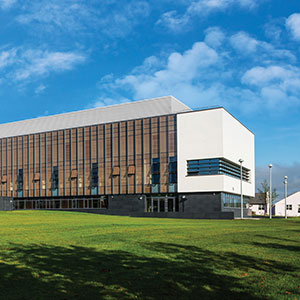
University of Galway has earned international recognition as a research-led university with a commitment to top quality teaching across a range of key areas of expertise.
-
Research & Innovation

Research & Innovation
University of Galway’s vibrant research community take on some of the most pressing challenges of our times.
-
Business & Industry
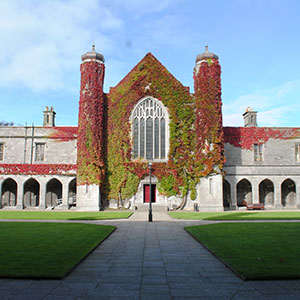
Guiding Breakthrough Research at University of Galway
We explore and facilitate commercial opportunities for the research community at University of Galway, as well as facilitating industry partnership.
-
Alumni & Friends

Alumni & Friends
There are 128,000 University of Galway alumni worldwide. Stay connected to your alumni community! Join our social networks and update your details online.
-
Community Engagement
Community Engagement
At University of Galway, we believe that the best learning takes place when you apply what you learn in a real world context. That's why many of our courses include work placements or community projects.
 Accessibility & Language
BTIS
Relationship between bending, tension and other properties of Irish spruce (BTIS)
Start Date
01/09/2023
End Date
31/08/2024
Funder
Department of Agriculture, Food and the Marine
Principal Investigator
Dr Patrick McGetrick
Partners
Edinburgh Napier University, UK; Microtec, Italy
Researchers
Dr David Gil-Moreno (Post-doc); Roohollah Mohammadi Pirooz (Researcher)
Objective: The majority of timber in Europe is graded in bending. The use of timber in applications subjected to tension loads is becoming more important, for example in glulam applications. In the absence of tension strength grades, it is possible to estimate tension strength values for softwoods in Europe from bending strength grades using the equation in the European standard EN 384. This project will investigate the relationship between the bending and tension properties of Irish-grown spruce. Boards of two nominal cross-sections will be sampled from Irish sawmills and paired to create groups of similar quality, so that one board can be tested in tension and the other in bending. The results will propose a new equation for presentation to CEN/TC124/WG2 with the aim of revising the current equation in EN 384.
InFutUReWood
Innovative Design for the Future - Use and Reuse of Wood (Building) Components (InFutUReWood)
Start Date
01/03/2019
End Date
28/02/2022
Funder
Forestry Department of the Department of Agriculture, Food and Marine; EU H2020 Forest Value ERA-NET
Principal Investigator
Prof. Annette Harte
Project Partners
Research Institutes of Sweden RISE (SE), Edinburgh Napier University (UK), Technical University of Munich (DE), Aalto University (FI), University College Dublin (IE), University of Ljubljana (SI), Technical University of Madrid (ES).
Researchers
Dr Caitríona Uí Chúláin (Post-doc); Dr Daniel F. Llana
Website
Objective: The objectives of the project are:
- To develop a method for ensuring future possibility of circulation of timber products with true consideration of the whole life-cycle, and practical industry issues at design, construction and deconstruction phases.
- To plan primary design to facilitate deconstruction rather than demolition, and to pay attention to the use of chemical treatments, adhesives and other synthetic materials, including deciding whether their use is technically necessary and avoiding over-specification.
- To optimise the primary design to enhance resource efficiency as well as reduce environmental impacts along the life cycle.
- To allow grading for quality of recovered wood, and similarly variable new wood from more diverse sources, in a way that is compatible and equivalent to grading of new timber from main commercial species.
- To identify potential new construction products using recovered timber.
- To examine the business, economic and environmental factors over the life-cycle to inform what is to be optimized, encouraged and avoided in design.
- To inform current engineers, architects and wood-based construction product manufacturers through professional development, industry bodies, codes and standards.
AFTB
Towards Adhesive Free Timber Buildings (AFTB)
Start Date
01/01/2017
End Date
31/03/2020
Funder
EU H2020 Interreg North-West Europe
Principal Investigator
Prof. Annette Harte
Project Partners
Dr Z. Guan (University of Liverpool), Dr M. Oudjene (Université de Lorraine), Dr S. Namari (Technische Universitat Dresden), Dr S. Belouettar (Luxembourg Institute of Science and Technology), F. Deneufbourg (Office Économique Wallon du Bois)
Researchers
Sameer Mehra (PhD); Fatemeh Hamid-Lakzaeian (Post-doc); Dr Conan O’Ceallaigh (Post-doc)
Website
Objective: The research consortium will cooperate to demonstrate new adhesive-free engineered wood products using new technology, encouraging and enabling market uptake across North West Europe. The adhesive-free products will be reusable and recyclable, and the new technology based on densified wood dowels will contribute to sustainable forest management and connected rural livelihoods by adding value to locally available low-quality timber.
EARTH
Exploitation and Realisation of Thinnings from Hardwoods (EARTH)
Start Date
01/03/2017
End Date
30/04/2019
Funder
DAFM
Principal Investigator
Prof. Annette Harte
Research Partner
Dr Ian Short (Teagasc)
Researcher
Dr Daniel Fernández Llana (Post-doc)
Website
Objective: This project aims to investigate novel and potential added-value uses of Irish hardwood thinnings. This will be achieved by undertaking a study of the current status of the resource to quantify the available dimensions from first and second thinnings. The physical and structural properties of the material will be determined through experimental testing. A drying and durability study will be carried out. Based on the information arising out of these investigations, potential end-uses of the material will be identified, both in roundwood form and as engineered wood products, in addition to wood energy products.
BENCHVALUE
Benchmarking the sustainability performances of value chains (BENCHVALUE)
Start Date
01/12/2016
End Date
30/11/2019
Funders
EU FP7 Sumforest ERA-NET; DAFM
Principal Investigators
Dr Jamie Goggins; Prof. Annette Harte
Research Partners
EFI-European Forest Institute (FI), BOKU (AT), EFIAtlantic (FR), FCBA (FR), UL (IE), LAMMC (LT), St Petersburg State Forest Technical University (RU), IVL (SE), University of Limoges (FR)
Objective: BenchValue addresses the limited availability of comprehensive sustainability assessments for renewable raw material value chains. The project will expand the Tool for Sustainability Impact Assessment with a method for benchmarking wood material value chains against mineral and non-renewable value chains. A gap analysis will identify discrepancies in sustainability assessment methods and frameworks, and the benchmarking method will be tested in five case studies.
CICLT
Commercialisation of Irish Cross-Laminated Timber (CICLT)
Start Date
01/01/2017
End Date
31/12/2017
Funder
DAFM
Principal Investigator
Prof. Annette Harte
Researcher
Dr Conan O’Ceallaigh (Post-doc)
Summary: In recent times there has been an increased demand for the use of sustainable construction materials to meet environmental targets related to energy use and emissions. One of the most promising construction materials meeting these targets is cross-laminated timber (CLT). The project ‘Innovation in Irish Timber Usage’ confirmed that there is potential in using Irish Sitka spruce for CLT manufacture, presenting new opportunities for Irish timber in the home and export markets. A niche product with strong commercialisation potential, a CLT modular floor system, was identified. This project further developed this product for market launch. Further verification of mechanical performance was carried out, and suitable metallic connectors were investigated when used in combination with Irish-made CLT flooring systems.
FASTFORESTS
Impacts of faster growing forest on raw material properties with consideration of the potential effects of a changing climate on species choice (FASTFORESTS)
Start Date
01/06/2014
End Date
31/05/2017
Funder
EU FP7 WoodWisdom ERA-NET; DAFM
Principal Investigator
Prof. Annette Harte
Project Partners
Dr C. O’Reilly (UCD), Prof M. Nieuwenhuis (UCD), Dr A. Ní Dhubhain (UCD), Dr F. Bruechert (FVA, DE), G. Prévost (Abibois, FR), Dr J.-D. Lanvin (FCBA, FR), Dr J. Moreau (ESB, FR)
Industrial Collaborator
ECC Sawmills
Researcher
Karlo Simic (PhD)
Objectives: This collaborative project between Ireland, France and Germany aims to:
- Use modelling approaches to present options for ensuring the quantity of future wood supply from forests under changing climate conditions.
- Develop new approaches for allocation of raw material to end products, increasing production efficiency and reducing waste.
- Identify means to improve social acceptance of intensively managed forests.
ITT
An in-situ assessment of heat loss through thermal bridging by means of infrared thermography technique (ITT)
Start Date
15/11/2011
End Date
30/06/2017
Funder
University of Galway, Enterprise Ireland Innovation Voucher IV-2014-4203
Principal Investigator
Prof. Annette Harte
Research Collaborator
Dr Agnieszka Lechowska (Cracow University of Technology, Poland)
Industrial Collaborator
SIP Energy
Researcher
Gosia O’Grady (PhD)
Objective: This project was established to:
- Develop a measurement method that allows the heat flow rate through a thermal bridge in an external building envelope and its Ψ-value to be quantified by means of infrared thermography technique.
- Apply the methodology to indoor conditions for single and multiple thermal bridges.
- Adapt the methodology to outdoor conditions and investigate the influence of different wind velocities on the assessment of heat loss through thermal bridges using ITT.
IITU
Innovation in Irish Timber Usage (IITU)
Start Date
01/01/2013
End Date
31/07/2016
Funder
DAFM (10 C 207)
Principal Investigator
Prof. Annette Harte
Project Partner
Dr D. McPolin (QUB)
Industrial Collaborator
SIP Energy
Researchers
Dr Karol Sikora (Post-doc NUIG), Conan O’Ceallaigh (PhD NUIG), Caoimhe O’Neill (PhD QUB)
Website
Summary: To increase the utilisation of Irish timber in construction, research was carried out to establish the mechanical and physical properties of the current forest output. It was found that the mechanical and physical properties of Irish Sitka spruce have not changed significantly over the last 25 years, and MOE was found to be the limiting factor for strength classification. Novel engineered wood products suitable for Irish timber were developed, with two key areas addressed: fibre-reinforced polymer reinforced timber and cross-laminated timber (CLT). The viability of glued-in basalt fibre reinforced polymer rods as reinforcement for timber beams and connections was established. The potential use of Irish Sitka spruce in CLT production was also investigated, and a niche product for commercialisation, a CLT modular floor system, was identified.
Other Research Projects
The influence of silvicultural practices on mechanical properties of Irish timber
Start Date
01/10/2015
End Date
01/10/2019
Funders
Teagasc, DAFM
Principal Investigator
Prof. Annette Harte
Research Partner
Dr N. Farrelly (Teagasc)
Researcher
Luka Krajnc (PhD)
Objective: Forest management practices are currently based on optimising production volume rather than structural quality. Researchers at Teagasc have undertaken studies to determine the influence of various thinning practices on the growth and development of the forest crop. However, there are no comprehensive studies on the effect of silvicultural practices on the structural performance of Irish-grown timber. This study will endeavour to correlate the structural properties with different thinning systems across different tree species in order to optimise silvicultural practices that will allow, in future, an increase in yields of timber grown for construction purposes.
The influence of the fixing system configuration on the serviceability response of cross laminated timber floors
Start Date
01/10/2014
End Date
31/10/2018
Funder
University of Galway – College of Engineering and Informatics
Principal Investigator
Prof. Annette Harte
Industrial Collaborators
KLH, Rothoblaas, Enterprise Ireland
Researcher
Caitríona Uí Chúláin (PhD)
Objective: The objective of the research is to characterise the boundary conditions imposed on timber floor systems due to the fixing configurations, and to determine their influence on the deflection and vibration behaviour of the floor.
Prestressing of timber beams using FRP
Start Date
01/10/2012
End Date
01/10/2017
Funder
IRC
Principal Investigator
Prof. Annette Harte
Researcher
James Brady (PhD)
Objective: To develop a method of prestressing timber glulam beams manufactured from Irish Sitka spruce and demonstrate the enhanced stiffness and strength of such beams.
Quantifying the environmental impacts associated with the production of wood products from Irish forests
Start Date
01/01/2012
End Date
31/12/2016
Funder
IRC/Coillte; University of Galway
Principal Investigator
Prof. Annette Harte
Researcher
Desmond Dolan (PhD)
Summary: This research involved a detailed investigation into the total environmental impacts associated with the production of forestry and construction wood products using Life Cycle Assessment (LCA), a process-based environmental assessment methodology. A national energy-based Input-Output LCA tool was also developed to quantify the environmental effects of products or services from a given industry based on economic value. Using a hybrid of these approaches, the total environmental impacts of forestry and wood-based products were quantified. The comparative environmental advantages of sustainably harvested wood construction products were then assessed by examining existing and planned structures over their whole life cycle.