-
Courses

Courses
Choosing a course is one of the most important decisions you'll ever make! View our courses and see what our students and lecturers have to say about the courses you are interested in at the links below.
-
University Life

University Life
Each year more than 4,000 choose University of Galway as their University of choice. Find out what life at University of Galway is all about here.
-
About University of Galway
About University of Galway
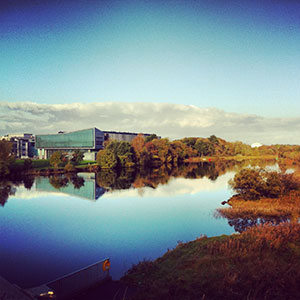
Since 1845, University of Galway has been sharing the highest quality teaching and research with Ireland and the world. Find out what makes our University so special – from our distinguished history to the latest news and campus developments.
-
Colleges & Schools
Colleges & Schools
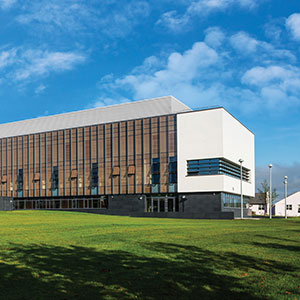
University of Galway has earned international recognition as a research-led university with a commitment to top quality teaching across a range of key areas of expertise.
-
Research & Innovation

Research & Innovation
University of Galway’s vibrant research community take on some of the most pressing challenges of our times.
-
Business & Industry
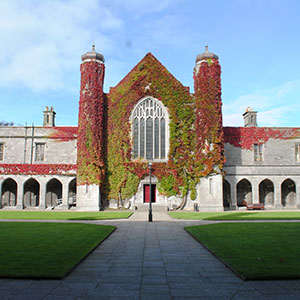
Guiding Breakthrough Research at University of Galway
We explore and facilitate commercial opportunities for the research community at University of Galway, as well as facilitating industry partnership.
-
Alumni & Friends
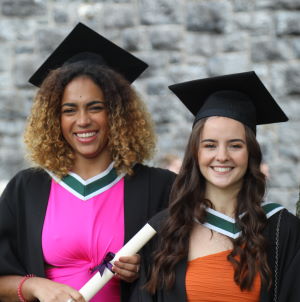
Alumni & Friends
There are 128,000 University of Galway alumni worldwide. Stay connected to your alumni community! Join our social networks and update your details online.
-
Community Engagement
Community Engagement
At University of Galway, we believe that the best learning takes place when you apply what you learn in a real world context. That's why many of our courses include work placements or community projects.
 Accessibility & Language
Engineering Management (MSc)


MSc (Engineering Management)
College of Science and Engineering- Title of Award
- Master of Science
- Course Code
- 1MSEM1
- Delivery
- On Campus
- NFQ
- Level 9
- Award Type
- Major
- Duration
- 1 year, full-time
- ECTS Weighting
- 90
Why Choose This Course?
Course Information
Who is this course for?
The MSc in Engineering Management is designed for Science, Technology, Engineering & Mathematics (STEM) graduates who hold a 2.1 honours degree, or equivalent, and want to develop the skills and mindset to lead in technology-driven industries. Whether you are a recent graduate seeking a career in high-tech organisations, a professional looking to pivot into engineering management, or someone aiming to gain a competitive edge in operations, technology, and project leadership, this programme provides the expertise you need to succeed.
We welcome applicants with strong analytical and problem-solving abilities, a curiosity for technology and business, and a desire to work at the intersection of technology and management. It is particularly suited to those aiming for careers in manufacturing, technology, healthcare, consultancy, or etrepreneurial ventures, as well as those considering further research in technology management.
With a curriculum focused on real-world projects, industry collaboration, and practical applications, the MSc in Engineering Management equips you with the knowledge, leadership skills, and transferable competencies to thrive in complex, fast-paced, and multidisciplinary work environments.
What will I study?
The MSc in Engineering Management is a 12-month, full-time programme worth 90 ECTS credits. It blends core modules in engineering management with a choice of specialist and advanced topics, allowing you to tailor your learning to your career goals.
You will complete:
Core modules: These cover essential skills in project management, lean systems, quality systems and research methods.
Elective modules: Choose from a wide range of options, including technology innovation and entrepreneurship, sustainability measurement and management, business analytics, and programming, to shape your own learning pathway.
Research thesis (30 ECTS): Undertake a substantial, independent project tackling a real-world industrial challenge, often in collaboration with industry partners. You will deepen your technical expertise, apply advanced research methods, and produce a professional report with practical recommendations.
Sample modules include:
Project management: Learn how to frame and define engineering problems, identify sources of value, and manage projects to deliver meaningful outcomes for organisations and stakeholders across the project lifecycle.
Lean systems: Explore lean principles and methods for improving efficiency and value creation by identifying waste and optimising engineering and organisational processes.
Quality systems: Learn how to design, implement, and continuously improve quality management systems that enhance performance, reliability, and competitive advantage.
Research methods for Engineers: Develop the skills to design and conduct rigorous research, including problem formulation, data collection, analysis, and communication of findings in engineering and management contexts.
Operations research: Learn how to use mathematical models and optimisation techniques to support effective decision-making in engineering and business environments.
Technology innovation & entrepreneurship: Explore how to use user-centred techniques to design and develop solutions, and develop the skills to lead innovation initiatives.
Sustainability measurement: Introduction to lifecycle management: Understand how lifecycle thinking is used to measure and improve the environmental and social impacts of products and systems.
Applied statistics: Develop practical statistical skills to analyse data, quantify uncertainty, and support evidence-based engineering and management decisions.
Green lab principles & practice: Learn how laboratories and research environments can operate more sustainably through efficient resource use and improved practices.
Advanced energy systems engineering: Examine modern energy systems, including renewable technologies, storage, and integration, with a focus on low-carbon transitions.
Fundamentals of python programming: Gain a practical introduction to Python for problem-solving, automation, and data analysis in engineering contexts
Societal impact of AI and cybersecurity: Explore the ethical, social, and governance challenges of artificial intelligence and cybersecurity in modern organisations.
Systems modelling and simulation: Learn how to model and simulate complex systems to analyse performance and support informed decision-making.
Machine learning and artificial intelligence for engineering applications: Apply machine learning and AI techniques to real-world engineering problems, focusing on practical implementation and evaluation.
Information systems management: Understand how information systems support organisational strategy, operations, and innovation, and how they are effectively managed.
Business modelling & analytics: Use quantitative models and data analytics to evaluate business scenarios and support strategic decision-making.
Quality systems: Learn how to design and improve quality management systems that enhance performance, reliability, and competitive advantage.
Artificial intelligence: Gain a foundational understanding of artificial intelligence concepts, methods, and applications across engineering and business.
Introduction to sustainability: Deepen your understanding of sustainability concepts and how they are applied within organisations and engineering systems.
Accounting & management control for sustainable organisations: Learn how financial and management accounting information supports planning, control, and sustainable organisational performance.
Business data communications: Understand the fundamentals of data communication and networking that enable secure and reliable organisational information flows.
Transforming international supply chains for sustainability and the circular economy: Explore how global supply chains can be redesigned to support sustainability, resilience, and circular economy principles.
Accelerating change for global sustainability: Develop the skills to lead and manage organisational and societal change toward global sustainability goals.
Curriculum Information
Curriculum information relates to the current academic year (in most cases).Course and module offerings and details may be subject to change.
Glossary of Terms
- Credits
- You must earn a defined number of credits (aka ECTS) to complete each year of your course. You do this by taking all of its required modules as well as the correct number of optional modules to obtain that year's total number of credits.
- Module
- An examinable portion of a subject or course, for which you attend lectures and/or tutorials and carry out assignments. E.g. Algebra and Calculus could be modules within the subject Mathematics. Each module has a unique module code eg. MA140.
- Subject
- Some courses allow you to choose subjects, where related modules are grouped together. Subjects have their own required number of credits, so you must take all that subject's required modules and may also need to obtain the remainder of the subject's total credits by choosing from its available optional modules.
- Optional
- A module you may choose to study.
- Required
- A module that you must study if you choose this course (or subject).
- Required Core Subject
- A subject you must study because it's integral to that course.
- Semester
- Most courses have 2 semesters (aka terms) per year, so a three-year course will have six semesters in total. For clarity, this page will refer to the first semester of year 2 as 'Semester 3'.
Year 1 (90 Credits)
OptionalIE309: Operations Research - 5 Credits - Semester 1OptionalME432: Technology Innovation & Entrepreneurship - 5 Credits - Semester 1
OptionalMG5155: Sustainability Measurement: Introduction to Life Cycle Management and Assessment - 5 Credits - Semester 1
OptionalST311: Applied Statistics I - 5 Credits - Semester 1
OptionalBI5108: Green Lab Principles and Practice - 5 Credits - Semester 1
OptionalEG5101: Advanced Energy Systems Engineering - 5 Credits - Semester 1
OptionalCT5200: Fundamentals of Python Programming - 5 Credits - Semester 1
OptionalCT5190: Societal impact of AI and Cybersecurity - 5 Credits - Semester 1
OptionalCT561: Systems Modelling and Simulation - 5 Credits - Semester 1
OptionalEE4104: Machine Learning and Artificial Intelligence for Engineering Applications - 5 Credits - Semester 1
OptionalMS807: Information Systems Management - 5 Credits - Semester 1
OptionalMS5107: Business Modelling and Analytics - 5 Credits - Semester 1
RequiredIE591: Thesis (Industrial) - 30 Credits - Semester 1
RequiredME521: Research Methods for Engineers - 5 Credits - Semester 1
RequiredIE446: Project Management - 5 Credits - Semester 1
RequiredIE450: Lean Systems - 5 Credits - Semester 1
OptionalAY5141: Accounting and Management Control for Sustainable Organizations - 5 Credits - Semester 2
OptionalCT421: Artificial Intelligence - 5 Credits - Semester 2
OptionalST312: Applied Statistics II - 5 Credits - Semester 2
OptionalBSS2104: Introduction to Sustainability 2 - 5 Credits - Semester 2
OptionalMS803: Business Data Communications - 5 Credits - Semester 2
OptionalMG5151: Transforming International Supply Chains for Sustainability and Circular Economy - 5 Credits - Semester 2
OptionalMG5153: Accelerating Change for Global Sustainability - 5 Credits - Semester 2
RequiredME353: Quality Systems - 5 Credits - Semester 2
Industry-driven design
Created with leading employers to ensure you graduate with skills in demand now and in the future. Learn from guest speakers and work on real-world industry projects.
Multidisciplinary approach
Blend engineering, technology, and business to gain a versatile skill set. Open to graduates from multiple disciplines who want to thrive in technology-driven industries.
Learning by doing
Go beyond the classroom with practical assignments and creative problem-solving tools that tackle real-world challenges.
Proven career success
Join a network of graduates working in top global companies such as Apple, Medtronic, Jaguar Land Rover, IBM, Accenture, and Stryker, in roles from Operations Manager to Innovation Consultant.
Entrepreneurial & innovative mindset
Develop the vision, adaptability, and leadership skills to innovate and succeed in fast-changing industries.
Sustainable outlook
Align your learning with the UN Sustainable Development Goals and prepare to lead in a global, responsible, and future-focused way.
The MSc in Engineering Management prepares graduates for leadership and specialist roles at the intersection of engineering, technology, and management. Graduates are equipped to address complex organisational challenges, support innovation, and contribute to the effective delivery of engineering initiatives in global contexts.
Launch your career with impact
Graduates commonly progress into roles such as:
- Project and Operations Managers focused on performance improvement and transformation
- Product and Process Managers supporting the development and delivery of new solutions
- Quality and Systems Analysts responsible for operational effectiveness and compliance
- Innovation Consultants and Entrepreneurs engaged in new venture development and organisational change
Work with leading global organisations
Students benefit from strong links with leading international organisations. Alumni work in roles across companies such as Apple, Medtronic, IBM, Accenture, Stryker, Jaguar Land Rover, Boston Scientific, and Kerry Group, contributing to complex engineering and management projects early in their careers.
A global, versatile career path
Graduates pursue careers across a wide range of sectors, including advanced manufacturing, healthcare, finance, software, and consulting. The programme supports progression into technical leadership and management roles, as well as entrepreneurial pathways.
Why the MSc in Engineering Management gives you an edge
The programme combines academic rigour with practical experience and industry engagement. Through applied projects and exposure to real-world challenges, graduates develop the capabilities needed to lead engineering initiatives, manage innovation, and contribute effectively in complex organisational environments.
How will I learn?
The MSc in Engineering Management combines applied, problem-based learning with a strong theoretical foundation. Teaching is designed to support the development of analytical, managerial, and professional skills relevant to contemporary engineering organisations.
Learning approaches include:
Project-based learning: Work on real-world engineering and management problems, both individually and in multidisciplinary teams, to apply theory in practice.
Industry engagement: Learn from industry practitioners through guest lectures, company interactions, and applied projects informed by current practice.
Active learning methods: Use case studies, simulations, and interactive exercises to analyse complex systems and decision-making scenarios.
Flexible curriculum: Select modules that align with individual interests and career objectives, allowing for focused skill development.
Research-informed teaching: Develop critical thinking and analytical capabilities through applied assignments and a research thesis or capstone project.
This blended approach supports the development of technical expertise, management capability, and professional judgement required to contribute effectively in engineering and technology-driven organisations.
How Will I Be Assessed?
Assessment on the MSc in Engineering Management is designed to mirror the real-world challenges you will face in your career, combining rigorous academic standards with practical application. You will be evaluated through a variety of methods that encourage critical thinking, problem-solving, and applied learning.
Key assessment methods include:
Practical projects & case studies: Work on real-world problems individually and in teams, simulating industry challenges.
Examinations: Assess your understanding of core theory and its application in complex scenarios.
Continuous assessment & presentations: Regular assignments, reports, and presentations to develop communication, collaboration, and professional skills.
Research thesis: Undertake an independent, industry-relevant research project that develops analytical, project management, and reporting skills.
The MSc in Engineering Management is underpinned by a strong tradition of award-winning research excellence in engineering systems, innovation management, quality, and organisational performance. The programme draws on internationally recognised research that advances knowledge in areas such as enterprise systems design, innovation processes, operational excellence, Lean and quality management, and the integration of emerging technologies in complex organisational settings.
This research is characterised by high-impact publications, competitive international funding, and sustained collaboration with industry. Its outcomes have informed policy, improved organisational practice, and contributed to the development of resilient, innovative, and sustainable engineering systems. As a result, students benefit from research-led teaching that is both academically rigorous and closely aligned with real-world challenges, ensuring the programme remains current, relevant, and impactful.
Course queries:
kathryn.cormican@universityofgalway.ie
Programme Director(s):
Prof. Kathryn Cormican
School of Engineering
University of Galway recognises that knowledge and skills can be acquired from a range of learning experiences. This is in line with the National Framework of Qualifications (NFQ) goals, which aim to recognise all learning achievements by supporting the development of alternative pathways to qualifications (or awards) and by facilitating the recognition of prior learning (RPL).
The MSc in Engineering Management is designed to equip you with highly valued transferable skills that apply across industries and roles. Beyond technical knowledge, you will develop:
Leadership & teamwork: Lead multidisciplinary teams and collaborate effectively in diverse environments.
Problem-solving & critical thinking: Analyse complex challenges, make informed decisions, and implement innovative solutions.
Communication & influence: Present ideas clearly, negotiate effectively, and engage stakeholders at all levels.
Project & time management: Plan, prioritise, and deliver results on real-world projects under tight deadlines.
Entrepreneurial & innovation mindset: Identify opportunities, develop creative solutions, and drive change in organisations.
By cultivating these skills, you will not only excel in engineering management roles but also adapt confidently to evolving career paths, whether in industry, consultancy, or entrepreneurship.
Accreditations & Awards



Industry increasingly requires engineers who combine strong technical expertise with management capability. Graduates with this balance are better prepared to deliver complex projects, support innovation, and lead change in multidisciplinary environments. This MSc in Engineering Management aligns well with current and emerging industry needs.
Huaxing Zhao
Senior Project Manager, Apple

Throughout my career at Aerogen, I have progressed from mechanical design engineer through project and programme management to leading the R&D User Experience Department. Through this experience, I’ve seen how combining engineering expertise with management, systems thinking, and stakeholder input drives innovation. This MSc in Engineering Management reflects the skills engineers need today to lead complex projects, innovate responsibly, and translate technical excellence into meaningful impact.
Claire Lillis
R&D Programme Manager, Aerogen

Operational efficiency starts with requirements-led, system-level design, but that alone is not enough. Organisations must be able to deliver innovative, high-quality solutions to market repeatedly and efficiently. Engineering management plays a critical role in ensuring that holistic design quality is prioritised, enabling sustainable innovation rather than short-term delivery.
David Genter
Director Design Engineering, Cummins

We need engineers who not only understand the people–technology–business paradigm, but who can also manage the complex change processes associated with digital transformation. This includes leveraging digital opportunities to streamline organisational processes while effectively managing change from a human resource perspective. Only by addressing enduring and sustainable organisational values can real value be created.
Manon vanLeeuwn
CEO, EOLAS

Today’s engineering landscape demands professionals who understand innovation, systems, and stakeholder dynamics, ensuring that technical solutions lead to sustainable outcomes. As industries face greater complexity and rapid change, there is a growing need for engineering programmes that prepare graduates to integrate technical insight with organisational priorities.
Emer Feerick
Director of Research & Technology, Structural Heart, Medtronic
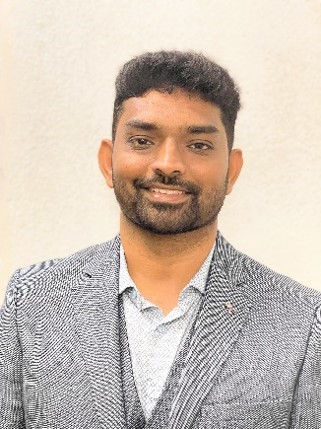
Today’s engineering landscape demands professionals who understand innovation, systems, and stakeholder dynamics, ensuring that technical solutions lead to sustainable outcomes. As industries face greater complexity and rapid change, there is a growing need for engineering programmes that prepare graduates to integrate technical insight with organisational priorities.
Periakaruppan Annamalai
Senior Engineer & Engineering Service Provider: Technical Services Lead, Tobin
Meet our Employers
Entry Requirements and Fees
Minimum Entry Requirements
Candidates must hold at least a Second Class Honours Level 8 primary degree in a related subject area or hold a primary degree in a related area (which is acceptable to the college) without honours and have three years’ relevant practical experience in the subject area.
Academic entry requirements standardised per country are available here.
English Language Entry Requirements
For applicants whose first language is not English, an English language proficiency of IELTS score of 6.5 is required (with no less than 6.5 in Writing and no less than 6.0 in any other band) or equivalent.
More information on English language test equivalency are available here.
Supporting Documents
You will be required to provide supporting documentation as part of your application. You can check here what supporting documents are required for this course.
You can apply online to the University of Galway application portal here.
Please review the entry requirements set out in the section above.
You will be required to upload supporting documentation to your application electronically. See the section above on entry requirements for further information on the supporting documentation required for this course.
Closing Dates
For this programme, there is no specific closing date for receipt of applications. Applications will be accepted on a rolling basis and course quotes will be reviewed continuously throughout the application cycle.
Notes
- You will need an active email account to use the website and you'll be guided through the system, step by step, until you complete the online form.
- Browse the FAQ's section for further guidance.
| Course Type | Year | EU Tuition | Student Contribution | Non-EU Tuition | Levy | Total Fee | Total EU Fee | Total Non-EU Fee |
|---|
Postgraduate Excellence Scholarships
This scholarship is valued at €1,500 for EU students applying for full-time taught master's postgraduate courses. You will be eligible if:
- You have been accepted to a full-time taught master's course at University of Galway,
- You have attained a first class honours (or equivalent) in a Level 8 primary degree.
An application for the scholarship scheme is required (separate to the application for a place on the programme). The application portal for 2026 is now open and available here. Applications will close on the 30th September 2026. Full details available here.
Global Scholarships
University of Galway offers a range of merit-based scholarships to students from a number of countries outside of the EU. Visit here for schemes currently available.
Application Process
Students applying for full time postgraduate programmes from outside of the European Union (EU), You can apply online to the University of Galway application portal here.
Our application portal opens on the 1st October each year for each the following September.
Further Information
Please visit the postgraduate admissions webpage for further information on closing dates, documentation requirements, application fees and the application process.
Why University of Galway?
World renowned research led university nestled in the vibrant heart of Galway city on Ireland's scenic West Coast.
Contact the College of Science and Engineering
University of Galway, University Road, Galway, Ireland, H91 TK33


Downloads
Meet Our Alumni
Course Introduction
Turning knowledge into real-world impact
This course aims to produce engineering managers who can translate engineering solutions into operational and commercial success. Students gain the analytical, managerial, and leadership skills required to improve processes, optimise systems, manage risk, and lead projects in dynamic industrial environments. The programme develops the ability to align people, processes, and technology, enabling graduates to tackle complex challenges and deliver sustainable, high-quality engineering outcomes.
This programme will not run in 2026. The first student intake will be in September 2027. If you would like to sign-up for specific programme updates please complete this form