-
Courses
Courses
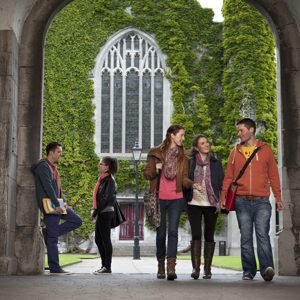
Choosing a course is one of the most important decisions you'll ever make! View our courses and see what our students and lecturers have to say about the courses you are interested in at the links below.
-
University Life

University Life
Each year more than 4,000 choose University of Galway as their University of choice. Find out what life at University of Galway is all about here.
-
About University of Galway
About University of Galway
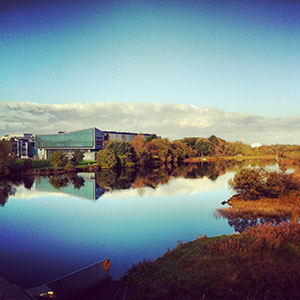
Since 1845, University of Galway has been sharing the highest quality teaching and research with Ireland and the world. Find out what makes our University so special – from our distinguished history to the latest news and campus developments.
-
Colleges & Schools
Colleges & Schools
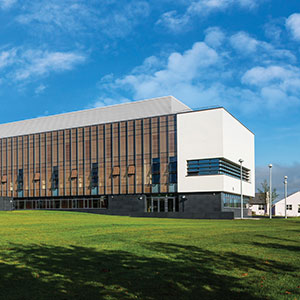
University of Galway has earned international recognition as a research-led university with a commitment to top quality teaching across a range of key areas of expertise.
-
Research & Innovation
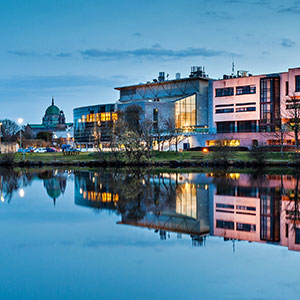
Research & Innovation
University of Galway’s vibrant research community take on some of the most pressing challenges of our times.
-
Business & Industry
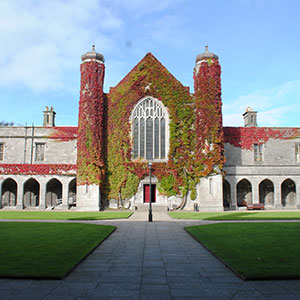
Guiding Breakthrough Research at University of Galway
We explore and facilitate commercial opportunities for the research community at University of Galway, as well as facilitating industry partnership.
-
Alumni & Friends
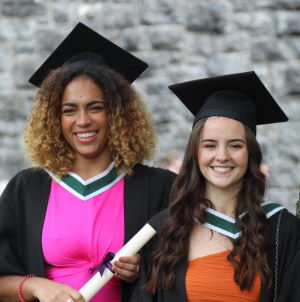
Alumni & Friends
There are 128,000 University of Galway alumni worldwide. Stay connected to your alumni community! Join our social networks and update your details online.
-
Community Engagement
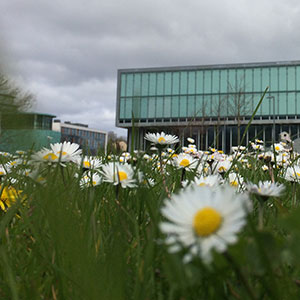
Community Engagement
At University of Galway, we believe that the best learning takes place when you apply what you learn in a real world context. That's why many of our courses include work placements or community projects.
 Accessibility & Language
Speaker Overivew
IHDI Member Event - Speakers
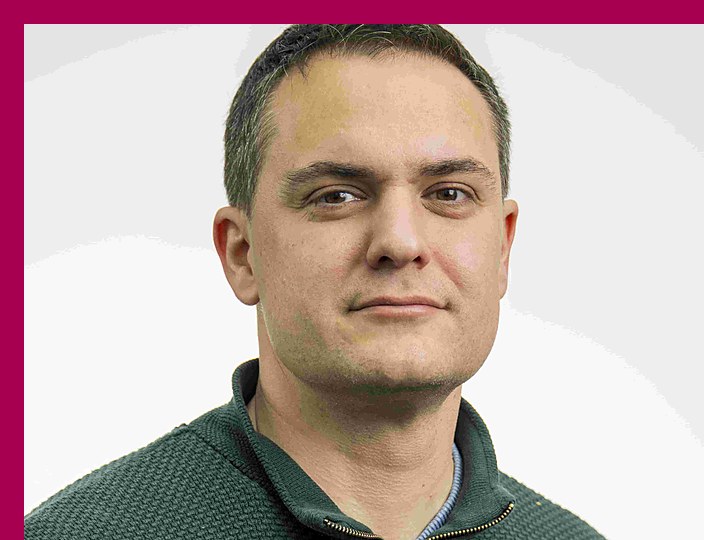
Dr Mihailo Mirkovic is a Senior Lecturer at the University of Galway’s Centre for Chromosome Biology, where he leads a research programme investigating how chromosome instability enables fungi to adapt to stressful environments. His work explores how errors arising during cell division can generate changes in chromosome number, known as aneuploidy, and how these changes can sometimes provide fungi with an advantage when exposed to stresses such as elevated temperatures or antifungal treatments.
Mihailo’s research examines the links between cellular stress, RNA processing and chromosome instability, and how these processes contribute to adaptation and antifungal resistance. Using model fungi including Saccharomyces cerevisiae and Candida albicans, his group combines approaches such as microscopy, genome editing, yeast genetics and genome-wide screens to identify the biological mechanisms that drive chromosome instability under stress.
His research programme at University of Galway is supported by a Wellcome Trust Career Development Award and seeks to improve understanding of chromosome segregation, fungal genomics and the mechanisms through which microbes evolve resistance to antifungal drugs. His group is based within the Centre for Chromosome Biology, which forms part of the University’s Institute for Health Discovery and Innovation.
Originally from Montenegro, Mihailo studied molecular biology and physiology at the University of Belgrade before completing his PhD at the Instituto Gulbenkian de Ciência in Portugal under the supervision of Dr Raquel Oliveira. He subsequently carried out postdoctoral research in Yves Barral’s laboratory at ETH Zurich in Switzerland before establishing his research group at University of Galway.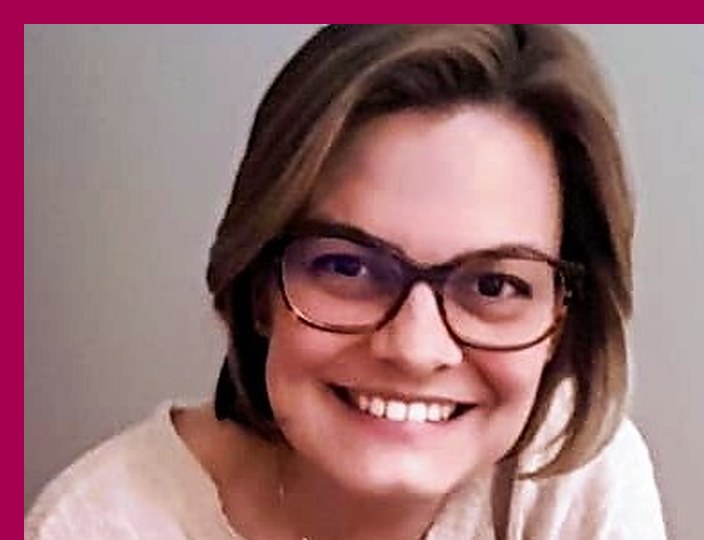
Dr Catalina Vallejo-Giraldo is an Associate Professor at the University of Galway, with a joint appointment in Biomedical Engineering in the School of Engineering and Advanced Therapies in the School of Medicine. She leads the CVG Lab, where her research sits at the intersection of biomaterials, brain mechanobiology and medicine, exploring how physical and spatial cues influence the behaviour and communication of cells in the brain.
Catalina and her team are particularly interested in how factors such as geometry, space and mechanical forces affect brain cells and how this understanding can inform the design of new biomaterials and therapeutic approaches. Her research encompasses areas including astrocytes and microglia, brain tumours, gliosis, cell-cell interactions and the development of advanced 3D models such as organoids and assembloids. Her multidisciplinary team brings together researchers from engineering, biology and physics to better understand the mechanisms underlying brain health and disease.
One strand of Catalina’s research focuses on glioblastoma, an aggressive form of brain cancer. Supported by a European Research Council Starting Grant, her TrapKill project is developing a biomaterial platform designed to physically trap and compress residual cancer cells following tumour removal, with the aim of making those cells more susceptible to chemotherapy and radiation.
Her work also extends to neural interfaces and medical devices. Recent collaborative research has investigated biomaterial coatings for deep-brain-stimulation electrodes, with the aim of reducing inflammation and scarring around implanted devices and improving their long-term performance.
Originally from Medellin, Colombia, Catalina came to the University of Galway in 2013 to undertake her PhD before spending five years in the UK and returning to Galway in 2022. Her international experience spans academia, industry and clinical environments, including Imperial College London, Cardiff University, Neurent Medical and Mayo Clinic.
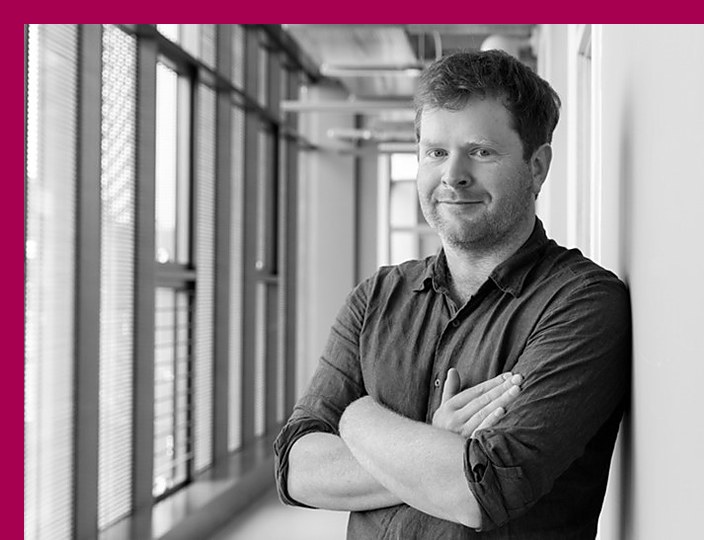
Dr Andy Daly is an Associate Professor in Biomedical Engineering at the University of Galway and a Funded Investigator at Rinn Medical Devices. He leads the Biofabrication research group, a multidisciplinary team developing advanced approaches to 3D bioprinting human tissues and organ models, with a particular focus on the heart.
Andy’s research explores how biofabrication can recreate the complex structure and function of human tissues. Rather than attempting to print a fully formed heart directly, his group takes inspiration from how the heart develops naturally in the embryo. The team bioprints simplified heart structures and uses bioengineering approaches to guide them through shape changes that mimic aspects of the heart's natural development. This work is supported by a European Research Council Starting Grant focused on bioprinting models of heart organ morphogenesis.
Alongside this work, Andy’s group is combining artificial intelligence, computer vision and bioprinting to improve the precision and reliability of the technology. The team has developed a bioprinting system that uses cameras and machine-learning algorithms to monitor printing in real time, detecting and correcting errors during the process. His group is also working on organ-on-a-chip platforms through projects supported by Rinn.
Andy completed his undergraduate studies and PhD in Mechanical and Biomedical Engineering at Trinity College Dublin before undertaking postdoctoral research at the University of Pennsylvania, where his work moved towards biomaterials engineering and bioprinting heart tissues. He returned to Ireland in 2021 to establish his independent research group at the University of Galway.
His research brings together biomedical engineering, biomaterials, computer science, biotechnology and stem cell biology, reflecting the highly multidisciplinary approach needed to address the challenge of creating functional human tissue models.
More Speakers Coming Soon