-
Courses
Courses
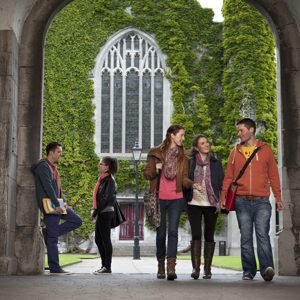
Choosing a course is one of the most important decisions you'll ever make! View our courses and see what our students and lecturers have to say about the courses you are interested in at the links below.
-
University Life

University Life
Each year more than 4,000 choose University of Galway as their University of choice. Find out what life at University of Galway is all about here.
-
About University of Galway
About University of Galway
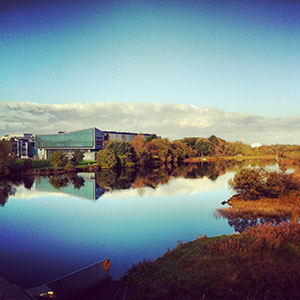
Since 1845, University of Galway has been sharing the highest quality teaching and research with Ireland and the world. Find out what makes our University so special – from our distinguished history to the latest news and campus developments.
-
Colleges & Schools
Colleges & Schools
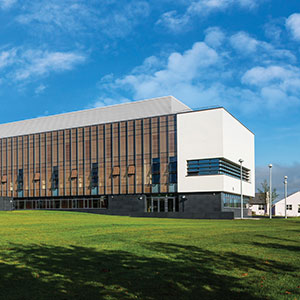
University of Galway has earned international recognition as a research-led university with a commitment to top quality teaching across a range of key areas of expertise.
-
Research & Innovation
Research & Innovation
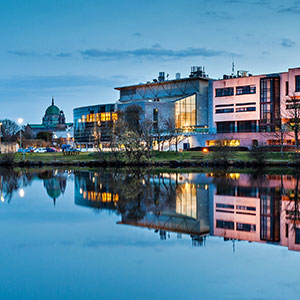
University of Galway’s vibrant research community take on some of the most pressing challenges of our times.
-
Business & Industry
Guiding Breakthrough Research at University of Galway
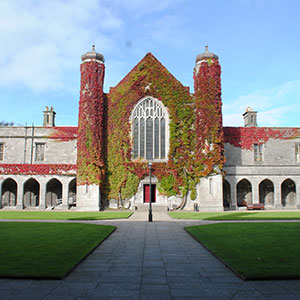
We explore and facilitate commercial opportunities for the research community at University of Galway, as well as facilitating industry partnership.
-
Alumni & Friends

Alumni & Friends
There are 128,000 University of Galway alumni worldwide. Stay connected to your alumni community! Join our social networks and update your details online.
-
Community Engagement
Community Engagement
At University of Galway, we believe that the best learning takes place when you apply what you learn in a real world context. That's why many of our courses include work placements or community projects.
 Accessibility & Language
Green Lab Principles and Practice
Duration
10 weeks
Next start date
January 2027
NFQ
Level 9
ECTS
10 Credits
Mode of Study
Online
Apply By
Dec 7, 2026, 5PM
Fee
€1450
Overview
This module aims to provide a general overview of key environmental concepts such as climate change, plastic pollution, principles of sustainability, sustainable development goals, and biodiversity. It will briefly explore how perspectives from psychology, sociology, communication, circular and doughnut economy, and the study of ethics and governance provide us with insights into how perception and behaviour influence responses to environmental issues. In addition, the life-cycle of materials, and the environmental impact of the resources and equipment typically used in scientific laboratories will be examined in some detail. These ideas will form the backdrop to a focused study on how the organisation of, and practices in, scientific laboratories can be reformed to reduce their environmental footprint and be established on a more sustainable basis.
Green Lab Course Contributors.pdf
Entry Requirements
Applicants should be over 21 years. This course is designed for graduates of Level 8 degree programmes. Applications can be considered using Recognition of Prior Learning.
What you will Learn
- The earth's climate system and factors influencing climate change.
- Psychological and social influences on your own and others about climate change, biodiversity loss, and other environmental challenges.
- Principles of sustainability and planetary boundaries exceeded.
- Local/regional environment impacted by climate change.
- Relevant government or supranational (eg. E.U.) policies that address climate change, greenhouse gas emissions and loss of biodiversity.
- Chemical formula for different kinds of plastic used in labs and their potential cradle-to-grave impact on the environment.
- Circular and doughnut economy policies and practice.
- Sustainability Development Goals.
Course Outcomes
On successful completion of this micro-credential, you will receive credits as per the European Credit and Transfer System. These credits are recognised by the awarding institution as credits aligned to learning completed at postgraduate level 9.
Learning Outcomes
- Use what you have learned about the key factors influencing the earth’s climate- and eco-systems to list lab-related activities/operations that are contributing to the global climate and biodiversity crisis.
- List the psycho-social barriers to your own and others’ behaviour when it comes to implementing sustainable practices within labs and with these in mind, apply best practices when communicating the need to adopt and expand lab greening policies.
- Express the day-to-day operations of a typical lab in terms of the core principles of sustainability, planetary boundaries and associated metrics.
- List lab plastic resins in terms of their capacity to be recycled or reused and propose ways that the principles of the circular economy and doughnut economic actions could be applied to reduce all types of lab waste.
- Explain how this module aligns with SDGs 11-13 and how you could imagine yourself having a leadership role in assisting compliance with national and international policies that mitigate the negative impacts that lab work has on the environment.
Assessments
- Continuous Assessment (20%)
- Department-based Assessment (50%)
- Research (30%)
Contact
If you have any questions about this course, please contact:
Micro Creds
Email: Micro Creds
How to Apply
From the 1st Oct 2026, you can apply for this micro-credential through our Online Application Portal.
Learn more about our application process.
Apply here: Online Application Portal
_______________________________________________________________________________________________________
Looking to make your laboratory more sustainable? Tune in with Dr Una Fitzgerald about University of Galway's Green Lab: Principles and Practice micro-credential. In this podcast episode, Una discusses the growing importance of sustainability in laboratory environments and explores practical ways researchers and laboratory teams can reduce their environmental impact.
Listen to the podcast and explore how you can start greening your lab today.