-
Courses

Courses
Choosing a course is one of the most important decisions you'll ever make! View our courses and see what our students and lecturers have to say about the courses you are interested in at the links below.
-
University Life

University Life
Each year more than 4,000 choose University of Galway as their University of choice. Find out what life at University of Galway is all about here.
-
About University of Galway
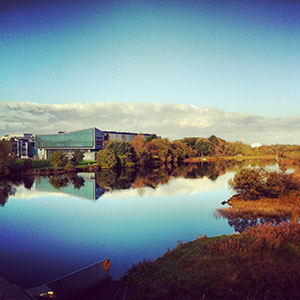
About University of Galway
Since 1845, University of Galway has been sharing the highest quality teaching and research with Ireland and the world. Find out what makes our University so special – from our distinguished history to the latest news and campus developments.
-
Colleges & Schools
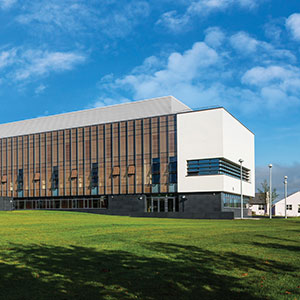
Colleges & Schools
University of Galway has earned international recognition as a research-led university with a commitment to top quality teaching across a range of key areas of expertise.
-
Research & Innovation

Research & Innovation
University of Galway’s vibrant research community take on some of the most pressing challenges of our times.
-
Business & Industry
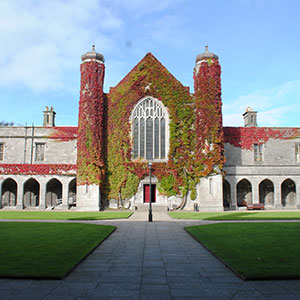
Guiding Breakthrough Research at University of Galway
We explore and facilitate commercial opportunities for the research community at University of Galway, as well as facilitating industry partnership.
-
Alumni & Friends

Alumni & Friends
There are 128,000 University of Galway alumni worldwide. Stay connected to your alumni community! Join our social networks and update your details online.
-
Community Engagement
Community Engagement
At University of Galway, we believe that the best learning takes place when you apply what you learn in a real world context. That's why many of our courses include work placements or community projects.
 Accessibility & Language
Postgraduate Research
School of Political Science and Sociology PhD Handbook
2026/2027
This handbook is a key resource that outlines important information about postgraduate research in the School of Political Science and Sociology, including key contacts, requirements and training.
PhD Opportunities
The School of Political Science and Sociology offers supervision in a wide range of research fields through its two Research Centres and four Research Clusters.
A PhD is a piece of independent research undertaken by an advanced post-graduate student. PhD research aims to develop significantly knowledge and understanding of the chosen topic and to add a new dimension to existing scholarship in the field. A PhD is a major undertaking; prospective students should demonstrate the interest, commitment and ability to advance knowledge in their chosen field.
The Structured PhD
The majority of PhD researchers in SoPSAS are registered on a Structured PhD programme where researchers complete 30 ECTS of structured training, comprising a combination of discipline-specific and transferable skills development, alongside a monograph. Students should discuss training needs and module selection with their supervisor and GRC throughout their programme. You can learn more about the modules available to you here.
Alternative PhD Tracks and Formats
While the vast majority of researchers in the School of Political Science and Sociology follow the standard Structured PhD monograph framework, the university formally accommodates alternative paths to an NFQ Level 10 Doctorate.
If you are considering altering your submission format, or if you are registered under a different track, you must consult your supervisor and the Graduate Research Committee (GRC) early in your registration.
The Article-Based PhD
Rather than a traditional single-volume book thesis, this model permits candidates to submit a unified portfolio of peer-reviewed journal articles or book chapters that are published or accepted for publication during their candidature.
- Format: The thesis incorporates a substantial, multi-chapter comprehensive text (including an integrated literature review, rigorous methodology, and overarching conclusion) alongside the peer-reviewed papers.
- Regulations: The portfolio must demonstrate a distinct, cohesive contribution to knowledge. For institutional policy regarding formatting, co-authorship declarations, and binding, refer to the University Guidelines for Research Degree Programmes.
Prospective researchers who intend to pursue an article-based thesis should normally register for the Structured PhD in the first instance. In consultation with their supervisor and the Graduate Research Committee, they can then plan their research and publication activities to meet the requirements of this format.
Practice-Based PhD
Though primarily utilized by creative arts disciplines within the college, the university supports doctorates that combine a practical or digital portfolio with a reflective critical commentary. Any student seeking to utilize non-traditional visual, digital, or applied methodologies must ensure their proposal satisfies the core academic benchmarks of the discipline.