-
Courses
Courses
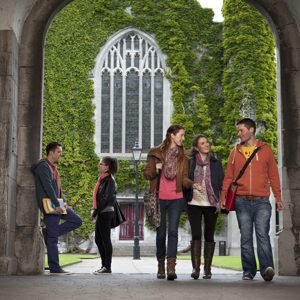
Choosing a course is one of the most important decisions you'll ever make! View our courses and see what our students and lecturers have to say about the courses you are interested in at the links below.
-
University Life

University Life
Each year more than 4,000 choose University of Galway as their University of choice. Find out what life at University of Galway is all about here.
-
About University of Galway
About University of Galway
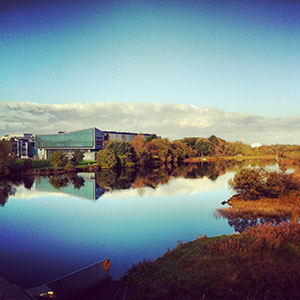
Since 1845, University of Galway has been sharing the highest quality teaching and research with Ireland and the world. Find out what makes our University so special – from our distinguished history to the latest news and campus developments.
-
Colleges & Schools
Colleges & Schools
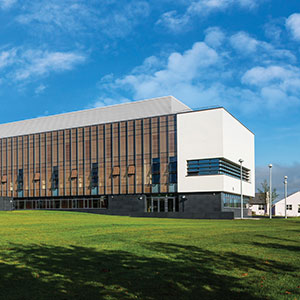
University of Galway has earned international recognition as a research-led university with a commitment to top quality teaching across a range of key areas of expertise.
-
Research & Innovation
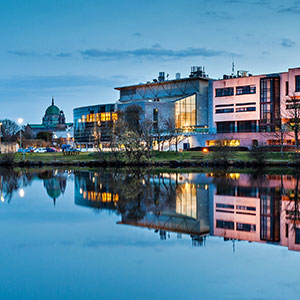
Research & Innovation
University of Galway’s vibrant research community take on some of the most pressing challenges of our times.
-
Business & Industry
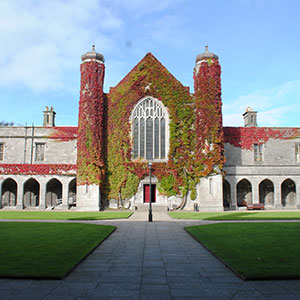
Guiding Breakthrough Research at University of Galway
We explore and facilitate commercial opportunities for the research community at University of Galway, as well as facilitating industry partnership.
-
Alumni & Friends
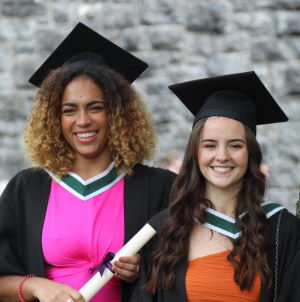
Alumni & Friends
There are 128,000 University of Galway alumni worldwide. Stay connected to your alumni community! Join our social networks and update your details online.
-
Community Engagement
Community Engagement
At University of Galway, we believe that the best learning takes place when you apply what you learn in a real world context. That's why many of our courses include work placements or community projects.
 Accessibility & Language
October Circular farming could help insulate Ireland’s farmers and taxpayers from global shocks
Circular farming could help insulate Ireland’s farmers and taxpayers from global shocks
Tuesday, 20 October 2026
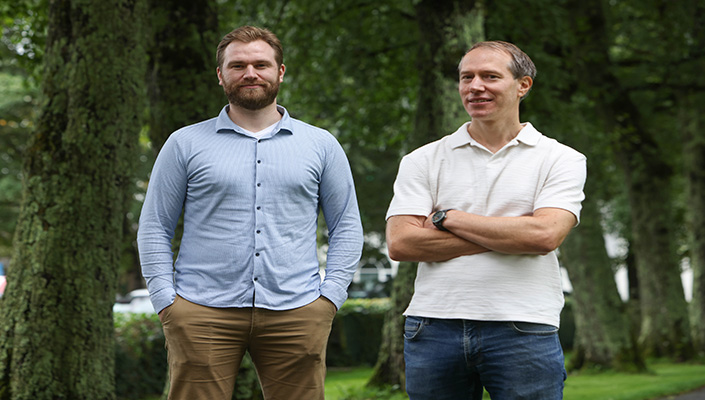
Dr Daniel Henn, School of Biological and Chemical Sciences and Ryan Institute and Professor David Styles, Ryan Institute, University of Galway. Photo: Aengus McMahon
New research from University of Galway shows that transformative changes in farming and land use could mitigate huge risks facing Ireland’s farmers and taxpayers over the coming decades.
The findings underline how current farming practices and land use patterns leave Ireland vulnerable to inevitable global shocks, including climate change impacts and trade disruptions. By making greater use of farm and food by-products, alongside ambitious climate action, circular farming could diversify revenue streams and reduce risk.
The research has been published in two new scientific articles in Nature portfolio journals.
The first study published in npj – Sustainable Agriculture applies alternative solutions to evaluate land use strategies developed as part of Ireland’s Land Use Review Phase 2, a government‑led assessment that examines how Ireland’s land can best meet climate, biodiversity, food production and rural livelihood goals out to 2050.
The second study published in Nature Communications Earth & Environment explored a range of future farming and land use alternatives that achieved climate neutrality by 2050 and embedded high levels of circularity – recycling biological resources to supply animal feed and bioenergy generation.
Both studies illustrate the increasing costs likely to face farmers, taxpayers and consumers if difficult decisions on subsidy reform and land strategy are kicked further down the road. They also provide robust evidence for policy makers and farming stakeholders grappling with difficult decisions on how to balance apparently competing objectives for land.
The research was led by Professor David Styles and Dr Daniel Henn from the Ryan Institute at University of Galway.
Professor David Styles from the Ryan Institute at University of Galway, said: “Business as usual exposes Irish farmers to pollution pricing in a sustainable future, trade barriers in a regional rivalry future, and climate-change-driven productivity losses in a fossil-fuelled-growth future. More diversified farming could help insulate Irish farmers, consumers and taxpayers to this plethora of risks, whilst improving food and energy security and supporting a vibrant agri-food sector less exposed to reputational risk and trade barriers.”
In his research, Professor Styles assessed five possible futures drawn from outlooks used by the global climate and economic research communities. Ambitious climate-neutral bioeconomy and alternative‑protein scenarios include:
- More use of home‑grown peas and pulses
- Refined protein extracted from grass biorefineries
- Low-input multifunctional bioenergy crops such as willow
- High levels of technology adoption
- More diversified land use
These scenarios were found to dramatically reduce emissions while lowering exposure to future risks.
Dr Henn’s alternative research scenarios included dairy specialisation, food production diversification and national food self-sufficiency. Advanced circular animal feed included refined by-products from breweries and other food industries, and insect meal produced from insects fed on food waste.
Novel indicators to evaluate sustainability and resilience considered factors such as import dependency, net human-edible protein production, total land requirement for agriculture and bioenergy generation, alongside greenhouse gas emissions and nutrient losses to water.
Findings showed that circular farming strategies could reduce Ireland’s exposure to future market, regulatory and climate threats - through the substitution of imported feed, food, fertiliser and fossil energy.
Dr Daniel Henn, Postdoctoral Researcher at the Ryan Institute, University of Galway, said: “Increased circular agriculture is more resilient to future volatility. Embedding it within the ambitious land use strategies needed to achieve climate neutrality can create more robust, self-sustaining farming systems that are better able to cope with climate and geopolitical shocks.”
Dr Colm Duffy, Research Fellow at the Ryan Institute, University of Galway, said: “Better use of Ireland’s abundant bioresources could substantially lower import demands. While this creates obvious economic benefits for society as a whole, benefits need to be translated to farmer incomes.”
Both studies underline the pivotal role of diversification, and the need for long-term strategic policymaking that reconciles climate, biodiversity, food security and rural livelihood objectives for farming and downstream bioeconomy sectors, such as timber for construction and advanced biofuels for aviation and shipping.
This research involved partners from Munster Technological University, the Norwegian Institute of Bioeconomy Research (NIBIO) and Fers Ltd. Funding support was from the Department of Climate, Energy and the Environment and the Department of Agriculture Food and the Marine.
The first study published in npj – Sustainable Agriculture can be read here.
The second study published in Nature Communications Earth & Environment can be read here.
Ends
Keywords: Press.
Author: Marketing and Communications , NUI Galway
« Back
Related news
19 October 2026
Four generations of women share a University of Galway connection
19 October 2026
Tús le comhpháirtíocht straitéiseach don chultúr agus don oideachas idir an Ollscoil agus an Músaem
19 October 2026
University and Museum unveil strategic partnership for culture and education
15 October 2026
Ollscoil na Gaillimhe ag ceiliúradh agus beagnach 2,800 duine ag fáil a gcéime ag na searmanais bhronnta
15 October 2026
University of Galway celebrates almost 2,800 graduates at conferring ceremonies
Featured Stories
Tuesday,
20
October
2026
Circular farming could help insulate Ireland’s farmers and taxpayers from global shocks
Monday,
19
October
2026
Four generations of women share a University of Galway connection
Monday,
19
October
2026