-
Courses

Courses
Choosing a course is one of the most important decisions you'll ever make! View our courses and see what our students and lecturers have to say about the courses you are interested in at the links below.
-
University Life

University Life
Each year more than 4,000 choose University of Galway as their University of choice. Find out what life at University of Galway is all about here.
-
About University of Galway

About University of Galway
Since 1845, University of Galway has been sharing the highest quality teaching and research with Ireland and the world. Find out what makes our University so special – from our distinguished history to the latest news and campus developments.
-
Colleges & Schools
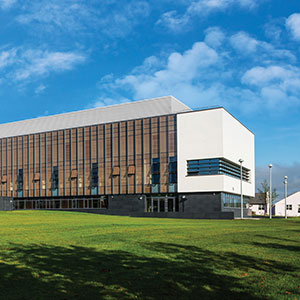
Colleges & Schools
University of Galway has earned international recognition as a research-led university with a commitment to top quality teaching across a range of key areas of expertise.
-
Research & Innovation

Research & Innovation
University of Galway’s vibrant research community take on some of the most pressing challenges of our times.
-
Business & Industry
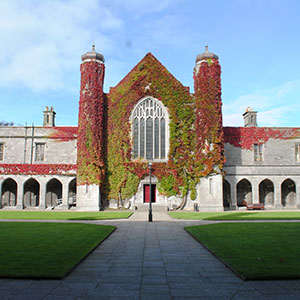
Guiding Breakthrough Research at University of Galway
We explore and facilitate commercial opportunities for the research community at University of Galway, as well as facilitating industry partnership.
-
Alumni & Friends

Alumni & Friends
There are 128,000 University of Galway alumni worldwide. Stay connected to your alumni community! Join our social networks and update your details online.
-
Community Engagement

Community Engagement
At University of Galway, we believe that the best learning takes place when you apply what you learn in a real world context. That's why many of our courses include work placements or community projects.
 Accessibility & Language
May Clinical Research Innovation Day highlights potential for clinical trials
Clinical Research Innovation Day highlights potential for clinical trials
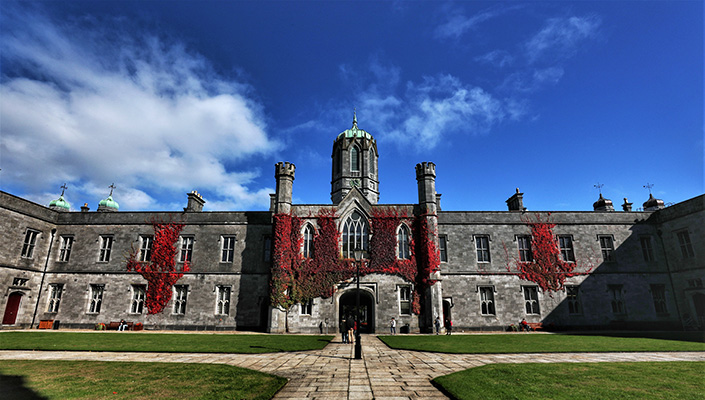
The Quadrangle, University of Galway
May
14
2026
Posted: 11:30 IST
Pilot spearheaded at University of Galway offers blueprint to position Ireland as a global hub for clinical research
University of Galway’s Institute for Clinical Trials has hosted a national clinical research innovation day to examine how Ireland can strengthen its capabilities in clinical trials and enhance its position as a global MedTech hub.
To coincide with the event, the Institute launched a White Paper on the Hypercare initiative – a pilot project which demonstrates a blueprint for dramatically faster regulatory approvals for clinical trials and significant improvements in efficiency.
Hypercare is designed to support and improve Ireland’s capability, predictability, and competitiveness in medical device clinical investigations. The White Paper outlines three different cases which achieved authorisation to go to clinical trial significantly faster than the standard average of 73 days – with one case going from end-to-end regulatory review in half the time.
President of University of Galway, Professor David Burn, said: “The work of the Institute for Clinical Trials at University of Galway is a clear signal about the value of working together with a shared vision and towards a shared goal. The work of the team, our partners in the Health Service Executive, and industry has helped us to create this blueprint to position Ireland as a European and global leader in clinical trials.”
Professor Fidelma Dunne, Director of the Institute for Clinical Trials, said: “The findings from the Hypercare initiative demonstrate that targeted coordination and early engagement can make Ireland a more predictable and attractive environment for clinical research. This has implications not only for innovation, but for regional development and the long-term growth of the sector.”
The national clinical research innovation day, hosted by the University’s Institute for Clinical Trials, was organised in collaboration with the Health Products Regulatory Authority (HPRA), National Office for Research Ethics Committees (NREC), Data Protection Commission (DPC), Health Research Consent Declaration Committee (HRCDC), and the Health Service Executive (HSE). Representatives from regulatory bodies, healthcare services, academia, industry and patient groups attended.
The focus of the one-day event was on practical and regulatory aspects of conducting trials, including sessions on ethics, governance, and data protection.
It featured insights from real-world clinical trial studies, conducted through the Hypercare initiative. Contributions were made by InterVene, an international SME based in the US; Luminate Medical, a University of Galway spin-out; and Medtronic, which has a five-year €5million signature innovation partnership with University of Galway focuses on developing the MedTech ecosystem, STEM engagement and research.
Hypercare enabled the three companies to navigate the complexities of the pathway to authorisation for a clinical trial with different medical devices and investigation strategies.
Findings published in the White Paper include:
- Increasing clinical research activity within hospitals contributes directly to the wider health system, supports job creation and skills development and enables earlier access to new and potentially life-enhancing treatment for patients.
- The single point of contact created in the Hypercare initiative was a key driver of efficiency, removing administrative fragmentation and allowing their teams to focus on clinical execution rather than logistics.
- The Health Protection Regulatory Authority reported that Hypercare significantly improved sponsor readiness and application quality and proactive early engagement helped streamline the process without compromising the rigor required for safety and performance.
- Further scaling and investment in coordinated supports, could see Ireland significantly increase its share of global medical device clinical trials, strengthening both regional economies and national research infrastructure
- Attracting and retaining clinical investigation activity can generate substantial regional economic benefits and further position Ireland as a globally competitive hub for MedTech innovation.
The White Paper can be read in full at https://www.universityofgalway.ie/instituteforclinicaltrials/ tbc
The national clinical research innovation day aimed to support knowledge-sharing and collaboration across the sector, with a particular focus on improving trial readiness, reducing barriers to innovation, and enabling earlier patient access to new treatments.
Professor Tom Melvin, Institute for Clinical Trials at University of Galway, said: “The initiation of a clinical study relies on the coordinated contribution of multiple organisations. The Hypercare pilot demonstrates that complex clinical study pathways can be streamlined for medical technologies. This supports the translation of scientific discoveries into enhanced patient care. This also supports our health service, by providing earlier access to medical technologies designed to address unmet medical need.”
John Kilmartin, Adjunct Professor, Institute for Clinical Trials at University of Galway, said: “I believe that this collaborative partnership stands as a model for academic–industry collaboration, advancing innovation while upholding the highest clinical and regulatory standards. Aligned with the mission of the Institute for Clinical Trials, this project drives excellence, inclusivity, and need-driven research to improve health outcomes for Irish patients. The Hypercare project aims to highlight positive changes in the delivery of clinical research in Ireland, attracting further interest and investment from MedTech stakeholders nationally and internationally."
Professor Donal Reddan, Director of Research, HSE West and North-West Region, said: “The Hypercare initiative clearly demonstrates how a coordinated approach across regulators, ethics committees clinical site teams and the wider public health system can significantly accelerate the opening of clinical studies. By enabling early engagement, parallel processes and a single point of coordination, it is helping to reduce study start-up timelines without compromising regulatory standards, supporting faster access to innovative treatments for patients across the public health system.”
Ends
Related News
14 October 2026
University of Galway awarded Jean Monnet Centre of Excellence
13 October 2026
European research partnership to strengthen child protection and wellbeing
9 October 2026
Atlantic Summit Galway 2026 concludes with release of Statement to support a sustainable and prosperous ocean future
5 October 2026
Venomous snakes evolved striking colours to stand out
30 September 2026
University of Galway recognised with RTPI Accredited Planning School status
Featured Stories
Wednesday,
14
October
2026
University of Galway awarded Jean Monnet Centre of Excellence
Tuesday,
13
October
2026
European research partnership to strengthen child protection and wellbeing
Friday,
9
October
2026