-
Courses

Courses
Choosing a course is one of the most important decisions you'll ever make! View our courses and see what our students and lecturers have to say about the courses you are interested in at the links below.
-
University Life

University Life
Each year more than 4,000 choose University of Galway as their University of choice. Find out what life at University of Galway is all about here.
-
About University of Galway
About University of Galway
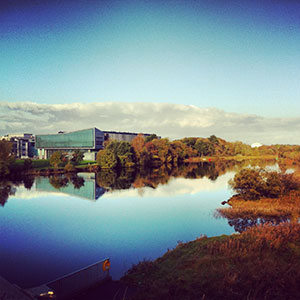
Since 1845, University of Galway has been sharing the highest quality teaching and research with Ireland and the world. Find out what makes our University so special – from our distinguished history to the latest news and campus developments.
-
Colleges & Schools
Colleges & Schools
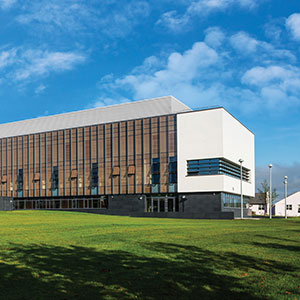
University of Galway has earned international recognition as a research-led university with a commitment to top quality teaching across a range of key areas of expertise.
-
Research & Innovation

Research & Innovation
University of Galway’s vibrant research community take on some of the most pressing challenges of our times.
-
Business & Industry
Guiding Breakthrough Research at University of Galway
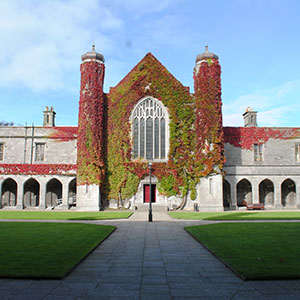
We explore and facilitate commercial opportunities for the research community at University of Galway, as well as facilitating industry partnership.
-
Alumni & Friends

Alumni & Friends
There are 128,000 University of Galway alumni worldwide. Stay connected to your alumni community! Join our social networks and update your details online.
-
Community Engagement

Community Engagement
At University of Galway, we believe that the best learning takes place when you apply what you learn in a real world context. That's why many of our courses include work placements or community projects.
 Accessibility & Language
June Landmark research highlights need for coastal erosion masterplan
Landmark research highlights need for coastal erosion masterplan
Jun
10
2026
Posted: 08:23 IST
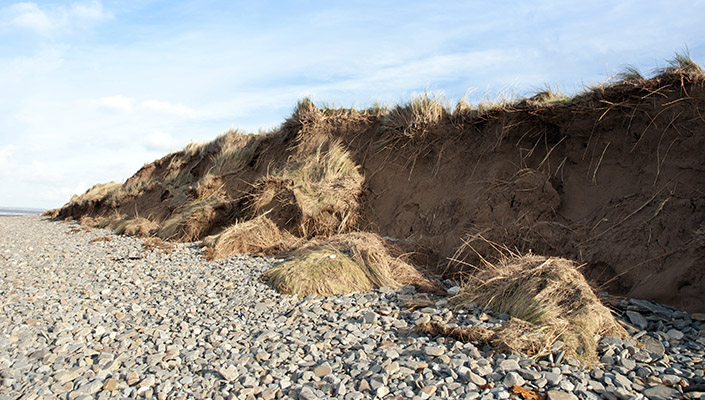
Ireland must shift from monitoring coastal erosion as a physical process to establishing the urgent legal and financial mechanisms required to relocate homes and infrastructure, according to new research from University of Galway.
The working paper published today by the Climate Change Advisory Council moves beyond the science of coastal change to provide the first comprehensive roadmap for a national Coastal Change Adaptation Framework.
Entitled ‘Managing Coastal Risks in Ireland: Towards strategies that integrate planned coastal relocations,’ the report identifies potential policy levers, zoning tools, and funding structures needed to carry out the planned relocation of people and critical assets (residential and commercial properties, roads, bridges, rail lines, ports and harbours, telecommunication networks, or utility plants) away from at-risk zones.
The working paper highlights that the scale of the threat from coastal erosion is immense. It notes a survey of eight local authorities which identified 2,279 properties and 570km of roads at risk. These numbers are projected to jump to 4,446 properties by 2050, a figure that will rise substantially once all local authorities covering 19 coastal counties report their data.
The paper argues that while erosion is an inevitable natural process, the current lack of a binding framework for retreat has left the State in a cycle of ad hoc reactive engineering and unmanaged loss.
To protect current and future generations, the Government must now prioritise the creation of a masterplan that operationalises how - and not just why - coastal communities will move to safety.
Dr Eugene Farrell, Associate Professor at University of Galway and lead author of the report, said: "The core issue is accountability and action. Governments and communities cannot continue to frame today’s coastal erosion crisis as an unforeseeable outcome. The science has been clear for decades, and the warnings were widely available. What is required now is decisive remedial and adaptive action. Implementing 'planned relocation' from eroding coastlines is not optional - it is an essential responsibility of present governance."
The findings address targets in the Report of the Inter-Departmental Group on National Coastal Change Management Strategy 2023; policy objectives in the 2025 National Planning Framework; and the recommendations The Just Transition Commission of Ireland 2025 report which highlights the need to move beyond reactive policymaking and embrace long-term, structural change, to ensure fast and fair climate action with lasting benefits for future generations.
The working paper outlines a series of actions for Government to consider to respond to the increasing risks associated with coastal erosion that will require houses, roads and other infrastructure to be relocated:
- New legislation addressing coastal change and planned relocation
- Consistent coastal planning and zoning guidance at a national level
- Comprehensive, high-resolution coastal risk data
- A national framework for funding and compensation for relocation
- Clear governance structures and well-defined roles for all agencies
- Substantial investment in technical capacity within local authorities to manage relocation
- Robust community engagement to support meaningful dialogue around relocation
Dr Farrell added: "Planned relocation is often framed as a 'last resort,' but it should be viewed as a valid strategic shift when defending homes or roads becomes unsustainable.
"By planning for the strategic movement of people and infrastructure early, we can reduce exposure to extreme events, lower long-term costs, and build community resilience."
Further observations in the working paper:
- Coastal management should prioritise a proactive, managed retreat strategy, with erosion recognised as a natural process essential for sustaining coastal environments like beaches and dunes. Selective protection should be maintained for high-value urban areas, however, rural homeowners cannot simply be left to "be washed away".
- Relocation should be viewed through a human rights lens and fundamentally as a public health and social justice priority. Relocation with community participation and fair compensation, can improve long-term wellbeing; without it, the risk of deepens of social inequalities and causing mental health trauma.
- Humanitarian aid, equivalent to previous approaches used for river flooding, is required for coastal erosion. However, relying on reactive emergency funding is unpredictable whereas a long-term strategy for coastal relocations enables the Government of Ireland to plan proactively and allocate public funds money more efficiently as climate impacts worsen.
- Mandatory natural hazard disclosure in property transactions, similar to a scheme in California and being progressed in England, where a prospective buyer would be formally notified if a home falls within a projected erosion or flood risk zone.
- Coastal infrastructure required to service offshore renewable energy including ports and transmission networks must be designed with climate adaptation and long-term coastal change in mind.
The working paper, compiled by Dr Eugene Farrell with technical support from MKO planning and environmental consultants, was commissioned by the Climate Change Advisory Council. It integrates a desktop review of international case studies and interviews with practitioners and policymakers.
The full paper 'Managing Coastal Risks in Ireland: Towards strategies that integrate planned coastal relocations' can be viewed here.
Ends
Related News
18 August 2026
University of Galway joins EU-funded project for sustainable livestock farming
17 August 2026
Atlantic Summit Galway 2026 – Programme unveiled and pre-registration now open for flagship ocean event
17 August 2026
Cruinniú Mullaigh Atlantaigh na Gaillimhe 2026 – Clár fógartha agus réamhchlárú oscailte anois
4 August 2026
Researchers design implant that fights ovarian cancer from the inside
29 July 2026
People of all ages invited to explore mathematical ideas through art
Featured Stories
Tuesday,
18
August
2026
University of Galway joins EU-funded project for sustainable livestock farming
Monday,
17
August
2026
Atlantic Summit Galway 2026 – Programme unveiled and pre-registration now open for flagship ocean event
Monday,
17
August
2026