-
Courses

Courses
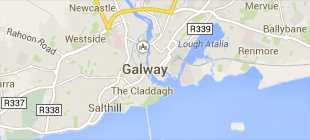
Choosing a course is one of the most important decisions you'll ever make! View our courses and see what our students and lecturers have to say about the courses you are interested in at the links below.
-
University Life

University Life
Each year more than 4,000 choose University of Galway as their University of choice. Find out what life at University of Galway is all about here.
-
About University of Galway

About University of Galway
Since 1845, University of Galway has been sharing the highest quality teaching and research with Ireland and the world. Find out what makes our University so special – from our distinguished history to the latest news and campus developments.
-
Colleges & Schools
Colleges & Schools
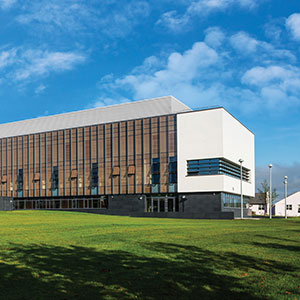
University of Galway has earned international recognition as a research-led university with a commitment to top quality teaching across a range of key areas of expertise.
-
Research & Innovation

Research & Innovation
University of Galway’s vibrant research community take on some of the most pressing challenges of our times.
-
Business & Industry
Guiding Breakthrough Research at University of Galway
We explore and facilitate commercial opportunities for the research community at University of Galway, as well as facilitating industry partnership.
-
Alumni & Friends

Alumni & Friends
There are 128,000 University of Galway alumni worldwide. Stay connected to your alumni community! Join our social networks and update your details online.
-
Community Engagement
Community Engagement
At University of Galway, we believe that the best learning takes place when you apply what you learn in a real world context. That's why many of our courses include work placements or community projects.
 Accessibility & Language
July Cross-border research calls for trusted, youth-centred digital mental health supports
Cross-border research calls for trusted, youth-centred digital mental health supports
Monday, 6 July 2026

Pictured at the Atlantic Futures-hosted all-island policy dialogue are:
Back row l-r: Ross Woods (Senior Manager, Teaching and Learning, Healthy Campus, Mental Health and Wellbeing, HEA); Professor Gary Donohoe (School of Psychology, University of Galway); Dr Adele McLoughlin (School of Psychology, Ulster University); Dr Carmen Kealy (Health Promotion Research Centre, University of Galway); and Professor Maurice Mulvenna, School of Computer Science, Ulster University.
Front row l-r: Jamie McNulty (School of Psychology, Ulster University); Dean Masterson (NSRP Program Manager, HEA-funder); Professor Siobhan O’Neill (Northern Ireland Mental Health Champion, School of Psychology, Ulster University), Alba Madrid Cagigal (School of Psychology, University of Galway). Photo: Collette Cassidy, Ulster University
University of Galway and Ulster University launch All-Island policy brief on strengthening digital mental health supports for young people
Cross-border research has examined how digital mental health supports can better meet the needs of young people across the island of Ireland amid rising mental health challenges and limited access to services.
The research was developed by the University of Galway and Ulster University through the shared island-funded Atlantic Futures programme, supported by the Higher Education Authority (HEA).
Produced as a policy brief, it presents evidence from an Atlantic Futures-hosted all-island policy dialogue event involving policymakers, practitioners, researchers, youth sector representatives and young people.
Findings highlight that trust, simplicity and cultural relevance are critical to engagement. Young people, especially marginalised youth, are more likely to use digital mental health tools that are recommended by trusted organisations, peers or adults; are easy to navigate; and reflect their identities, communities and lived experiences.
The researchers also found that young people use digital tools mainly for light‑touch emotional regulation, not therapy, and want grounding, distraction, positivity, and short check-in's - not long programmes or clinical content.
Additionally, while young people are confident navigating digital spaces, gaps in digital mental health literacy persist largely because the wider digital landscape is fragmented and lacks clear governance, making it difficult to assess the credibility, privacy practices and safety of online platforms, with families further constrained by language, literacy and digital exclusion.A key recommendation is sustained youth participation, highlighting young people stay engaged when treated as equal partners and when they see impact. The briefing calls for long-term, inclusive co-design embedded in policy and service design and development.
Project lead, Dr Carmen Kealy, Health Promotion Research Centre, University of Galway, said: “Young people are navigating increasing pressures, and digital supports can genuinely help - but only when they are trustworthy, culturally relevant, and easy to use. Our research shows that young people value clarity, representation, and tools that fit naturally into their daily lives. A coordinated, youth‑centred approach across the island is essential to building a digital mental health ecosystem that feels credible, accessible, and supportive for all young people.
Principal Investigator, Professor Siobhan O’Neill, School of Psychology, Ulster University, said: “The briefing forms part of the Atlantic Futures programme, a collaborative all-island initiative supported through the HEA North-South Research Programme under the Shared Island initiative, which seeks to address shared societal challenges through research, innovation and partnership.”The findings conclude that digital mental health supports have significant potential to extend access to care and reduce barriers for young people across the island of Ireland. However, the researchers caution this potential will only be realised when digital solutions are built around trust, cultural relevance, simplicity and meaningful participation.
The policy brief calls on policymakers, service providers, educators, youth organisations and technology developers to work collaboratively to create a more coherent and accessible digital mental health ecosystem.The full policy brief can be read here.
Ends
Keywords: Press.
Author: Marketing and Communications , NUI Galway
« Back
Related news
15 October 2026
Ollscoil na Gaillimhe ag ceiliúradh agus beagnach 2,800 duine ag fáil a gcéime ag na searmanais bhronnta
15 October 2026
University of Galway celebrates almost 2,800 graduates at conferring ceremonies
14 October 2026
University of Galway awarded Jean Monnet Centre of Excellence
13 October 2026
European research partnership to strengthen child protection and wellbeing
9 October 2026
Atlantic Summit Galway 2026 concludes with release of Statement to support a sustainable and prosperous ocean future
Featured Stories
Thursday,
15
October
2026
Ollscoil na Gaillimhe ag ceiliúradh agus beagnach 2,800 duine ag fáil a gcéime ag na searmanais bhronnta
Thursday,
15
October
2026
University of Galway celebrates almost 2,800 graduates at conferring ceremonies
Wednesday,
14
October
2026