-
Courses

Courses
Choosing a course is one of the most important decisions you'll ever make! View our courses and see what our students and lecturers have to say about the courses you are interested in at the links below.
-
University Life

University Life
Each year more than 4,000 choose University of Galway as their University of choice. Find out what life at University of Galway is all about here.
-
About University of Galway

About University of Galway
Since 1845, University of Galway has been sharing the highest quality teaching and research with Ireland and the world. Find out what makes our University so special – from our distinguished history to the latest news and campus developments.
-
Colleges & Schools

Colleges & Schools
University of Galway has earned international recognition as a research-led university with a commitment to top quality teaching across a range of key areas of expertise.
-
Research & Innovation

Research & Innovation
University of Galway’s vibrant research community take on some of the most pressing challenges of our times.
-
Business & Industry
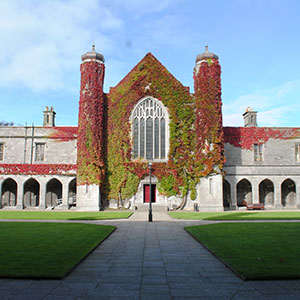
Guiding Breakthrough Research at University of Galway
We explore and facilitate commercial opportunities for the research community at University of Galway, as well as facilitating industry partnership.
-
Alumni & Friends

Alumni & Friends
There are 128,000 University of Galway alumni worldwide. Stay connected to your alumni community! Join our social networks and update your details online.
-
Community Engagement

Community Engagement
At University of Galway, we believe that the best learning takes place when you apply what you learn in a real world context. That's why many of our courses include work placements or community projects.
 Accessibility & Language
Health Promotion (MA/PDip)


MA (Health Promotion) - full-time Postgraduate Diploma (Health Promotion) - full-time
College of Medicine and Health, School of Allied and Community Health- Title of Award
- Master Postgraduate / Diploma of Health Promotion
- Course Code
- 1MMA1
- Average Intake
- 20
- Delivery
- Blended Learning
- NFQ
- Level 9
- Award Type
- Major
- Next Intake
- September 2027
- Duration
- 1 year, full-time
Why Choose This Course?
Course Information
This programme provides professional education and training in the principles and practice of Health Promotion, equipping students with the knowledge and skills necessary for effective, evidence-informed practice.
Students will acquire knowledge and skills in the following:
- The theoretical foundations of Health Promotion and how theory informs practice
- The determinants of physical, mental, and social well-being
- The key factors that influence the promotion of positive health
- The application of a range of Health Promotion strategies and approaches across diverse population groups, health topics, and settings
- The critical role of research in advancing best practice and informing policy and programme development
The programme is structured around six modules in total:
Required Modules
| Code | Module Title | Credits |
| HP504 | Dissertation | 30 |
| HP832 | Research Methods | 10 |
| HP846 | Foundations of Health Promotion | 10 |
| HP1104 | Evidence Based Health Promotion Practice | 10 |
| HP848 | Determinants of Health | 10 |
Optional Modules
Students choose two optional modules to complete their programme requirements.
| Code | Module Title | Credits |
| HP1107 | Mental Health Promotion | 10 |
| HP1108 | Promoting Health in the Workplace | 10 |
| HP1109 | Promoting Healthy Behaviours | 10 |
| HP1111 | Promoting Health in pre-schools, schools and colleges | 10 |
This structure allows students to gain a strong foundation in the principles and practice of Health Promotion, while also tailoring their learning to specific areas of interest or career goals.
Delivery is through a blended learning format, combining:
- Face-to-face teaching
- Online learning
- A variety of teaching methods, including lectures, small group teaching, collaborative group work, and enquiry-based learning
Work Placement
A distinctive feature of the full-time programme is a supervised work placement, providing students with the opportunity to gain practical experience and apply their learning in real-world settings. The placement supports professional development and enhances career readiness.
Research Opportunities
As a student of Health Promotion, you will have the opportunity to engage with international health promotion research projects. Students undertaking the MA complete a minor dissertation during the summer, supported by a dedicated academic supervisor who provides tailored guidance throughout the research process.
Curriculum Information
Curriculum information relates to the current academic year (in most cases).Course and module offerings and details may be subject to change.
Glossary of Terms
- Credits
- You must earn a defined number of credits (aka ECTS) to complete each year of your course. You do this by taking all of its required modules as well as the correct number of optional modules to obtain that year's total number of credits.
- Module
- An examinable portion of a subject or course, for which you attend lectures and/or tutorials and carry out assignments. E.g. Algebra and Calculus could be modules within the subject Mathematics. Each module has a unique module code eg. MA140.
- Optional
- A module you may choose to study.
- Required
- A module that you must study if you choose this course (or subject).
- Semester
- Most courses have 2 semesters (aka terms) per year.
Year 1 (90 Credits)
RequiredHP504: Dissertation
HP504: Dissertation
15 months long | Credits: 30
This module will be delivered as a series of workshops during semesters one and two. The workshops will require students to engage in developing their research proposal for the dissertation project and to address ethical issues arising in the proposal. During the summer (May - August) students will be allocated and work with a supervisor who will guide them through the implementation of the proposal developed during the workshops.
(Language of instruction: English)
Learning Outcomes
- Plan and organise the different stages involved in the dissertation work.
- Conduct a search and review of relevant literature for the project.
- An understanding of the ethical implications of the project.
- Ability to undertake data collection and/or data processing mechanisms and procedures
- Carry out quantitative and/or qualitative analyses of data as appropriate to the methodology employed for the project.
- Report on methodologies employed, results obtained and to critically discuss these in a formal dissertation format according to guidelines provided.
Assessments
- Research (100%)
Teachers & Administrators
Click a name to search for their researcher profile. Note: Only teachers publish research profiles.
- DENISE GLAVIN 🖂
- MARGARET HODGINS 🖂
- VICTORIA HOGAN 🖂
- COLETTE KELLY 🖂
- VERNA MCKENNA 🖂
- MARTIN POWER 🖂
- LISA PURSELL 🖂
- CATHERINE ANNE FIELD 🖂
- Stacey Gibbons 🖂
Reading List
- "Theses and Dissertations: A guide to planning, research and writing" by Robert Murray Thomas, Dale L. Brubaker
ISBN: 9781412951159.
Publisher: Corwin Press - "Doing postgraduate research" by Stephen Potter,
Publisher: Sage Publication - "Research Methods in Health: Investigating Health and Health Services" by Bowling, A
Publisher: Open University Press - "Real World Research" by Robson, C., & McCarten, K.
Publisher: Wiley - "SPSS Survival Manual: A step-by-step guide to data analysis using SPSS" by Pallant, J.
Publisher: Open University Press - "Discovering Statistics using SPSS" by A Field
Publisher: Sage - "Sampling Essentials: Practical Guidelines for Making Sampling Choices" by J. Daniel
Publisher: Sage - "Doing research in the real world" by David E Gray
Publisher: Sage
Note: Module offerings and details may be subject to change.
RequiredHP832: Research Methods
HP832: Research Methods
Semester 1 and Semester 2 | Credits: 10
This module takes the students through the research process, from formulating research questions, identifying the preferred approach to testing them, developing research tools, collecting and analysing data and critically interpreting the findings.
(Language of instruction: English)
Learning Outcomes
- Have an understanding of the research process
- Appreciate the strengths and weaknesses of different methodological approaches
- Be able to select appropriate research methods for different research questions
- Have an understanding of basic qualitative and quantitative data analysis techniques
- Be able to critically review research articles
- Be able to prepare a basic research protocol
- Have an understanding of evaluation research
- Understand and be able to execute statistical techniques employing SPSS.
Assessments
- Department-based Assessment (100%)
Teachers & Administrators
Click a name to search for their researcher profile. Note: Only teachers publish research profiles.
Reading List
- "Basic Epidemiology" by Beaglehole, R., Bonita, R. & Kjellstrom, T.
Publisher: World Health Organization - "Research Methods in Health: Investigating Health and Health Services" by Bowling, A.
Publisher: Open University Press. - "Real World Research" by Robson, C. & McCarten, K.
Publisher: Wiley - "Evaluation: A Systematic Approach" by Rossi, P.H., Lipsey, M.W. & Freeman, H.E.
Publisher: Sage - "Evaluating Health Promotion: Practice and Methods" by Thorogood, M. & Coombes, Y.
Publisher: Oxford University Press. - "SPSS survival manual: A step-by-step guide to data analysis using SPSS." by Pallant, J.
Publisher: Maidenhead: Open University Press. - "Discovering Statistics using SPSS" by Field, A.
Publisher: Sage
Note: Module offerings and details may be subject to change.
RequiredHP846: Foundations of Health Promotion
HP846: Foundations of Health Promotion
Semester 1 | Credits: 10
This module provides a theoretical background to the concepts and principles of Health
Promotion as a foundation for policy and practice. The development of Health Promotion
internationally is discussed and current approaches and strategies are examined. In
particular, the module focuses on the key actions to promote health as outlined in the Ottawa Charter for Health Promotion (WHO, 1986) and subsequent WHO declarations and charters.
Contemporary practice, policy, and research issues in Health Promotion are examined. The
module also contains dedicated academic skills sessions, with the essay requirement for the
module as a focus. Workshops include essay writing, referencing and use of reference tools.
(Language of instruction: English)
Learning Outcomes
- demonstrate a critical understanding of the core concepts, principles and values that underpin health promotion
- understand the five action areas of the Ottawa Charter for Health Promotion (WHO, 1986) and critically discuss their implications for practice and policy
- demonstrate an understanding of the theoretical models that underpin health promotion
- demonstrate a critical appreciation of the importance of the evidence base for health promotion
- critically consider the ethical debates and dilemmas within health promotion and their implications for practice
- have an appreciation of the competing discourses within health promotion
Assessments
- Continuous Assessment (100%)
Teachers & Administrators
Click a name to search for their researcher profile. Note: Only teachers publish research profiles.
- DENISE GLAVIN 🖂
- MARGARET HODGINS 🖂
- VERNA MCKENNA 🖂
- MARTIN POWER 🖂
- LISA PURSELL 🖂
- CATHERINE ANNE FIELD 🖂
- Stacey Gibbons 🖂
Reading List
- "Making Health Policy" by Buse, K., Mays, N., and Walt, G.
Publisher: Open University Press - "The Pocket Guide to Health Promotion" by Laverack, A.
Publisher: Open University Press - "Policy and Practice in Promoting Public Health" by Lloyd, C., Handsley, S., Douglas, J., & Spurr, S.
Publisher: Open University Press - "Foundations for Health Promotion" by Naidoo, J., and Wills, J.
ISBN: 978070205442.
Publisher: Elsevier. - "Health Promotion. Planning and Strategies (2nd Ed.)" by Green, J., & Tones, K
Publisher: Sage
Note: Module offerings and details may be subject to change.
RequiredHP847: Health Promotion Practice
HP847: Health Promotion Practice
Semester 1 and Semester 2 | Credits: 10
The overall aim of this module is to introduce students to the knowledge, abilities, skills and values required for Health Promotion practice. The module is based on the core competencies contained in the CompHP Core Competencies Framework for Health Promotion Handbook and the CompHP Professional Standards for Health Promotion. The module combines lectures, tutorials and practitioner led workshops. Workshops
address a number of competency domains
including: needs assessment; planning; implementation; evaluation; communication skills; advocacy for health; leadership; and partnership working.The module also contains a practice placement for full-time students. The purpose of the supervised workplacement is to access opportunities to gain appropriate skills and knowledge for health
promotion practice.
(Language of instruction: English)
Learning Outcomes
- understand the role of competencies in the development of Health Promotion practice.
- identify the competencies that form the competency framework underpinning professional practice in health promotion.
- demonstrate a critical understadning of each of the 9 core health promotion competencies and the associated skills required for each.
Assessments
- Continuous Assessment (100%)
Teachers & Administrators
Click a name to search for their researcher profile. Note: Only teachers publish research profiles.
Reading List
- "Planning, Implementing & Evaluating Health Promotion Programs" by McKenzie, J.F., Neiger, B.L. & Thackeray, R.
ISBN: 0134219929.
Publisher: Pearson Benjamin Cummings. - "The CompHP Project Handbooks" by Barry, M M; Battel-Kirk, B; Davison, H; Dempsey, C; Parish, R; Schipperen, M; Speller, V; Zanden, van der, G; Zilnyk, A.
Publisher: International Union for Health Promotion and Education (IUHPE), - "Foundations for health promotion" by Naidoo, J. & Wills J.
ISBN: 9780702054426.
Publisher: Elsevier - "Practical health promotion." by Hubley, J., Copeman, J. & Woodall, J.
ISBN: 9780745663166.
Publisher: Polity - "Promoting Health: A Practical Guide - E-Book" by Angela Scriven
ISBN: 9780702066948.
Publisher: Elsevier Health Sciences
Note: Module offerings and details may be subject to change.
RequiredHP848: Determinants of Health
HP848: Determinants of Health
Semester 1 | Credits: 10
The module introduces students to biological, psychological, sociological, environmental and cultural determinants of health. The module enables students to critically apply understandings of a health determinants approach to policy, theory and practice of Health Promotion.
(Language of instruction: English)
Learning Outcomes
- Demonstrate critical understanding of determinants of health.
- Critically apply understandings of a health determinants approach to policy, theory and practice of Health Promotion
- Critically discuss and analyse various health issues experienced by individuals, populations and social groups.
- Gain understanding of the psychological and sociological concepts of health and ill-health.
- Identify inequalities in health and develop means to address them.
Assessments
- Continuous Assessment (100%)
Teachers & Administrators
Click a name to search for their researcher profile. Note: Only teachers publish research profiles.
- DENISE GLAVIN 🖂
- MARGARET HODGINS 🖂
- COLETTE KELLY 🖂
- VERNA MCKENNA 🖂
- MARTIN POWER 🖂
- LISA PURSELL 🖂
- CATHERINE ANNE FIELD 🖂
- MARY JOSEPHINE LAVELLE 🖂
- Stacey Gibbons 🖂
Reading List
- "Health Promotion: Foundations for Practice" by Naidoo, J. & Wills, J.
Publisher: Ballière Tindall - "Understanding health: A determinants Approach." by Keleher, H. & Murphy, B.
Publisher: Oxford University Press - "Health behavior and health education" by Glanz, K., Rimer, B.K., & Viswanath, K.
ISBN: 9780787996147.
Publisher: Jossey-Bass
Note: Module offerings and details may be subject to change.
OptionalHP1101: Knowledge Translation in Health and Social Care Research
HP1101: Knowledge Translation in Health and Social Care Research
Semester 1 and Semester 2 | Credits: 5
This module introduces the concept of knowledge translation (KT) in health and social care research to students. The module will give an overview of the function and value of KT in bridging the gap between knowledge and practice/policy, and will include an emphasis on conceptual frameworks and models of planning and evaluation. The module will adopt a blended-learning approach, with online lectures via Articulate-Rise supplemented with three face-to-face workshops to support students to plan and put into practice their own KT initiatives as part of their research activities. Assessment will be carried out by programme staff. The module will be available to Structured PhD or Research Masters level students, with the agreement of the relevant supervisor and/or programme director.
(Language of instruction: English)
Learning Outcomes
- Critically engage with the KT process and understand the barriers to and facilitators of knowledge use.
- Critically assess theories, models and frameworks for translating knowledge into practice and policy.
- Develop communication strategies to bring their research to a wider audience.
- Access resources and templates to facilitate planning, implementing and evaluating KT initiatives.
- Understand and put into practice methods to plan and implement a KT initiative for their on-going research activities.
Assessments
- Continuous Assessment (100%)
Teachers & Administrators
Click a name to search for their researcher profile. Note: Only teachers publish research profiles.
The above information outlines module HP1101: "Knowledge Translation in Health and Social Care Research" and is valid from 2024 onwards.Note: Module offerings and details may be subject to change.
OptionalHP852: Re-Orienting Health Services
HP852: Re-Orienting Health Services
Semester 2 | Credits: 5
This module examines policy and practice in relation to reorientating the health services to promote health and reduce inequities. The reorientation of primary and acute care settings are considered in the context of the application of the settings approach to the health services. The settings approach will be reviewed and particular attention given to the health promoting hospital movement. The specific challenges of reorientating health services are explored.
(Language of instruction: English)
Learning Outcomes
- demonstrate a critical understanding of reorientating the health services as a health promotion action
- be familiar with the international context for, and the work of, the health promoting hospitals movement with a critical understanding of its contribution to reorientating the health service
- be familiar with specific health promotion initiatives that aim to reorientate the health services to promote health and reduce inequities.
- demonstrate a critical understanding of the application of the settings approach in the health services as it relates to the reorientation of the health services
Assessments
- Continuous Assessment (100%)
Teachers & Administrators
Click a name to search for their researcher profile. Note: Only teachers publish research profiles.
- DENISE GLAVIN 🖂
- MARGARET HODGINS 🖂
- LORRAINE MICHELLE KENT 🖂
- LISA PURSELL 🖂
- JANE SIXSMITH 🖂
- CATHERINE ANNE FIELD 🖂
- MARY JOSEPHINE LAVELLE 🖂
- Stacey Gibbons 🖂
Reading List
- "Irish Apartheid. Health care inequality in Ireland" by Burke, S
Publisher: New Island Books
Note: Module offerings and details may be subject to change.
OptionalHP150: Evaluation of Health Promotion Programmes
HP150: Evaluation of Health Promotion Programmes
Semester 2 | Credits: 5
The module is delivered through an through an Enquiry Based Learning (EBL) approach involving group work. An initial series of lectures introduces approaches and models used to evaluate health promotion programmes.
The class will be asked to develop a proposal to evaluate a specific health promotion programme. A detailed briefing on the programme will be included in one workshop session. The class will then be divided into a number of smaller groups. Each group will decide on how to evaluate the programme by focusing on a particular aspect of their own choosing. The groups are expected to justify the evaluation plans and to build these around the theoretical base of values, approaches, methods and purpose of evaluation as described in class lectures and workshops.
(Language of instruction: English)
Learning Outcomes
- Recognise the theoretical and conceptual basis of evaluation
- Identify different forms of evidence
- Identify the breadth of evidence available for evaluation
- Identify a range of approaches to evaluation within appropriate settings
- Plan and develop a detailed evaluation proposal.
Assessments
- Continuous Assessment (100%)
Teachers & Administrators
Click a name to search for their researcher profile. Note: Only teachers publish research profiles.
- MARGARET BARRY 🖂
- MARGARET HODGINS 🖂
- VERNA MCKENNA 🖂
- SAOIRSE NIC GABHAINN 🖂
- LISA PURSELL 🖂
- Stacey Gibbons 🖂
Reading List
- "Experimental and quasi-experimental designs for generalized causal inference" by William R. Shadish, Thomas D. Cook, Donald T. Campbell
ISBN: 9780395615560.
Publisher: Houghton Mifflin - "Evaluation in Health Promotion" by I. Rootman,Michael Goodstadt (Ed.)
ISBN: 9289013591.
Publisher: WHO Regional Office Europe - "Evaluation" by Peter H. Rossi, Mark W. Lipsey, Howard E. Freeman
ISBN: 9780761908944.
Publisher: Sage Publications - "Evaluating health interventions" by John Ovretveit
ISBN: 033519964X.
Publisher: Buckingham [England] ; Open University Press, 1998. - "Evaluating Health Promotion" by Margaret Thorogood,Yolande Coombes (Ed.)
ISBN: 0199569290.
Publisher: Oxford University Press, USA - "Developing an Effective Evaluation Plan" by CDC
Publisher: Centers for Disease Control and Prevention, National Center for Chronic Disease Prevention and Health Promotion, Office on Smoking and Health; Division of Nutrition, Physical Activity, and Obesity
Note: Module offerings and details may be subject to change.
OptionalHP849: Promoting Healthy Behaviour
HP849: Promoting Healthy Behaviour
Semester 2 | Credits: 5
This module introduces students to the relationship between lifestyle behaviours and health, Particular focus is on the areas of nutrition, physical activity, smoking and alcohol use. The course will be taught using problem-based learning techniques involving group work to examine the practice and policy evidence base for the promotion of health and disease prevention.
(Language of instruction: English)
Learning Outcomes
- Understand the relationship between individual behavioural, community and structural level factors for nutrition, physical activity, alcohol intake and smoking in the promotion of health and the prevention of disease
- Be aware of policy developments in respect to nutrition, alcohol intake, smoking and physical activity.
- Have an appreciation of effective alcohol and tobacco consumption interventions and for promotion of healthy eating and physical activity
- Have knowledge of the application of the principles of health promotion to public health programmes to improve health.
- Have knowledge of practical approaches to behaviour change
Assessments
- Continuous Assessment (100%)
Teachers & Administrators
Click a name to search for their researcher profile. Note: Only teachers publish research profiles.
Reading List
- "Health Behavior" by Karen Glanz,Barbara K. Rimer,K. Viswanath
ISBN: 9781118629055.
Publisher: John Wiley & Sons - "From Health Behaviours to Health Practices" by Simon Cohn
ISBN: 9781118898390.
Publisher: John Wiley & Sons
Note: Module offerings and details may be subject to change.
OptionalHP853: Supportive Environments for Health
HP853: Supportive Environments for Health
Semester 2 | Credits: 5
This module explores the application of the settings approach to health promotion in workplaces and schools. The key aspects of the settings approach will be reviewed and the special challenges of each of these settings will be explored. Examples of initiatives in each setting will be examined, through which students will be encouraged to identify aspects of good health promotion practice, and in particular evidence–based practice and policy.
(Language of instruction: English)
Learning Outcomes
- demonstrate an understanding of the principles underlying the settings approach to health promotion
- demonstrate an understanding of the particular challenges for the application of the settings approach in schools and workplaces
- describe the issues to be considered in identifying best practice in the context of settings based work
- demonstrate an understanding of the success and the limitations of behaviour change approaches in workplaces and schools.
Assessments
- Continuous Assessment (100%)
Teachers & Administrators
Click a name to search for their researcher profile. Note: Only teachers publish research profiles.
- DENISE GLAVIN 🖂
- MARGARET HODGINS 🖂
- VICTORIA HOGAN 🖂
- COLETTE KELLY 🖂
- SAOIRSE NIC GABHAINN 🖂
- LISA PURSELL 🖂
- Stacey Gibbons 🖂
Reading List
- "The health promoting school: International advances in theory, evaluation and practice" by Clift, S. & Jensen, B.B. (Eds.)
Publisher: Danish University Press - "Promoting health in schools: from evidence to action" by St. Leger, L., Young, I., Blanchard, C. & Perry, M.
Publisher: IUHPE - "Creating healthy organisations" by Lowe, G.
Publisher: University of Toronto - "Health promotion settings: Principles and practice." by Scriven, A. & Hodgins, M. (Eds.)
Publisher: Sage - "Promoting Health and Well-Being in the Workplace" by Hodgins, M., Fleming, P., and Griffith, J.
ISBN: 9781137375421.
Publisher: Palgrave
Note: Module offerings and details may be subject to change.
OptionalHP845: The European Dimension in Health Promotion
HP845: The European Dimension in Health Promotion
Summer School | Credits: 5
The European Dimension in Health Promotion module aims to provide students with the opportunity to develop and practice Health Promotion knowledge and skills within an alternative European setting. This module offers an opportunity to become aware of the relevance of the European context for Health Promotion practice including:
• to personally experience the European dimension in practice
• to develop your own perceptions of the European context for practice and policy
• to understand social, cultural, political diversities and commonalties within the Health Promotion framework.
(Language of instruction: English)
Learning Outcomes
- • relate the theoretical elements of the course in a functional way to a different European context other than their own
- • have an understanding of Health Promotion practice and policy in Europe based on their broadened knowledge base
- • achieve personal and professional learning outcomes through their experience.
Assessments
- Continuous Assessment (100%)
Teachers & Administrators
Click a name to search for their researcher profile. Note: Only teachers publish research profiles.
The above information outlines module HP845: "The European Dimension in Health Promotion" and is valid from 2023 onwards.Note: Module offerings and details may be subject to change.
OptionalHP6106: Workplace Wellness
HP6106: Workplace Wellness
Trimester 3 | Credits: 10
The module explores the application of the settings approach in workplaces and the special challenges posed by the promotion of health and wellness in work organisations. The settings approach focuses on system-level change in order to facilitate an environment that is supportive of employee health. Examples of evidence-based practice will be considered together with the importance of policy directives and the legislative context.
(Language of instruction: English)
Learning Outcomes
- To demonstrate an understanding of the complexity the relationship between work, workplaces and physical, mental and personal health
- To critically describe the way in which the physical environment influences the health of workers, and the interventions required to create a supportive physical environment
- To identify the psychosocial risk factors and interventions required to address them
- To demonstrate a critical understanding of the link between the enterprise and the community, and the importance of to creating a positive relationship with the community
- To identify the evidence base for effectiveness of various workplace health initiatives and interventions for personal, physical and psychosocial risk factors
- To identify interventions for facilitating voluntary health behaviours and the strengths and limitations of these approaches to improving worker health and well-being
Assessments
- Continuous Assessment (100%)
Teachers & Administrators
Click a name to search for their researcher profile. Note: Only teachers publish research profiles.
- DENISE GLAVIN 🖂
- MARGARET HODGINS 🖂
- LORRAINE MICHELLE KENT 🖂
- MARY JOSEPHINE LAVELLE 🖂
- Stacey Gibbons 🖂
Reading List
- "Promoting Health and Well-Being in the Workplace" by Hodgins, Fleming, Griffiths
ISBN: 978-1-137-375.
Publisher: palgrave macmillan
Chapters: 2026-01-11T00:00:00 - "Health Promotion Settings" by Angela Scriven (Editor), Margaret Hodgins (Editor)
ISBN: 9780857025463.
Publisher: Sage Publications Ltd - "Creating Healthy Organizations" by Graham Lowe
ISBN: 9780802099808.
Publisher: University of Toronto Press - "Promoting Health - A Practical Guide" by Angela Scriven
ISBN: 9780702066924.
Publisher: Elsevier - "Health promotion in the workplace" by edited by Michael P. O'Donnell... [et al.]
ISBN: 0766828662.
Publisher: Delmar Thomson Learning
Note: Module offerings and details may be subject to change.
OptionalHP6101: Cardiovascular Health and Diabetes Prevention
HP6101: Cardiovascular Health and Diabetes Prevention
Trimester 3 | Credits: 10
This module provides a theoretical background to the concepts and principles of health promotion as a foundation for policy and practice for cardiovascular health and type two diabetes prevention. The module will enable learners to apply health promotion principles of best practice to cardiovascular health and type 2 diabetes prevention. This module will reference evidence-based practice for the development of health promotion interventions.
(Language of instruction: English)
Learning Outcomes
- Critically understand the determinants and prevalence of cardiovascular health and type two diabetes prevention and its associated patterns of inequity and inequality.
- Critically assess the evidence base for promotion of cardiovascular health and the prevention of type two diabetes.
- Understand national and international policy approaches, including the role of advocacy and effective advocacy strategies, for the promotion of cardiovascular health and type two diabetes prevention.
- Design effective health promotion interventions by incorporating needs assessments, planning, implementation, evaluation and principles of project management.
- Demonstrate skills and competencies for delivering effective practice and health promotion interventions for cardiovascular health and type two diabetes prevention.
- Critically discuss risk and protective factors for cardiovascular health and type two diabetes prevention, including physical activity, obesity, nutrition, alcohol and smoking cessation.
Assessments
- Continuous Assessment (100%)
Reading List
- "Foundations for Health Promotion" by Naidoo, J. & Wills, J.
Publisher: Elsevier - "Health Promotion: Planning and Strategies" by Green, J., Tones, K., Cross, R. & Woodall, J.
Publisher: Sage - "Global Handbook on Noncommunicable Diseases and Health Promotion." by McQueen, D.V.
Publisher: Springer
Note: Module offerings and details may be subject to change.
OptionalHP140: Mental Health Promotion
HP140: Mental Health Promotion
Trimester 3 | Credits: 10
This specialism module introduces the concepts and determinants of positive mental health and wellbeing and the evidence-based principles of effective mental health promotion practice. The implementation of mental health promotion strategies across the life course is examined.
(Language of instruction: English)
Learning Outcomes
- Have a critical understanding of the conceptual and theoretical base of mental health promotion.
- Identify the determinants, risk and protective factors for positive mental health and wellbeing and the nature of their interaction in promoting mental health equity.
- Critically appraise and apply the generic principles of evidence-based practice in implementing mental health promotion interventions across the life course delivered in key settings, such and the home, schools, community and health services.
- Understand principles of best practice based on current international and national research on evidence based practice and policy.
Assessments
- Continuous Assessment (100%)
Reading List
- "Implementing Mental Health Promotion" by Barry, M.M., Clarke, A.M., Petersen, I., Jenkins, R. (Eds.)
Publisher: Springer Nature
Note: Module offerings and details may be subject to change.
OptionalHP1102: Promoting Mental Health & Social Wellbeing
HP1102: Promoting Mental Health & Social Wellbeing
Semester 2 | Credits: 5
This module addresses the promotion of positive mental health, sexual health and the prevention of substance misuse. Current frameworks and models for practice, together with international and national policy and practice initiatives, will be presented and reviewed. The evidence-base supporting health promotion interventions in these areas will be examined.
(Language of instruction: English)
Learning Outcomes
- • an understanding of the importance of positive mental health and social wellbeing to health promotion
- • an appreciation of the opportunities, challenges and barriers to promoting positive mental health and social wellbeing
- • an understanding of current strategies and interventions for promoting mental health, sexual health and preventing substance misuse for population groups in different settings
- • a critical understanding of the role of policy, both national and international, in preventing substance misuse
- • an understanding of critical, evidence-based approaches to promoting positive mental health, social wellbeing and reducing risk behaviours.
Assessments
- Continuous Assessment (100%)
Teachers & Administrators
Click a name to search for their researcher profile. Note: Only teachers publish research profiles.
- MARGARET BARRY 🖂
- DENISE GLAVIN 🖂
- COLETTE KELLY 🖂
- SAOIRSE NIC GABHAINN 🖂
- CATHERINE ANNE FIELD 🖂
- MARY JOSEPHINE LAVELLE 🖂
- Stacey Gibbons 🖂
Reading List
- "Implementing Mental Health Promotion." by Barry, M.M. & Jenkins, R.
Publisher: Elsevier - "Drug Use: Concepts, Prevention and Cessation" by Sussman, S.Y.
Publisher: Cambridge University Press - "Sexual Health: Foundations for Practice" by Wilson, H. & McAndrew, S.
Publisher: Balliere Tindall - "Implementing Mental Health Promotion" by Barry, M.M., Clarke, A.M., Petersen, I., Jenkins, R.
ISBN: 9783030234553.
Publisher: Springer Nature https://www.springer.com/in/book/9783030234546 doi:10.1007/978-3-030-23455-3-È - "Health related harm due to illicit drug use: reducing drug related health harm" by Consumers, Health, Agriculture and Food Executive Agency
Publisher: EU Publications Agency
Note: Module offerings and details may be subject to change.
Research and Professional Links
Academics teaching on the programme are research-active members of the Health Promotion Research Centre, which is designated as a World Health Organization (WHO) Collaborating Centre for Health Promotion Research. The Centre contributes directly to the WHO’s work programme and plays a key role in advancing health promotion policy, research, and practice globally.
Established as the first of its kind in Ireland, the Health Promotion Research Centre has developed strong national and international partnerships, ensuring that the programme remains current, relevant, and informed by global developments in the field.
Practical Experience and Career Development
A key feature of the programme is the work-placement component, which provides students with the opportunity to experience health promotion in action. This hands-on experience allows students to apply their learning in real-world settings, develop professional skills, and build valuable networks within the sector.
Graduates of the programme have gone on to secure roles in public, voluntary, and private sector organisations, both in Ireland and internationally, working across a range of health promotion and public health initiatives.
Graduate Employability:
Graduates of the Health Promotion programmes benefit from a wide range of career opportunities both in Ireland and internationally. The qualifications equip graduates to pursue dedicated careers in health promotion or to integrate health promotion principles into roles across sectors, particularly within healthcare, education, and community development.
Alumni have secured employment across statutory, private, voluntary, and community sectors, with many taking up roles as Health Promotion Specialists and related positions.
Graduates of the MA in Health Promotion have also gone on to roles in academic research and in national and international health research projects, reflecting the programme’s strong research foundation.
Several graduates have pursued further study, including PhD programmes at the University of Galway and other institutions, in Health Promotion and related disciplines.
The diversity of career paths followed by graduates from a broad range of academic and professional backgrounds demonstrates the relevance, flexibility, and transferability of the competencies developed throughout the Health Promotion programmes.
As part of the full-time taught programme, students undertake a supervised work placement designed to provide practical experience in Health Promotion. This placement enables students to apply theoretical knowledge in real-world settings, while developing professional and transferable skills essential for effective practice in the field.
The Discipline of Health Promotion coordinates the placement process, identifying potential host organisations and matching students based on their academic background and areas of interest.
Placement Details:
- Duration: 12 days total
- Structure: Begins with a one-week block, followed by flexible scheduling
- Timing: Semester 2 (starting in January)
- Remuneration: The placement is unpaid
Sample Host Organisations Include:
- Sexual Health West
- HBSC Research Projects
- Croí
- National Youth Council of Ireland
- Tusla – Child and Family Agency
- Smoking Cessation Department, University Hospital Galway
- Child and Adolescent Mental Health Services (CAMHS)
- HSE Health Promotion Departments
- Jigsaw
This valuable hands-on experience enhances employability and gives students the opportunity to explore different areas of Health Promotion in practice.
Accrediting Body
The programme is accredited by the International Union for Health Promotion and Education (IUHPE). This accreditation ensures that the curriculum aligns with internationally agreed professional standards in Health Promotion. Graduates of the programme are automatically eligible to apply for registration as an IUHPE Registered Health Promotion Practitioner on the global voluntary register.
International Opportunities
IUHPE accreditation supports international mobility and recognition, enabling graduates to pursue roles across different countries, organisations, and sectors. It ensures that the qualification is recognised globally as meeting the core competencies and professional standards required for effective practice in Health Promotion.
This international validation enhances the employability of graduates and facilitates career progression both nationally and internationally.
The Postgraduate Diploma in Health Promotion is a taught programme delivered over two semesters. Full-time students complete four core modules and choose two optional modules, allowing for both foundational learning and specialised focus within key areas of Health Promotion.
Building upon the diploma, the Master of Arts (MA) in Health Promotion includes all elements of the Postgraduate Diploma and incorporates a minor dissertation based on original research. The dissertation is completed over the summer months, with final submission typically in August.
Programme delivery
Both programmes are delivered through a blended learning format, combining:
- Face-to-face teaching
- Online learning
- Lectures
- Small group teaching
- Collaborative group work
- Enquiry-based learning
Assessment
Assessment methods include:
- Continuous assessment across modules
- Oral examination
Dissertation Support (MA only)
MA students are supported by a dedicated academic supervisor, who provides one-on-one guidance throughout the research and dissertation process.
Course queries:
Stacey Gibbons
Course Administrator
T: +353 (0)91 493644
E: hpinfo@universityofgalway.ie
Programme Director(s)
Dr. Aoife Howard
Dr. Martin Power
E: aoife.howard@universityofgalway.ie
E: martin.p.power@universityofgalway.ie
Accreditations & Awards
.png)



The course has provided me with a deeper understanding of the determinants of health and their influence on the health and wellbeing of the population. Though the course I have developed essential skills in the planning, implementation and evaluation of Health Promotion programmes. I received tremendous support and guidance from the lecturers on the programme who guided me along a very fruitful personal and academic journey.
Clara Meehan

Studying for an MA in Health Promotion was truly a transformative experience for me. The experience at the department was nothing short of enlightening. The empathetic support from lecturers, combined with the eye-opening lectures, deepened my understanding of health promotion in ways I never anticipated. The research opportunities offered through both work placements and the minor dissertation were invaluable.
Ummu Ainane Tunis Paasewe

One of the highlights of the programme was having the opportunity to engage with fellow students from various professional and academic backgrounds. The course educators facilitated us to have discussions that were insightful and thought provoking. I benefitted hugely from the research resources and expertise that were available to me throughout this course. The educators were excellent - approachable and genuinely invested in the students' success.
Emily Tully
Enrolling in the Mental Health Promotion micro credential was one of the best decisions I've ever made. The module was both rigorous and relevant, striking the right balance between theoretical depth and practical application. The lectures and guest speakers brought real-world experience into the classroom.
Paul Gallier

I chose the MSc in Health Promotion due to my interest in health and wellness. The hybrid delivery suited my work and family commitments, while face-to-face sessions fostered a supportive group atmosphere. Diverse student backgrounds broadened my perspective, and the work experience gave valuable practical insight. Expert, supportive faculty and engaging guest speakers enriched the course. My thesis allowed me to explore a personal topic and strengthen my research skills.
Carmel McGarr

I recently completed the HP1108 Promoting Health in the Workplace micro-credential, and it has been a fantastic stepping stone for my professional development. This micro-credential has provided me with valuable insights and practical strategies to improve health and well-being in the workplace. The content was engaging and relevant, covering essential topics such as psychosocial working environments, organisational culture and change along with case studies.
Keelin O’Shaughnessy
Meet our Employers
Entry Requirements and Fees
As Health Promotion is a multidisciplinary field, we consider applications from candidates with a primary degree from a related discipline.
For the MA, the minimum entry requirement is a 2.1 on an honours degree programme.
For the PGDip, the minimum entry requirement is a primary degree at any level.
The programme board evaluates each applicant’s academic record and relevant professional experience and assesses the applicant’s level of motivation and suitability from the personal statement submitted as part of the online application.
Additional Requirements
Students must satisfy Garda/Police clearance requirements. Garda clearance must be applied for through University of Galway, regardless of whether an individual currently holds Garda clearance with another organisation.
Academic entry requirements standardised per country are available here.
English Language Entry Requirements
For applicants whose first language is not English, an English language proficiency of IELTS score of 6.5 is required (with no less than 6.5 in Writing and no less than 6.0 in any other band) or equivalent.
More information on English language test equivalency are available here.
Supporting Documents
You will be required to provide supporting documentation as part of your application. You can check here what supporting documents are required for this course.
You can apply online to the University of Galway application portal here.
Please review the entry requirements set out in the section above.
You will be required to upload supporting documentation to your application electronically. See the section above on entry requirements for further information on the supporting documentation required for this course.
Closing Dates
For this programme, there is no specific closing date for receipt of applications. Applications will be accepted on a rolling basis and course quotes will be reviewed continuously throughout the application cycle.
Notes
- You will need an active email account to use the website and you'll be guided through the system, step by step, until you complete the online form.
- Browse the FAQ's section for further guidance.
Fees for Academic Year 2027/28
| Course Type | Year | EU Tuition | Student Contribution | Non-EU Tuition | Levy | Total Fee | Total EU Fee | Total Non-EU Fee |
|---|---|---|---|---|---|---|---|---|
| PG Diploma Full Time | 1 | €7600 | €0 | €16200 | €150 | €150 | €7750 | €16350 |
| Masters Full Time | 1 | €8600 | €0 | €19800 | €150 | €150 | €8750 | €19950 |
Find out about our Postgraduate Scholarships here.
Application Process
Students applying for full time postgraduate programmes from outside of the European Union (EU), You can apply online to the University of Galway application portal here.
Our application portal opens on the 1st October each year for entry the following September.
Further Information
Please visit the postgraduate admissions webpage for further information on closing dates, documentation requirements, application fees and the application process.
If you would like to meet us:
- We participate in the University of Galway postgraduate open days which are run twice a year.
- We put on our own course-specific open evening in Spring where you can hear about the programme, meet staff and other potential students.
- You can make an appointment by email to meet a member of staff at the University of Galway.
Details of open days/evenings will be posted on this website and here, or email hpinfo@universityofgalway.ie to be added to our mailing list.
Applications
The programme board evaluates each applicant’s academic record and relevant professional experience to date at the time of application and assesses the applicant’s level of motivation and suitability as per the Personal Statement submitted as part of the online application.
Further Education
Students can go on to earn the PhD, and MPhil degrees, through research work, with an optional minor taught element. Students can specialise in one of the disciplines various areas of research, working with a high degree of independence, and becoming experts on their chosen topic. This work is usually published in international conferences and journals
Visit Health Promotion (Structured PhD) - University of Galway for more details.
Why University of Galway?
World renowned research led university nestled in the vibrant heart of Galway city on Ireland's scenic West Coast.
Contact the School of Allied and Community Health
Áras Moyola, Upper Newcastle, Galway


Downloads


Meet Our Alumni
Course Introduction
Globally Recognised Health Promotion Qualification
The MA/Postgraduate Diploma in Health Promotion is an internationally recognised, IUHPE-accredited programme that prepares graduates to design and implement health initiatives. It opens career paths in public, private, and NGO sectors, with roles in policy, education, and research, and supports global career mobility in health promotion.
Health Promotion Brochure