-
Courses
Courses
Choosing a course is one of the most important decisions you'll ever make! View our courses and see what our students and lecturers have to say about the courses you are interested in at the links below.
-
University Life
University Life
Each year more than 4,000 choose University of Galway as their University of choice. Find out what life at University of Galway is all about here.
-
About University of Galway
About University of Galway
Since 1845, University of Galway has been sharing the highest quality teaching and research with Ireland and the world. Find out what makes our University so special – from our distinguished history to the latest news and campus developments.
-
Colleges & Schools
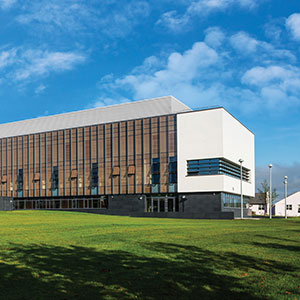
Colleges & Schools
University of Galway has earned international recognition as a research-led university with a commitment to top quality teaching across a range of key areas of expertise.
-
Research & Innovation

Research & Innovation
University of Galway’s vibrant research community take on some of the most pressing challenges of our times.
-
Business & Industry
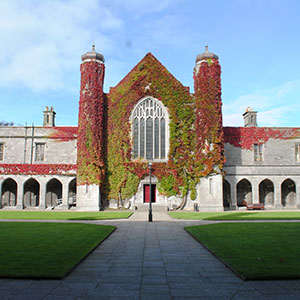
Guiding Breakthrough Research at University of Galway
We explore and facilitate commercial opportunities for the research community at University of Galway, as well as facilitating industry partnership.
-
Alumni & Friends
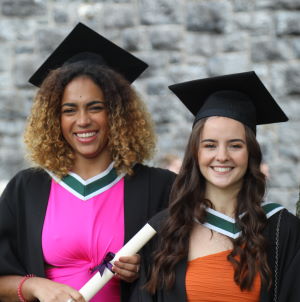
Alumni & Friends
There are 128,000 University of Galway alumni worldwide. Stay connected to your alumni community! Join our social networks and update your details online.
-
Community Engagement
Community Engagement
At University of Galway, we believe that the best learning takes place when you apply what you learn in a real world context. That's why many of our courses include work placements or community projects.
 Accessibility & Language
Music (Structured PhD)
Music (Structured PhD Arts HSS)
Course Overview
As part of the doctoral training available on the Structured PhD programme, students avail themselves of a range of interdisciplinary taught modules. The wide menu of available options include modules that:
- are discipline-specific in that they augment the student’s existing knowledge in their specialist area
- are dissertation-specific in that they supply core skills which are essential to completion of the research project, e.g., additional language skills
- acknowledge a student’s professional development, e.g., presentation of a paper at an international conference
- enhance a student’s employability through generic training, e.g., careers workshops, computer literacy.
Each student will be assigned a primary Supervisor(s) and a Graduate Research Committee made up of experienced researchers to plan their programme of study and to provide on-going support to their research.
The Discipline of Music encourages PhD degree applications across all genres of music.
A PhD dissertation in Music should make a substantial and original contribution to its field of knowledge. The PhD degree is awarded for work that is 'worthy of publication, in whole or in part, as a work of serious scholarship' ( University of Galway Calendar).
Programmes Available
Structured PhD 4 years full-time, 6 years part-time
Associated
Learning Outcomes
Entry Requirements
For all Arts Research Programmes the following supporting documentation must be submitted:
- Qualifications and exam results (transcripts) to date:required for all non-University of Galway applicants and for University of Galway graduates who did not receive their undergraduate degrees from University of Galway. Applicants who have still to graduate must upload these on receipt
- English language competency: if necessary, evidence of English language competency
- Passport or birth certificate: non University of Galway-applicants only—a copy of your passport or birth certificate must also be uploaded.
Who’s Suited to This Course
Current research projects
Current research projects (Optional)
Current PhD Projects:
- Putting on the trousers for the trouser role… in opera leadership in Ireland (funded by Research Ireland)
- Reinterpretations of Unaccompanied Traditional Irish Singing in the Early 21st Century (project jointly hosted by the University of Galway and University Paris 8)
- Sean-nós singing and linguistic development (focusing on dialect forms) (co-supervised with Roinn na Gaeilge, University of Galway)
- Women's intersubjectivity in sean-nós singing
Visiting PhD Researcher
Gender and sean-nós dance
Current funded research opportunity
Work Placement
Related Student Organisations
Career Opportunities
Employers increasingly value creativity above all other qualities in the workforce. A PhD study in Music develops literary, digital, linguistic, analytical, performative and creative skills. Many PhD graduates find success in performance, teaching, composition, academia, sound engineering, music therapy, arts administration, journalism, broadcasting, publishing, librarianship and archivism.
Find a Supervisor / PhD Project
If you are still looking for a potential supervisor or PhD project or would like to identify the key research interests of our academic staff and researchers, you can use our online portal to help in that search
Research Areas
Research Areas
Dr Thomson: Late-nineteenth and early-twentieth-century British and Irish art music; reception history; music historiography; music and literature; analysis; editing.
Dr Feery: Acoustic Composition; Electro-Acoustic Composition; Opera; Music for Stage and Screen; Experimental Music and Improvisation; Popular Music and Songwriting.
Dr Hanlon: Cultural musicology; historiography in Western art music: popular music studies; the intersection of music with social movements, including feminist movements and the LGBTQ+ rights movements since the early 1970s; music as medicine.
Dr Ní Shiochain: 17th-19th-century Irish-speaking women song composers, lamenters, and singers; sean-nós singing; anonymous women's voices in song; oral composition, transmission, and performance; Irish traditional music and dance; the inter-relationship between melody and embodiment in dance, particularly in polkas and slides; the relationship of poetic metre to melodic structure in sean-nós song; song and thought formation; song and liminality; song and selfhood/identity; anti-colonial song; decolonising arts practice and artistic research; oral theory; performance theory; ethnomusicology; cultural musicology. Performance specialisms: sean-nós singing, set-dancing, whistle playing.
Researcher Profiles
Course Fees
Fees: EU
€5,750 p.a. (€5,890 including levy) 2026/27
Fees: Non EU
€14,500 p.a. (€14,640 including levy) 2026/27
Contact Us
Dr Ann-Marie Hanlon ann-marie.hanlon@universityofgalway.ie
Related links:
 Scholarships
 Research
 Graduate Studies Office