-
Courses

Courses
Choosing a course is one of the most important decisions you'll ever make! View our courses and see what our students and lecturers have to say about the courses you are interested in at the links below.
-
University Life

University Life
Each year more than 4,000 choose University of Galway as their University of choice. Find out what life at University of Galway is all about here.
-
About University of Galway
About University of Galway
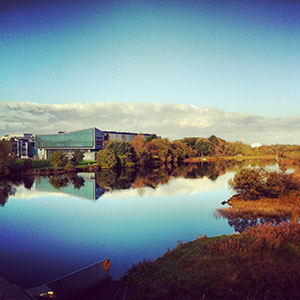
Since 1845, University of Galway has been sharing the highest quality teaching and research with Ireland and the world. Find out what makes our University so special – from our distinguished history to the latest news and campus developments.
-
Colleges & Schools
Colleges & Schools
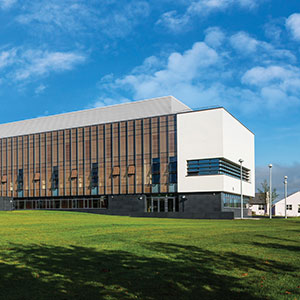
University of Galway has earned international recognition as a research-led university with a commitment to top quality teaching across a range of key areas of expertise.
-
Research & Innovation
Research & Innovation
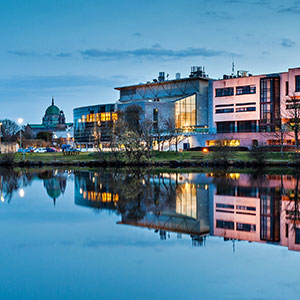
University of Galway’s vibrant research community take on some of the most pressing challenges of our times.
-
Business & Industry
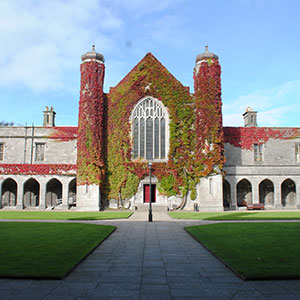
Guiding Breakthrough Research at University of Galway
We explore and facilitate commercial opportunities for the research community at University of Galway, as well as facilitating industry partnership.
-
Alumni & Friends
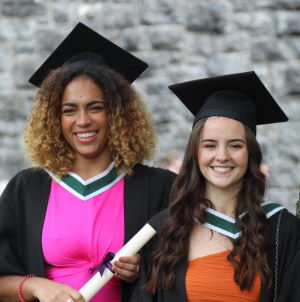
Alumni & Friends
There are 128,000 University of Galway alumni worldwide. Stay connected to your alumni community! Join our social networks and update your details online.
-
Community Engagement
Community Engagement
At University of Galway, we believe that the best learning takes place when you apply what you learn in a real world context. That's why many of our courses include work placements or community projects.
 Accessibility & Language
November Lab created stem cell ‘mini-brains’ to investigate stroke injury and therapies
Lab created stem cell ‘mini-brains’ to investigate stroke injury and therapies
Monday, 16 November 2026
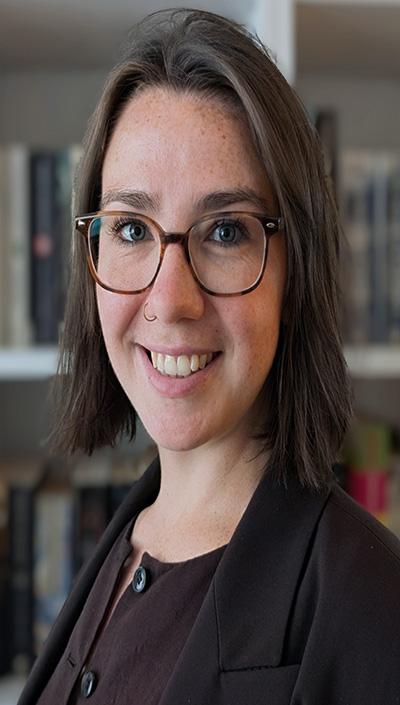
Dr Siobhan Crilly, School of Biological and Chemical Sciences and Rinn Medical Devices, University of Galway. Photo: Siobhan Crilly
A scientist at University of Galway will lead research to create ‘mini-brains’ in the lab to better understand how stroke and other blood vessel-related brain conditions develop.
The project will build a mini human brain to investigate stroke damage and therapies that can ultimately reduce reliance on animal testing and lead to successful translation to clinical practice.
Dr Siobhan Crilly has been awarded €1.96million through The Royal Society - Research Ireland University Research Fellowship programme to progress the research.
The Fellowship awards aim to support outstanding scientists who are in the early stages of their research career and have the potential to become leaders in their fields.
Diseases that affect the brain’s blood vessels - like haemorrhagic stroke which is caused by bleeding in or around the brain - are among the leading causes of disability and death worldwide, yet remain poorly understood.
By developing advanced human-relevant brain models, Dr Crilly aims to improve understanding of the biological mechanisms underlying stroke and support the future development of effective therapies.
Based at the University’s Institute for Health Discovery and Innovation, Dr Crilly’s research focuses on developing innovative systems to understand neurodevelopment and neurological disease. The project uses state-of-the-art techniques to grow human tissue from stem cells that mimic the human brain and its blood supply, to create a model of haemorrhagic stroke.
Dr Siobhan Crilly, Postdoctoral Fellow with the School of Biological and Chemical Sciences and Rinn Medical Devices, University of Galway, said: “My research will create a new, human-based model of the brain and its blood supply using lab-grown ‘mini-brains’, known as cerebral organoids. These organoids are made from stem cells and partially mimic the structure and function of the human brain.
“Human induced pluripotent stem cells are adult cells, reprogrammed to act like early-stage cells, that can turn into almost any other cell type in the body. With new techniques we can add blood vessels and even simulate blood flow through these mini-brains, allowing us to study stroke in a much more realistic way.
“This exciting research opens the door to understanding how stroke and other blood vessel-related brain conditions develop, how they damage brain cells, and how we might stop or even reverse that damage, perhaps better than the animal models can.”
The research builds on work carried out at Rinn Medical Devices through MedTrain+; a postdoctoral fellowship programme and aims to develop better treatments, reduce the need for animal testing, support greener science and ensure new therapies are safer and more effective for patients. It also aims to help patients recover faster, while reducing the long-term cost of care for society.
Professor Derek Morris, Established Professor of Human Genetics and Genomics and Head of the School of Biological and Chemical Sciences, University of Galway, said: “We are absolutely delighted to see Dr Siobhan Crilly awarded this prestigious Royal Society - Research Ireland University Research Fellowship. Siobhan's research combines scientific excellence with innovative approaches to tackling one of the most challenging areas of neurological disease research.
"This award recognises her outstanding achievements and her potential to become a future leader in the field. We look forward to seeing the significant impact her work will have on advancing our understanding of haemorrhagic stroke and ultimately improving outcomes for patients."
The Royal Society - Research Ireland University Research Fellowship is designed to support outstanding scientists in the Republic of Ireland. The highly competitive programme provides researchers with the opportunity to establish an independent research career and build a strong platform for future leadership within universities and research organisations.
Successful candidates are awarded a fellowship by the Royal Society, funded by Research Ireland, for up to eight years.
Ends
Keywords: Press.
Author: Marketing and Communications, NUI Galway
« Back
Related news
13 November 2026
Research breakthroughs advance Type 1 diabetes cell therapy
11 November 2026
Ireland’s best young science filmmakers announced
10 November 2026
University of Galway leads nationally with 13 Research Ireland Public Service Fellowships
4 November 2026
Universal Design Conference to welcome global leaders in inclusion
2 November 2026
University announces new Gaelic Games sponsorship with Supermac’s