-
Courses

Courses
Choosing a course is one of the most important decisions you'll ever make! View our courses and see what our students and lecturers have to say about the courses you are interested in at the links below.
-
University Life

University Life
Each year more than 4,000 choose University of Galway as their University of choice. Find out what life at University of Galway is all about here.
-
About University of Galway

About University of Galway
Since 1845, University of Galway has been sharing the highest quality teaching and research with Ireland and the world. Find out what makes our University so special – from our distinguished history to the latest news and campus developments.
-
Colleges & Schools

Colleges & Schools
University of Galway has earned international recognition as a research-led university with a commitment to top quality teaching across a range of key areas of expertise.
-
Research & Innovation

Research & Innovation
University of Galway’s vibrant research community take on some of the most pressing challenges of our times.
-
Business & Industry

Guiding Breakthrough Research at University of Galway
We explore and facilitate commercial opportunities for the research community at University of Galway, as well as facilitating industry partnership.
-
Alumni & Friends

Alumni & Friends
There are 128,000 University of Galway alumni worldwide. Stay connected to your alumni community! Join our social networks and update your details online.
-
Community Engagement
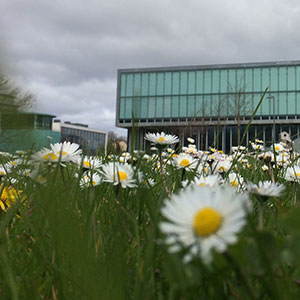
Community Engagement
At University of Galway, we believe that the best learning takes place when you apply what you learn in a real world context. That's why many of our courses include work placements or community projects.
 Accessibility & Language
December Researchers reshaping sex and gender inclusion in medical research
Researchers reshaping sex and gender inclusion in medical research
The Quadrangle, University of Galway
Dec
29
2025
Posted: 10:00 GMT
An international research team has created a roadmap for the integration of sex and gender in medical research.
The PAINDIFF network, led by University of Galway Centre for Pain researchers, brings together 32 international experts from 22 institutions across eight countries to address one of the most persistent gaps in biomedical science with barriers and inconsistencies in how sex and gender are accounted for in study design, data analysis and reporting.
The results of the project have been published in Nature Neuroscience https://www.nature.com/articles/s41593-025-02164-1
Senior author and consortium coordinator Dr Michelle Roche said: “For too long, medical research often assumed that biological mechanisms and treatment responses are the same for males and females. Historically, males were more commonly used in preclinical research and while clinical research included more balanced participation, data was not routinely analysed or separately by sex.”
The research team noted that increasing evidence now shows meaningful differences between males and females in disease prevalence, biological pathways and responses to treatment.
Dr Roche added: “As medical research moves toward personalised medicine, it is increasingly clear that understanding sex and gender differences and similarities is essential for improving health outcomes. The PAINDIFF network has developed guidelines and recommendations for studies in this field. Widespread adoption and implementation of these recommendations will reduce variability, improve reproducibility, and enhance the translatability of research findings, within and beyond the field of pain.”
Professor David Finn, joint first author on the paper, said: “Chronic pain is a clear example of a condition where there are important sex and gender differences. It affects one in five people worldwide, with women accounting for 70% of those affected. Our new paper aims to reset the basic requirements for medical research, offering 13 actionable recommendations to guide researchers, reviewers, funders and policymakers, creating a clear and comprehensive roadmap for integrating sex and gender.”
The recommendations include five universal principles applicable across all types of research — such as including both males and females as standard practice, and analysing and reporting data by sex. They also address how gender, distinct from biological sex, should be meaningfully incorporated into research frameworks.
Professor Brian McGuire, joint first author, said: “Historically, there have been deficits, barriers and inconsistencies surrounding the inclusion and study of sex and gender in research. Our paper provides a framework and roadmap for researchers and other stakeholders on how best to include and study sex and gender in research on pain and other biopsychosocial fields going forward.”
The research was carried out under the ERA-NET NEURON initiative, funded by the European Union and the Health Research Board, and led by Dr Michelle Roche, Professor David Finn and Professor Brian McGuire at the University of Galway’s Centre for Pain Research.
The 13 PAINDIFF recommendations published under three themes are:
- Universal Recommendations
- Include males and females as standard practice unless there is a valid reason not to do so.
- Account for sex in randomization/counterbalancing/testing order
- Use adequately powered study design to detect sex differences when it is the primary experimental variable or when data suggest sex-specific effects
- Include detailed reporting of experimental design including sex of the experimenter when possible
- Conduct sex-disaggregated analysis and reporting
- Preclinical
- Researchers should be aware of, and report on, the sex of the established cell lines, primary cells and tissues used in their research
- It is not always necessary to test for oestrous cycle stage
- Researchers should include detailed reporting on housing, environmental conditions and experimental design
- Clinical
- Ask for participants’ sex assigned at birth and self-identified gender
- Include a “prefer/choose not to say” response option when asking about sex and gender
- Include an open textbox response option to capture gender identity followed by a series of tick boxes to aid categorisation
- Report the number of people who hold diverse gender identities and, where possible and permitted, make the raw data accessible for further study (while ensuring anonymity).
- When possible, collect and report on sex-specific variables to allow disaggregated analysis by sex or gender to be better informed by hormonal status, rather than solely by age.
Ends