-
Courses
Courses
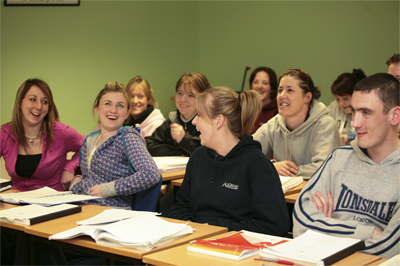
Choosing a course is one of the most important decisions you'll ever make! View our courses and see what our students and lecturers have to say about the courses you are interested in at the links below.
-
University Life

University Life
Each year more than 4,000 choose University of Galway as their University of choice. Find out what life at University of Galway is all about here.
-
About University of Galway

Since 1845, University of Galway has been sharing the highest quality teaching and research with Ireland and the world. Find out what makes our University so special – from our distinguished history to the latest news and campus developments.
-
Colleges & Schools

Colleges & Schools
University of Galway has earned international recognition as a research-led university with a commitment to top quality teaching across a range of key areas of expertise.
-
Research & Innovation

University of Galway’s vibrant research community take on some of the most pressing challenges of our times.
-
Business & Industry

Guiding Breakthrough Research at University of Galway
We explore and facilitate commercial opportunities for the research community at University of Galway, as well as facilitating industry partnership.
-
Alumni & Friends

Alumni & Friends
There are 128,000 University of Galway alumni worldwide. Stay connected to your alumni community! Join our social networks and update your details online.
-
Community Engagement
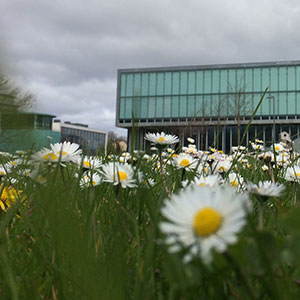
At University of Galway, we believe that the best learning takes place when you apply what you learn in a real world context. That's why many of our courses include work placements or community projects.
School of Psychology
Welcome. The School of Psychology is housed in a purpose-built facility in the centre of campus. We are dynamic, innovative and recognised for our teaching, research, and community contribution. We have a suite of professionally accredited undergraduate and postgraduate (Higher Diploma, Masters and PhD) programmes. We also have two active and successful research streams: Brain & Behaviour, and Health & Wellbeing. Researchers from both have participated in acquiring major national and international funding awards and we continue to develop a strong profile in quantity and quality of research output.
Latest University News
16 February 2026
University of Galway brings engineering to life with Family Fun Day 2026
University of Galway is opening its doors to families of all ages for a free, hands-on event designed to inspire the next generation of engineers and showcase the vital role engineering plays in everyday life.
As part of Engineers Week 2026, ‘Engineering Our Future: Family Fun Day’ takes place on Saturday February 28th from 10am-4pm, at the Alice Perry Engineering Building.
Organised by the School of Engineering, the event offers an exciting programme of interactive demonstrations, creative workshops, and hands-on activities.
Visitors can explore the world of engineering through fun experiences like building structures, discovering the science behind water networks, experimenting with robotics and 3D printing, enjoying virtual reality, tackling LEGO challenges and even engineering through slime, and much more.
Visitors will also have the opportunity to meet engineers and researchers, learn about cutting-edge innovations, and see first-hand how engineering shapes homes, cities and the world of tomorrow.
Professor David Burn, President of University of Galway, said: “Engineering turns imagination into reality. Engineers shape the world by solving problems, building connections and improving lives every day. This is particularly important in addressing current global challenges of climate change and providing technology and infrastructure required by the growing human population.”
Professor Jamie Goggins from the University’s School of Engineering and Director of Construct Innovate, said: “Children are natural engineers. They love to design and build things, using whatever they can get their hands on. With knowledge, innovation and creativity, engineers change the reality and future of all human beings. Join us for the Engineering Our Future: Family Fun Day and explore Engineering through exciting and fun hands-on activities and shows, as well as meeting with practicing engineers to better learn about the world around us, understand the role of Engineering in our lives and its impact on our future.”
Tickets are free and can be booked in advance for some shows and activities, but it will also be possible to attend shows without pre-booking on a first-come-first-served basis on the day.
For more information and booking details, visit: https://www.universityofgalway.ie/engineersweek/familyfunday/
The event is supported by Engineers Ireland West, Construct Innovate, Arup and MaREI Centre.
Ends
15 February 2026
Scientists show how to predict world’s deadly scorpion hotspots
International research team pinpoints high-risk areas to inform global scorpion sting prevention
An international team of scientists have identified how to pinpoint and predict hotspots for some of the most dangerous species of scorpion in the world.
The researchers have established the key environmental conditions that determine where lethal, venomous arachnids thrive - findings that could help shine a light on flashpoints for scorpion stings in tropical regions across the globe.
The team of scientists used field observations in Africa combined with computer modelling to predict where dangerous scorpion species are most likely to be found and what factors influence their distributions.
Their analysis uncovered a striking pattern - soil type largely determines where most scorpions live, while temperature, both average and seasonal ranges, play a key role for some species.
Crucially, not all scorpions behave alike. Some are adaptable and widespread, while several others showed extremely restricted predicted distributions, suggesting narrow habitat requirements and localised risk zones.
The research was conducted by an international team from University of Galway, in partnership with University Ibn Zohr in Morocco.
The findings of the study are published in Environmental Research Communications. It focuses on central Morocco, one of the most severe global hotspots for scorpion stings, and aims to guide prevention strategies, as well as the development of new diagnostic tools and antivenoms.
Dr Michel Dugon, Head of the Venom Systems Lab at University of Galway and senior author of the study, said: “The findings could save lives. By pinpointing where dangerous scorpions are most likely to appear, health authorities can target awareness campaigns, train frontline medical staff, and focus community prevention in high-risk areas, especially protecting children. The approach can be applied wherever scorpions pose a threat, from Brazil to the Middle East and India.”
Scorpion stings are a hidden global public health crisis, particularly across tropical and subtropical regions. Every year, more than 2 million people are stung. While most stings cause pain and swelling, some species can deliver venom that leads to very severe illness and death, especially in children and older people. Globally, scorpion stings are estimated to claim the lives of more than 3,000 children annually.
While antivenoms exist for a range of scorpion species, medical teams often struggle to identify which species is responsible, making timely, effective treatment difficult.
To address this issue, the researchers used a computer-mapping tool called Maximum Entropy to predict where dangerous scorpions live and what environmental conditions they prefer.
The analysis uncovered the striking patterns. Using globally available data on soil, temperature, and other habitat factors, the scientist demonstrates a way to pinpoint high-risk scorpion areas outside Morocco, including regions of the tropics where detailed species records are limited.
The research was carried out by established and doctoral scientists from both universities, with support from University of Galway undergraduate students who travel to Morocco annually as part of their Bachelor of Science Zoology programme.
Dr Dugon added: “Overall, we know very little about the ecology of scorpions, their venom and the best way to treat scorpion stings. Our international collaborative efforts aim to develop new tools for the prevention, diagnostic and treatment of scorpion stings globally. This requires multidisciplinary teams including public health specialists, clinicians, zoologists and members of local communities.”
Fouad Salhi, doctoral researcher at the University Ibn Zohr of Agadir and first author of the study, said: “This research shows how biodiversity data can inform public health policies. By combining long-term fieldwork with ecological modelling, we were able to identify where dangerous scorpions are most likely to occur. We aim to have real-world impact — supporting prevention strategies, improving medical preparedness, and ultimately contribute to the reduction of the burden of scorpion stings, both in Morocco and beyond.”
Dr Colin Lawton, Head of Zoology at University of Galway and co-author of the study, said: “University of Galway is gaining momentum as a centre of excellence in zoological research, addressing questions of global importance, from fish stock to mammal conservation and animal-borne disease mitigation. We are very proud to integrate our BSc Zoology students into our research activities and international partnerships.”
The full study in Environmental Research Communications is available at https://iopscience.iop.org/article/10.1088/2515-7620/ae3fef.
Ends
13 February 2026
Research highlights life-threatening dangers of button battery ingestion
Spoonful of honey can delay corrosive process in children as researchers stress the importance of better awareness of risks
New research from University of Galway raises awareness of the devastating injuries that can be caused to young children by button battery ingestion.
The study is the first of its kind in Ireland and highlights that children between the ages of six months and six years are at particular risk.
The research revealed that almost nine out of 10 people surveyed were not aware that a spoonful of honey can help delay the corrosive damage caused if a child swallows one of these batteries.
The team also called out concerns around a lack of safety and awareness among the general public over the risks from ingestion as well as inconsistent packaging and safety warnings.
The study has been published in the peer reviewed international Journal of Laryngology & Otology. The full paper is available to read here.
Professor Ivan Keogh, Head of the Discipline of Oto-Rhino-Laryngology at the University of Galway and Consultant Otolaryngologist-Head and Neck Surgeon at Galway University Hospitals, said: “In Ireland, button battery ingestion occurs a number of times each year, and in otherwise healthy young children it can lead to devastating, long-term, and sometimes fatal consequences.
“Button battery ingestion is a time critical, life-threatening emergency, but a spoonful of honey can reduce damage until urgent removal under general anaesthetic by experienced consultants.”
Button batteries are cheap and shiny and attractive to young children. They are found in many common household items, such as toys and remote controls.
If swallowed, larger button batteries, especially those measuring approximately 2cm in diameter, can lodge in a child’s upper oesophagus/swallow passage. Within minutes of ingestion, the negative pole of the battery starts generating an electrical current that causes ongoing caustic/burn injury to the lining of the swallow passage.
If the ingestion is unwitnessed, symptoms can be non-specific and lead to a delayed diagnosis. Eventually batteries can erode through the oesophagus into the aorta, leading to catastrophic bleeding and death.
The research, led by Professor Ivan Keogh and supported by Dr Anmol Mahesh and Mr Khalid Majeed as part of a Health Research Board grant, involved a questionnaire-based survey of 561 adults to assess public awareness of this serious and often under-recognised childhood risk.
The study revealed:
- Despite 87 per cent of respondents reporting the use of button batteries in their homes, 65 per cent had not considered their safety, and 68 per cent felt that existing packaging warnings were inadequate.
- While 80 per cent were aware that button battery ingestion can be dangerous, 88 per cent were unaware that giving a spoonful of honey can help delay the corrosive damage caused by the battery.
- Awareness of a simple, potentially life-saving intervention was particularly low, with only 11.4 per cent of participants reporting knowledge of honey as an immediate home measure to slow injury following ingestion.
The research team highlighted the need to educate the public on the dangers of button batteries among consumers including parents, the general public, healthcare professionals and retailers, to prevent further devastating impacts to young children. It noted that prevention, awareness and the development of safer technologies is key.
There are also numerous reports of devastating life changing injuries and unfortunately deaths reported in the international press.
Removal of a swallowed button battery is a time critical emergency. Safe removal involves urgent endoscopy under general anaesthetic by experienced consultants.
While some manufacturers are investing in research to develop safer button battery technologies, significant risks to children remain.
According to the National Poison Data System in the USA, button battery ingestions have increased from 745 in 1985 to 3467 cases in 2019. In the US, Reese’s Law was introduced in 2022, which mandates federal safety requirements around button battery use, making their compartments safer and more difficult for children to open.
Professor Keogh added: “Challenges persist regarding the design and marketing of button batteries and public awareness of the risks associated with ingestion. Action is required to prevent further tragedies.”
Ends