-
Courses
Courses
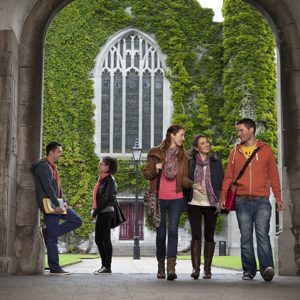
Choosing a course is one of the most important decisions you'll ever make! View our courses and see what our students and lecturers have to say about the courses you are interested in at the links below.
-
University Life
University Life
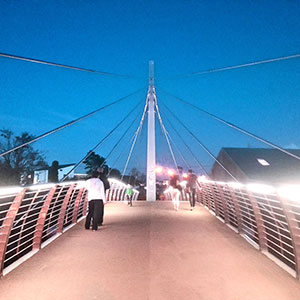
Each year more than 4,000 choose University of Galway as their University of choice. Find out what life at University of Galway is all about here.
-
About University of Galway
About University of Galway
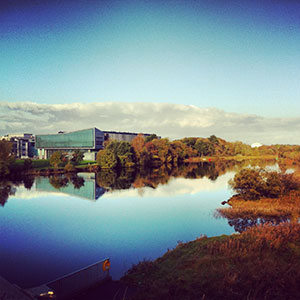
Since 1845, University of Galway has been sharing the highest quality teaching and research with Ireland and the world. Find out what makes our University so special – from our distinguished history to the latest news and campus developments.
-
Colleges & Schools
Colleges & Schools
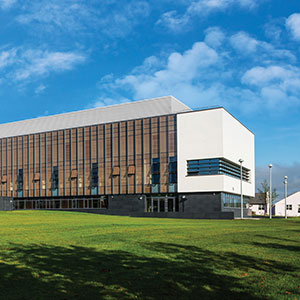
University of Galway has earned international recognition as a research-led university with a commitment to top quality teaching across a range of key areas of expertise.
-
Research & Innovation
Research & Innovation
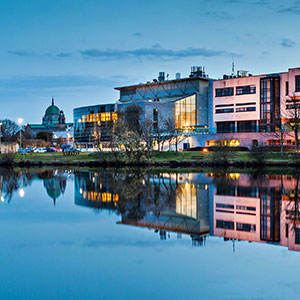
University of Galway’s vibrant research community take on some of the most pressing challenges of our times.
-
Business & Industry
Guiding Breakthrough Research at University of Galway
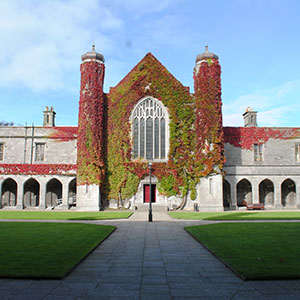
We explore and facilitate commercial opportunities for the research community at University of Galway, as well as facilitating industry partnership.
-
Alumni & Friends
Alumni & Friends
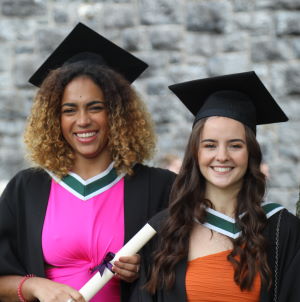
There are 128,000 University of Galway alumni worldwide. Stay connected to your alumni community! Join our social networks and update your details online.
-
Community Engagement
Community Engagement
At University of Galway, we believe that the best learning takes place when you apply what you learn in a real world context. That's why many of our courses include work placements or community projects.
 Accessibility & Language
Projects
Current projects affiliated with the DHRC
The following projects provide focal points for current work in the Galway DH community:
- Armarium Digital Editions
- Capturing Blades: Documenting Medieval Combat Technique through Motion Capture Technologies
- Cnuasach Fiteán an Ollaimh Tomás Ó Máille — Prof. Tomás Ó Máille Wax Cylinder Collection
- DICUIL: Dicuil – an Irish and Carolingian Universalist and his Intellectual Legacy
- GLOSSAM: Global and Local Scholarship on Annotated Manuscripts
- Landed Estates: Ireland's Landed Estates & Historic Houses, c. 1700 - 1914
- MIrA: Manuscripts with Irish Associations
- PIETRA—Translation and Communication
- REBPAF: Re-mediating the Early Book: Pasts and Futures
- Sport in European Cinema
- STEMMA: Systems of Transmitting Early Modern Manuscript Verse, 1475-1700
- Theatronomics
See also below for details on recently completed projects.
Armarium Digital Editions
Project Developer: Prof. Pádraic Moran
https://armarium.universityofgalway.ie/
Armarium is an Open Access, Open Source publishing platform for scholarly digital editions. It emphasises simple technical implementation, long-term preservation, citability, readability, and quality assurance.
Capturing Blades: Documenting Medieval Combat Technique through Motion Capture Technologies
Principal Investigator: Dr Jacopo Bisagni
Capturing Blades is a pilot project that uses motion-capture technology to record and analyse techniques from I.33, the earliest European swordsmanship manual (c.1330). Working with expert historical fencers and relying on infrastructure and expertise available at the Centre for Creative Technologies, we will capture selected combat sequences and produce analysable data and animated visualisations. This proof-of-concept dataset will form the foundation for a wider programme on the interaction between Medieval Latin philology and embodied research.
Funded by University of Galway (College of Arts, Social Sciences, and Celtic Studies, SRIS 2025–6).
Cnuasach Fiteán an Ollaimh Tomás Ó Máille — Prof. Tomás Ó Máille Wax Cylinder Collection
Principal Investigator: Prof. Lillis Ó Laoire
https://www.universityofgalway.ie/tomasomaille
Ba é Tomás Ó Máille an chéad Ollamh le Gaeilge i gColáiste na hOllscoile Gaillimh ó 1909 go lá a bháis i 1938 agus bhí sé ar dhuine de mhór-scoláirí Gaeilge a linne. Is suntasach go háirithe mar a dhírigh sé ar nua-theicneolaíocht a linne fhéin – an taifeadadh fuaime. Ó 1928 ar aghaidh, chruthaigh sé na céadta taifeadadh fuaime de chainteoirí Gaeilge as Connacht agus as an gClár. Tá Cartlann an Ollaimh Ó Máille in Ollscoil na Gaillimhe, ina bhfuil 398 fiteán, ar an gcartlann is mó dar chruthaigh aon bhailitheoir aonair fuaime a d'fheidhmigh go neamhspleách in Éirinn sa chéad leath den bhfichiú aois. Ar fhiteáin Uí Mháille cloistear ábhar ó bhéal – caint, scéalaíocht, agus amhráin – ábhar a léiríonn an spéis a chuir sé sa teangeolaíocht, sa bhéaloideas, agus i mbailiú an cheoil ar feadh a shaoil. Is acmhainn luachmhar í Cartlann Uí Mháille a rachfaidh go mór chun tairbhe an taighde idirdhisciplíneach, acmhainn a bhaineann leis an iliomad disciplín ina measc an teangeolaíocht, an tsochtheangeolaíocht, teanga agus litríocht na Gaeilge, an léann Éireannach, stair, tíreolaíocht, socheolaíocht, béaloideas, agus eitnicheoleolaíocht.
Prof. Tomás Ó Máille was the first professor of Irish at University College Galway from 1909 until his death in 1938 and was among the leading Irish scholars of his time. Ó Máille’s greatest foresight was his commitment to the newest technology of his day – audio recording. From 1928, he created hundreds of recordings of Irish speakers from Connacht and Clare. Numbering 398 wax cylinders, the Prof. Ó Máille Archive at the University of Galway is the largest collection of recordings to have been created by any individual recordist working independently in Ireland from the advent of recording technology to the mid-twentieth century. Ó Máille’s wax cylinders contain vocal material in Irish including speech, storytelling, and song, reflecting his lifelong interests in linguistics, folklore, and music collecting. The Ó Máille Collection represents an invaluable resource of great interdisciplinary potential with relevance for numerous disciplines including linguistics, socio-linguistics, Irish language and literature, Irish studies, history, geography, sociology, folkloristics, and ethnomusicology.
Funders: Heritage Council; Roinn na Gaeltachta; Foras na Gaeilge; Leabharlann Náisiúnta na hÉireann; Acadamh Ríoga na hÉireann; Ollscoil na Gaillimhe

DICUIL: Dicuil – an Irish and Carolingian Universalist and his Intellectual Legacy
Principal Investigator: Dr Christian Schweizer
https://www.universityofgalway.ie/classics/research/postdocs/schweizer/
This project analyses the texts and the legacy of Dicuil, an Irish scholar working at the Carolingian court in the early ninth century. This includes first translations of three of his texts, and a first edition of his 'Epistula censuum', a partly poetic treatise on measurements and grammar, written for Louis the Pious in 818. This text has been made available as the first contribution to Galway's pioneering new Open Access platform Armarium Digital Editions: https://armarium.universityofgalway.ie/editions/dicuil-epistula/

GLOSSAM: Global and Local Scholarship on Annotated Manuscripts
Principal Investigator: Prof. Pádraic Moran
https://www.glossam.ie/
The GLOSSAM project will enhance our understanding of reading, education, scholarship, and knowledge transfer in the pre-modern world, by creating new narratives, conceptual frameworks, digital tools and methodological models for the study of glosses. Glosses are the paratexts transmitted between the lines and in the margins of manuscript books, micro-texts that control how the central texts were read and interpreted.
Landed Estates
Principal Investigator: Dr. Laurence Marley
https://landedestates.ie
Since 2005 the Irish Landed Estates project has undertaken the research for, and the publication of, a comprehensive and integrated resource guide to landed estates and historic houses in the provinces of Connacht, Munster and part of Ulster, c. 1700-1914. The aim of the guide is to assist and support researchers working on the social, economic, political and cultural history of these provinces from c.1700 to 1914. The project has received funding from the Irish Research Council, the Heritage Council and the Programme for Research in Third Level Institutions
MIrA: Manuscripts with Irish Associations
Principal Investigator: Prof. Pádraic Moran
https://www.mira.ie
MIrA is a digital catalogue that aims to provide useful information for researchers on early Irish manuscript culture before c. AD 1000.
PIETRA—Translation & Communication
Principal Investigator: Prof. Anne O'Connor
https://pietra.universityofgalway.ie/
PIETRA is funded by the European Research Council under its Consolidator Grant Scheme, Grant No. 101001478. It is a study of the foundations on which the Catholic Church builds its multilingual communicative structures, and is the first, large-scale, multilingual study of the translation products and processes that underpin communication in global religion.
REBPAF: Re-mediating the Early Book: Pasts and Futures
Principal Investigators: Dr Lindsay Reid, Dr Catherine Emerson
https://www.universityofgalway.ie/rebpaf/
REBPAF focuses on the ways in which 15th- and 16th-century book producers (scribes, printers, entrepreneurs) negotiated the dynamic relations between the manuscript book and the printed book and adapted to the evolving challenges of the market, and it demonstrates the continuing relevance of these cultural and economic negotiations to the modern world. To this end, REBPAF unites the interests of present-day organisations that re-mediate the early book (e.g. publishers, book dealers, museums, and other stakeholders in the creative and heritage sectors) with those of academic scholarship.
Funded by the European Union under the Horizon Marie Skłodowska-Curie Doctoral Actions 2021 Project number 101072698. This work is additionally supported by the Swiss State Secretariat for Education, Research and Innovation (SERI) under contract number 22.00196 and UK Research and Innovation (UKRI).
Sport in European Cinema
Principal Investigator: Dr Seán Crosson
https://sportandfilm.eu
This web resource is dedicated to capturing the extraordinary story of how sport has featured across the history of European cinema – and the fascinating insights relevant productions give us today into the development of specific sports, national cultures and European society more broadly.
STEMMA: Systems of Transmitting Early Modern Manuscript Verse, 1475-1700
Principal Investigator: Prof. Erin A. McCarthy
https://stemma.universityofgalway.ie/
The STEMMA project develops and applies a data-driven approach in order to provide the first macro-level view of the circulation of early modern English poetry in manuscript. It focuses on English verse manuscripts written and used between the introduction of printing in England in 1475 and 1700, by which time the rapid changes in both literary taste and publishing norms ushered in by the Restoration had fully transformed literary culture. The project includes manuscripts circulating in England and anywhere else English was spoken and read, including Ireland, the North American colonies, and continental exile communities.
Theatronomics
Principal Investigator: Prof. David O'Shaughnessy
https://www.theatronomics.com/
The ambition of Theatronomics is to harness the remarkably rich (if patchy and inconsistent) financial archives of Covent Garden and Drury Lane, 1732–1809. By fusing archival research, digital humanities, and econometrics, this interdisciplinary project will construct a foundation on which eighteenth-century theatre studies can build its next generation of scholarship.
Completed projects
- An Gaodhal
- DHBM: A Descriptive Handlist of Breton Manuscripts (c. AD 780–1100)
- EVERVERSE
- RECIRC: The Reception and Circulation of Early Modern Women’s Writing, 1550-1700
- Ossian Online
- ÚRSCÉAL
An Gaodhal
Principal Investigator(s): Prof. Tadhg Ó hIfearnáin, Dr Nicholas Wolf (New York University)
https://linktr.ee/angaodhal
I réimse na ríomheolaíochta, is iomadh constaic roimh asbhaint téacs Gaeilge, ina measc inléiteacht an Chló Ghaelaigh ag meaisín, is é sin an cló is coitianta in ábhar lámhscríofa agus clóite na Gaeilge anuas go dtí na 1960í. Go nuige seo, níor cruthaíodh ach líon beag samhla oiliúna OCR in oiriúint don gCló Gaelach agus don litriú neamhchaighdeánach, agus níor dhírigh ceachtar díobh ar théacsanna dátheangacha Gaeilge-Béarla. Le cabhair na teicneolaíochta aitheanta téacs Transkribus, tá dhá shamhla nua OCR cruthaithe ag foireann as Ollscoil Nua-Eabhrac agus Ollscoil na Gaillimhe: samhail do Ghaeilge amháin agus samhail dhátheangach Gaeilge-Béarla. Is é croí-thacar sonraí an bhirt seo ná an nuachtán míosúil Gaeilge-Béarla An Gaodhal (1881–1898) a foilsíodh in Brooklyn, an chéad tréimhseachán a bhí dírithe ar ábhar do léitheoirí na Gaeilge. Ba é bunaitheoir, eagarthóir, agus clódóir an nuachtáin an Gaillimheach Micheál Ó Lócháin (1836-1899). Léiríonn an nuachtán cultúr na nGael i Nua-Eabhrac, in Éirinn, agus i measc deoraithe; saol an Ghael-Mheiriceánaigh; stair Nua-Eabhrac; agus forbairt na Gaeilge le linn na hAthbheochana. Baintear leas as na téacsanna asbhainte – atá ceartaithe ag leibhéal na bhfocal – ar mhaithe le haithint aonán ainmnithe (NER) a fhorbairt, céim a chuirfidh le próiseáil teanga nádúrtha (NLP) na Gaeilge amach anseo.
Computerized text extraction for the Irish language (Gaeilge) faces a number of challenges, the most significant of which is the machine-readability of Cló Gaelach, the typeface most commonly used in hand-written and printed Irish-language material up until the 1960s. To date, only a handful of OCR training models attuned to Cló Gaelach, and to pre-standardized spelling, have emerged and none were trained on bilingual texts (Irish-English). Using the text-recognition software Transkribus, a team at New York University and University of Galway have developed two new OCR models: a Gaeilge-only model and a bilingual Gaeilge-English model. The core dataset for this OCR training exercise is the Brooklyn-based bilingual (Gaeilge-English) monthly newspaper An Gaodhal (1881–1898), the first serial dedicated to providing content to an Irish-language readership, which was established, edited, and printed by Galwayman Micheál Ó Lócháin (1836-1899). The contents of the newspaper reflect the cultural interests of Irish speakers in New York, Ireland, and the wider diaspora; Irish American life; New York history; and the development of the Irish language during the Celtic Revival period. Using the texts extracted from An Gaodhal, which are being corrected at word level, the team is developing NER (named entity recognition) tools to aid future NLP work in the Irish language.
Funders: Robert David Lion Gardiner Foundation; Glucksman Ireland House; New York University; Irish Institute of New York; University of Galway; Data Science Institute; Roinn na Gaeltachta.

DHBM: A Descriptive Handlist of Breton Manuscripts (c. AD 780–1100)
Principal Investigator: Dr Jacopo Bisagni
https://ircabritt.nuigalway.ie/handlist
This online handlist presents a descriptive catalogue of 225 manuscripts associated with Brittany (c. AD 780–1100). Each entry provides bibliographic, codicological, palaeographical and provenance information, alongside discursive notes evaluating the strength of the proposed Breton connections and each manuscript’s place in textual transmission (with particular focus on the transmission of Hiberno-Latin works). Designed as a research tool for early medieval manuscript studies, the resource supports both quantitative overview and qualitative insight into a hitherto understudied corpus.
EVERVERSE
Principal Investigator: Justin Tonra
https://eververse.universityofgalway.ie/
Deploying tools and methods from poetic theory, data analysis, and Natural Language Generation, Eververse uses data from a quantified self device to automatically generate and publish poetry which correlates to the poet's varying physical states.
Funding: European Association for Digital Humanities & Moore Institute for Research in the Humanities and Social Studies
RECIRC: The Reception and Circulation of Early Modern Women’s Writing, 1550-1700
Principal Investigator: Prof. Marie-Louise Coolahan
https://recirc.universityofgalway.ie/
RECIRC was a research project about the impact made by women writers and their works in the sixteenth and seventeenth centuries. Led by Marie-Louise Coolahan, and funded by the European Research Council from 2014 to 2020, the project involved a team of 11 researchers based at the National University of Ireland Galway. The focus included writers who were read in Ireland and Britain as well as women born and resident in Anglophone countries. Therefore, the subject of study was not limited to authors who wrote in English. RECIRC aimed to produce a large-scale, quantitative analysis of the reception and circulation of women's writing from 1550 to 1700. The RECIRC database is one of its major outputs.
Ossian Online
Principal Investigators: Justin Tonra & Rebecca Barr
https://ossianonline.nuigalway.ie/
Ossian Online is a project to publish the various editions of the sequence of eighteenth-century works known collectively as the Ossian poems.
ÚRSCÉAL
Principal Investigator: Justin Tonra
https://universityofgalway.ie/ursceal/
ÚRSCÉAL is a project to build an open-access TEI-encoded collection of the Irish-language novel for inclusion in the European Literary Text Collection (ELTeC), the state-of-the-art multilingual corpus of the European novel (1840-1920).
Funding: College of Arts, Social Sciences, and Celtic Studies