-
Courses

Courses
Choosing a course is one of the most important decisions you'll ever make! View our courses and see what our students and lecturers have to say about the courses you are interested in at the links below.
-
University Life

University Life
Each year more than 4,000 choose University of Galway as their University of choice. Find out what life at University of Galway is all about here.
-
About University of Galway

About University of Galway
Since 1845, University of Galway has been sharing the highest quality teaching and research with Ireland and the world. Find out what makes our University so special – from our distinguished history to the latest news and campus developments.
-
Colleges & Schools
Colleges & Schools
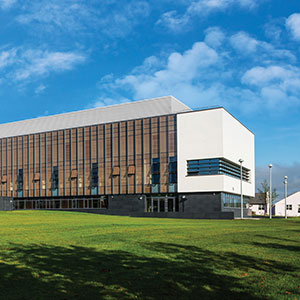
University of Galway has earned international recognition as a research-led university with a commitment to top quality teaching across a range of key areas of expertise.
-
Research & Innovation

Research & Innovation
University of Galway’s vibrant research community take on some of the most pressing challenges of our times.
-
Business & Industry
Guiding Breakthrough Research at University of Galway
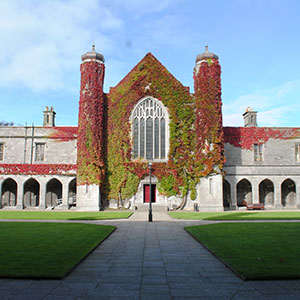
We explore and facilitate commercial opportunities for the research community at University of Galway, as well as facilitating industry partnership.
-
Alumni & Friends

Alumni & Friends
There are 128,000 University of Galway alumni worldwide. Stay connected to your alumni community! Join our social networks and update your details online.
-
Community Engagement
Community Engagement
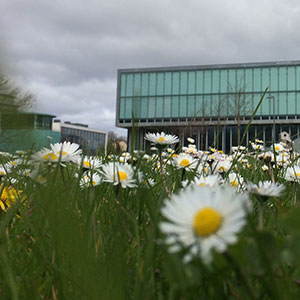
At University of Galway, we believe that the best learning takes place when you apply what you learn in a real world context. That's why many of our courses include work placements or community projects.
 Accessibility & Language
January Two University of Galway projects awarded European Research Council funding
Two University of Galway projects awarded European Research Council funding

Professor Ted Vaughan, Director of the Institute for Health Discovery and Innovation and Professor of Biomedical Engineering at University of Galway. Credit - Martina Regan. Professor Martin O’ Halloran, Principal Investigator in the College of Medicine Nursing and Health Sciences and Executive Director of the BioInnovate Programme at University of Galway.
Jan
27
2026
Posted: 11:55 GMT
Researchers at University of Galway have secured prestigious funding support through the European Research Council (ERC) to progress projects on next-generation 3D printing and hydrogel pain relief therapy.
They are among 136 projects across Europe which have been awarded ERC Proof of Concept grants to explore how scientific results can move towards practical application or early commercial use.
One project will advance an innovative software platform that enables engineers to design lighter, stronger, and more efficient components optimised for 3D printing - additive manufacturing - across biomedical, automotive and aerospace applications.
The new technology offers unprecedented freedom to create complex and lightweight parts as many products are still designed using approaches developed for traditional manufacturing, limiting performance and increasing material waste.
The research team will address this gap by developing a new, easy-to-use design approach that brings design and production considerations together in one simple process, helping engineers move quickly from an idea to a part that is ready to print and use in the real world.
The 3D printing project is led by Professor Ted Vaughan, Director of the Institute for Health Discovery and Innovation and Professor of Biomedical Engineering, alongside Dr Mahtab Vafaeefar, Postdoctoral Researcher in Biomedical Engineering at University of Galway.
The second project is Uro-Lieve, a minimally invasive, biodegradable capsaicin hydrogel designed to selectively silence pain fibres as a therapy for relief from symptoms of painful bladder syndrome, known as interstitial cystitis. The new approach avoids the severe burning of current treatments.
The research is led by Professor Martin O’ Halloran, Principal Investigator in the College of Medicine Nursing and Health Sciences and Executive Director of the BioInnovate Programme at University of Galway. This latest accolade for Professor O’Halloran brings his total ERC awards to eight, making him the joint highest-awarded Ireland-based ERC awardee.
The projects are the only two from Ireland to have been recognised with Proof of Concepts awards in this ERC round.
Professor Ted Vaughan, University of Galway, said: “The ERC Proof of Concept programme provides a vital bridge between discovery and application, enabling researchers to translate frontier science into real-world impact and we are delighted to build on our research and bring its benefits closer to industry and society.
“Too often, we simply ‘print’ conventional designs rather than truly exploiting the capabilities of additive manufacturing. Our goal is to provide intuitive tools that automatically generate high-performance, production-ready designs that are truly functionally tailored to each application, reducing costs, saving material and accelerating innovation.”
The software builds on biomimetic principles derived from models developed during Professor Vaughan’s European Research Council Starting Grant, taking inspiration from how nature designs complex structure and translating these insights into industry-ready design tools that will enable lightweight, efficient, and high-performance components across a range of engineering applications.
Professor Martin O' Halloran, University of Galway, said: “Painful bladder syndrome (interstitial cystitis) is a chronic, underdiagnosed condition marked by persistent bladder pain, urgency, and frequency, with profound impacts on quality of life, mental health, and economic productivity. This proposal introduces Uro-Lieve, a minimally invasive, biodegradable capsaicin hydrogel designed to selectively silence pain fibres while avoiding the severe burning of current treatments. It highlights a major unmet clinical need and the broader structural neglect of women’s pain in research and healthcare.”
Ekaterina Zaharieva, European Commissioner for Startups, Research and Innovation, said: “The discoveries emerging from ERC-funded research are very often more than academic breakthroughs. They form the bedrock of future innovation ecosystems across Europe, inspiring new technologies, businesses and societal solutions. I am pleased that the EU is funding a record number of Proof of Concept Grants this year, and I congratulate all the grantees on their success.”
The European Research Council Proof of Concept scheme is funded under Horizon Europe, the EU’s framework programme for research and innovation. It provides grants to existing ERC grant holders to bridge the gap between pioneering research and early-stage commercial or societal application.
Ends
Related News
20 October 2026
Circular farming could help insulate Ireland’s farmers and taxpayers from global shocks
19 October 2026
Four generations of women share a University of Galway connection
19 October 2026
Tús le comhpháirtíocht straitéiseach don chultúr agus don oideachas idir an Ollscoil agus an Músaem
19 October 2026
University and Museum unveil strategic partnership for culture and education
15 October 2026
Ollscoil na Gaillimhe ag ceiliúradh agus beagnach 2,800 duine ag fáil a gcéime ag na searmanais bhronnta
Featured Stories
Tuesday,
20
October
2026
Circular farming could help insulate Ireland’s farmers and taxpayers from global shocks
Monday,
19
October
2026
Four generations of women share a University of Galway connection
Monday,
19
October
2026