-
Courses

Courses
Choosing a course is one of the most important decisions you'll ever make! View our courses and see what our students and lecturers have to say about the courses you are interested in at the links below.
-
University Life

University Life
Each year more than 4,000 choose University of Galway as their University of choice. Find out what life at University of Galway is all about here.
-
About University of Galway
About University of Galway
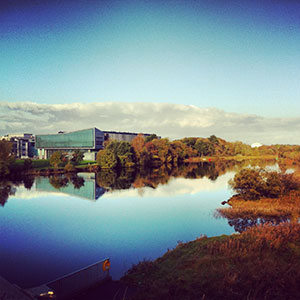
Since 1845, University of Galway has been sharing the highest quality teaching and research with Ireland and the world. Find out what makes our University so special – from our distinguished history to the latest news and campus developments.
-
Colleges & Schools
Colleges & Schools
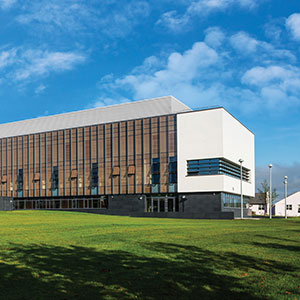
University of Galway has earned international recognition as a research-led university with a commitment to top quality teaching across a range of key areas of expertise.
-
Research & Innovation
Research & Innovation
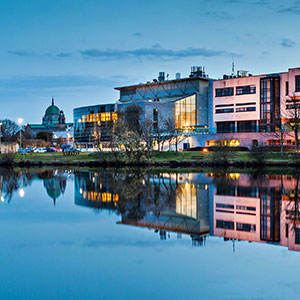
University of Galway’s vibrant research community take on some of the most pressing challenges of our times.
-
Business & Industry
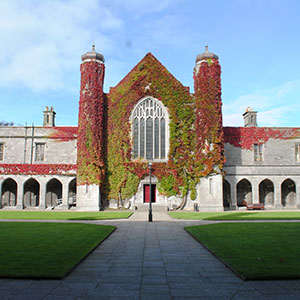
Guiding Breakthrough Research at University of Galway
We explore and facilitate commercial opportunities for the research community at University of Galway, as well as facilitating industry partnership.
-
Alumni & Friends

Alumni & Friends
There are 128,000 University of Galway alumni worldwide. Stay connected to your alumni community! Join our social networks and update your details online.
-
Community Engagement
Community Engagement
At University of Galway, we believe that the best learning takes place when you apply what you learn in a real world context. That's why many of our courses include work placements or community projects.
 Accessibility & Language
January Arctic Ocean’s natural archive unlocks secrets of climate change
Arctic Ocean’s natural archive unlocks secrets of climate change
The Quadrangle, University of Galway
Jan
08
2026
Posted: 14:55 GMT
Tiny plankton organism helps reveal hidden record of key marine currents and changes to Atlantic Meridional Overturning Circulation
An international research team led by the University of Galway has developed a crucial new way to enable scientific reconstruction of ocean acidity and CO2 levels in cold polar oceans, giving new insights into climate change.
The scientists studied how tiny polar foraminifera plankton record ocean acidity (pH) in their shells. When these organisms die and sink to the ocean floor, their shells form part of the ocean’s natural climate archive, which can be studied when collecting sediment cores from the seabed.
In both hemispheres, Polar seas are areas of strong deep-water formation which play a major role in the storage of CO2 and the Atlantic Meridional Overturning Circulation (AMOC) - the conveyor belt of marine currents that keep Northern Europe, in particular Ireland and Britain, relatively mild in winter.
The new findings now allow scientists to go back in time to test whether the rate at which CO2 is removed from the atmosphere is reduced when the AMOC slows down.
The research has been published in the scientific journal Biogeosciences and is available here https://cp.copernicus.org/articles/19/2493/2023/cp-19-2493-2023.pdf.
These and other findings and policy issues will be discussed at the third Annual Irish Atlantic Meridional Overturning Circulation (AMOC) Meeting taking place from today at University of Galway.
Dr Audrey Morley, senior researcher on the project, said: “Our analysis of the tiny polar foraminifera has opened a door to answer questions about climate change which was previously unavailable. We can use our new method to look at the acidity of the polar surface ocean and how it changed over time. That also gives us a deeper understanding of how the Atlantic Meridional Overturning Circulation controls our climate.”
Scientists warn that Atlantic Meridional Overturning Circulation (AMOC) is at risk of being disrupted due to rapid global warming. The ultimate threat is that a weakening or collapse of the AMOC triggers extreme weather events and disruptive changes in seasonality across Europe.
Dr Morley said: “Today, 25-30% of the anthropogenic (human-caused) CO2 emitted into the atmosphere is absorbed by the ocean, effectively mitigating the impact of anthropogenic greenhouse gas emissions on climate change. Whether or not, or how, the rate at which CO2 is removed from the atmosphere changes in response to global warming, or a weakening or collapse of the AMOC, is a critical question that remains to be determined.
“There is a risk if the AMOC slows down and deep-water formation slows down then the cold-water areas of the Polar Oceans won’t remove as much CO2 from the atmosphere and store it away in the deep ocean as they do now.
“The analysis of past warm climates can help us shed light on these important feedback processes. Closing this knowledge gap is crucial if we want to fully understand and quantify the risks of future global warming.”
The third Annual Irish Atlantic Meridional Overturning Circulation (AMOC) Meeting is hosted by the Ryan Institute at University of Galway and is proudly co-organised with Maynooth University and Met Éireann. It brings together leading researchers, state agencies and policymakers to discuss latest research findings and future priorities for AMOC research in Ireland.
Ends