-
Courses
Courses
Choosing a course is one of the most important decisions you'll ever make! View our courses and see what our students and lecturers have to say about the courses you are interested in at the links below.
-
University Life
University Life
Each year more than 4,000 choose University of Galway as their University of choice. Find out what life at University of Galway is all about here.
-
About University of Galway
About University of Galway
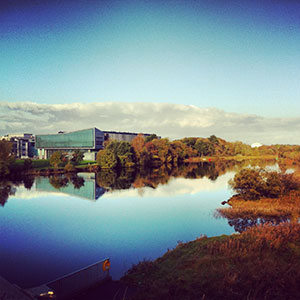
Since 1845, University of Galway has been sharing the highest quality teaching and research with Ireland and the world. Find out what makes our University so special – from our distinguished history to the latest news and campus developments.
-
Colleges & Schools
Colleges & Schools
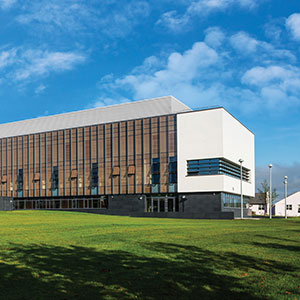
University of Galway has earned international recognition as a research-led university with a commitment to top quality teaching across a range of key areas of expertise.
-
Research & Innovation
Research & Innovation
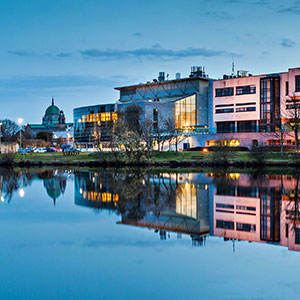
University of Galway’s vibrant research community take on some of the most pressing challenges of our times.
-
Business & Industry
Guiding Breakthrough Research at University of Galway
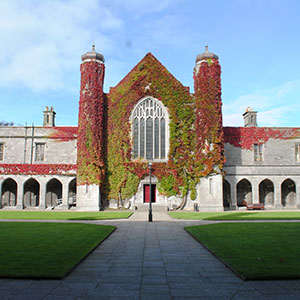
We explore and facilitate commercial opportunities for the research community at University of Galway, as well as facilitating industry partnership.
-
Alumni & Friends
Alumni & Friends
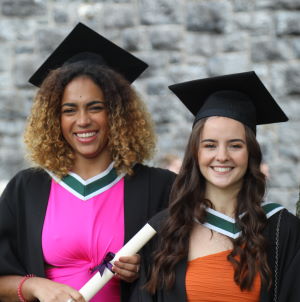
There are 128,000 University of Galway alumni worldwide. Stay connected to your alumni community! Join our social networks and update your details online.
-
Community Engagement
Community Engagement
At University of Galway, we believe that the best learning takes place when you apply what you learn in a real world context. That's why many of our courses include work placements or community projects.








 Accessibility & Language
Journalism (MA)
MA (Journalism)
College of Arts, Social Sciences & Celtic Studies- Title of Award
- Master of Arts
- Course Code
- MA-JOU
- Average Intake
- 20
- Delivery
- On Campus
- NFQ
- Level 9
- Award Type
- Major
- Next Intake
- September 2026
- Duration
- 1 year, full-time
- ECTS Weighting
- 90
Why Choose This Course?
Course Information
Who is this course for?
The MA Journalism is designed for individuals from a wide range of academic and professional backgrounds who want to develop the skills and knowledge needed to work as journalists in a fast-changing media industry. Whether you are a recent graduate seeking to build specialist training, a professional looking to change career direction, or someone already working in communications who wishes to sharpen their reporting skills, this programme will prepare you for the demands of modern journalism.
The course welcomes applicants from all disciplines who have strong writing ability, curiosity about the world, and a commitment to accurate, ethical storytelling. It is equally suited to those with backgrounds in the arts, humanities, social sciences, business, or science, as well as those with experience in media, NGOs, politics, or community organisations.
With a curriculum that combines professional newsroom training, multimedia reporting, and academic study of global media, the programme is ideal for students who want to pursue careers in newsrooms, broadcasting, online journalism, or communications roles, and for those considering further academic study at doctoral level.
What will I study?
The MA Journalism is a one-year, full-time programme that blends professional newsroom training with academic study of media and society. Students take core modules in reporting, law, ethics, and global media, alongside specialist electives in data, climate and science communication, and other areas. The programme culminates in a major project or dissertation.
Core modules include:
- Journalism Bootcamp - intensive foundation training in writing, editing, interviewing, and multimedia reporting.
- Multimedia Newsdays - newsroom simulations producing print, broadcast, and digital journalism to real deadlines.
- Reporting Economics and Politics - subject knowledge and reporting skills in two key fields of public life.
- Media Law and Ethics - press freedom, regulation, defamation, privacy, and ethical dilemmas in journalism.
- Global Media and Society - critical perspectives on journalism, democracy, disinformation, and globalisation.
- Final Project and Dissertation - an extended journalism project or research dissertation supervised by staff.
Elective modules:
- Data Analysis and Visualisation for Journalists - telling stories with data, coding basics, and visual presentation.
- Introduction to Investigative Reporting - methods and techniques for uncovering hidden stories, using documents, data, and sources.
- Communicating Climate Action and Science - covering complex environmental and scientific issues for general audiences.
- Other options - students may also select approved electives from across the University, including in Human Rights Law, Development Practice, and related areas, providing opportunities for cross-disciplinary study.
Curriculum Information
Curriculum information relates to the current academic year (in most cases).Course and module offerings and details may be subject to change.
Glossary of Terms
- Credits
- You must earn a defined number of credits (aka ECTS) to complete each year of your course. You do this by taking all of its required modules as well as the correct number of optional modules to obtain that year's total number of credits.
- Module
- An examinable portion of a subject or course, for which you attend lectures and/or tutorials and carry out assignments. E.g. Algebra and Calculus could be modules within the subject Mathematics. Each module has a unique module code eg. MA140.
- Subject
- Some courses allow you to choose subjects, where related modules are grouped together. Subjects have their own required number of credits, so you must take all that subject's required modules and may also need to obtain the remainder of the subject's total credits by choosing from its available optional modules.
- Optional
- A module you may choose to study.
- Required
- A module that you must study if you choose this course (or subject).
- Required Core Subject
- A subject you must study because it's integral to that course.
- Semester
- Most courses have 2 semesters (aka terms) per year, so a three-year course will have six semesters in total. For clarity, this page will refer to the first semester of year 2 as 'Semester 3'.
Year 1 (90 Credits)
RequiredDJ6110: Media Ethics and Regulation - 10 Credits - Semester 1RequiredDJ6135: Reporting Economics and Politics - 10 Credits - Semester 1
RequiredDJ6165: Reporter Bootcamp - 15 Credits - Semester 1
RequiredDJ6124: Final Project for journalism, media and communication - 30 Credits - Semester 1
OptionalDJ6144: Communicating Climate Action and Science - 10 Credits - Semester 2
OptionalDJ6157: Data Analysis and Visualisation - 10 Credits - Semester 2
RequiredDJ6166: Multiplatorm Newsdays - 15 Credits - Semester 2
- Professional newsroom experience - students learn in state-of-the-art TV, radio, and multimedia labs, producing stories under real newsroom conditions and deadlines.
- Industry placement - a four-to-six week placement with leading Irish and international newsrooms provides essential hands-on experience and professional networks.
- Specialist electives - options in data journalism, investigative reporting, and science and climate communication allow students to build niche expertise.
- Cross-disciplinary learning - access to electives from Human Rights Law, Development Practice, and other programmes encourages interdisciplinary perspectives.
- Global and critical focus - modules such as Global Media and Society situate Irish journalism within wider debates on democracy, disinformation, and media power.
- Industry connections - guest lectures, workshops, and masterclasses from editors, reporters, and media innovators ensure close links with the profession.
Graduates of the MA Journalism are highly sought after in Ireland and internationally across a wide range of media industries. The combination of practical newsroom training, academic study, and professional placements ensures students graduate with the skills, experience, and confidence to enter competitive news and communications roles.
Alumni work in national and regional newspapers, radio and television stations, digital-first outlets, wire services, and international broadcasters. Many also move into communications, NGOs, politics, cultural organisations, and digital media roles. Typical early career positions include reporter, sub-editor, broadcast producer, digital content creator, researcher, and communications officer. With experience, graduates progress into senior posts such as editor, correspondent, features writer, documentary maker, or newsroom manager.
Employers value the advanced writing, multimedia production, data analysis, critical thinking, and ethical decision-making skills developed on the programme. The ability to work under pressure, adapt to new technologies, and produce high-quality journalism across platforms prepares graduates for the realities of today’s media environment. The journalism profession is evolving rapidly, with strong growth in digital and multimedia roles, audience engagement, and data-driven reporting. Skills in verification, investigative methods, and multimedia storytelling are in demand across media, NGOs, and corporate communication sectors. The programme also provides an excellent foundation for further academic research, and many graduates have gone on to doctoral study and academic posts in Ireland and internationally.
Recent graduates have gone on to work at:
- RTÉ
- TG4
- The Irish Times
- Irish Independent
- TheJournal.ie
- BBC
- Reuters
- The Washington Post
- Politico
- Bloomberg
- Connacht Tribune
- Galway Bay FM
- Clare FM
International Field Trip
As part of the MA Journalism, students have the opportunity to take part in an optional international field trip to Brussels, the political and media capital of the European Union. The visit bridges theory and practice, offering first-hand exposure to how European institutions and international newsrooms operate.
During the trip, students visit the European Parliament, the European Commission, the Council of the European Union, and Ireland’s Permanent Representation to the EU. They also engage directly with working journalists, gaining behind-the-scenes insights from international media outlets such as Politico and other global news organisations based in Brussels.
Depending on the year, the trip has also included visits to London, Strasbourg, and Frankfurt, where students meet with financial journalists and officials at the European Central Bank. These experiences give students unique access to international reporting environments and deepen their understanding of how decisions in Brussels and beyond shape global news agendas.
The trip typically lasts several days and includes an additional cost to cover flights and accommodation, which is kept as affordable as possible.
Work placement is an optional but highly recommended part of the MA Journalism, giving students vital professional newsroom experience. Most students undertake a placement, normally lasting four to six weeks, in semester three during the summer.
Placements are arranged with a wide range of partners, including national and regional newspapers, radio and television stations, digital outlets, and international news organisations. Typical partners include RTÉ, TG4, The Irish Times, Irish Independent, TheJournal.ie, Politico, Reuters, and regional outlets such as the Connacht Tribune and Galway Bay FM. Students have also secured placements abroad with organisations including Bloomberg and The Washington Post.
Placements can be based in Galway, Dublin, or elsewhere in Ireland, and in some cases internationally. While most placements are unpaid, they provide invaluable professional exposure, build networks, and often act as a stepping stone into competitive graduate schemes and entry-level roles with major media organisations.
Students also have flexibility to propose and arrange their own placements, subject to approval, allowing them to pursue opportunities with specialist outlets, NGOs, or niche media organisations that align with their career ambitions.
In addition to formal placements, opportunities regularly arise for students to take part in short-term professional projects. These have included election coverage with RTÉ and other broadcasters, collaborative multimedia projects, and newsroom shifts during major news events, giving students a taste of high-pressure reporting environments.
The placement experience bridges the gap between the classroom and the profession, and gives graduates a competitive edge in launching their careers.
Accrediting Body
The MA Journalism at University of Galway is accredited by the European Journalism Training Association (EJTA) for the academic year 2025/26. EJTA is a recognised network of leading journalism schools and universities across Europe that share best practice and uphold high professional and academic standards in journalism education.
This accreditation assures students that the programme meets internationally benchmarked standards in curriculum design, newsroom training, and professional development. It also connects graduates to a wider European network of journalism educators and employers, strengthening opportunities for mobility and collaboration.
Graduates benefit from the recognition of EJTA membership across Europe and internationally, with accreditation highlighting the programme’s commitment to professional training, ethical standards, and the development of journalism as a democratic public good.
Graduate Opportunities
EJTA accreditation enhances graduate employability by signalling that the programme meets high European standards in professional training, ethics, and multimedia reporting. It provides international recognition for skills and qualifications, supporting graduates who wish to work in newsrooms across Europe and beyond. The network also creates pathways for further study, exchanges, and professional development within EJTA member schools.
International Opportunities
The MA Journalism at Galway is well recognised across the UK and comparable to leading programmes in Europe and the United States. Graduates benefit from an international reputation that opens doors to careers not only in Ireland but in competitive global markets. Members of the teaching team are active in international professional and academic associations, including the World Journalism Education Congress (WJEC), the Association for Education in Journalism and Mass Communication (AEJMC), and the International Association for Media and Communication Research (IAMCR). These affiliations ensure the programme is globally connected and aligned with the highest standards of journalism education and practice. This international recognition means that students graduate with a qualification respected by employers and universities worldwide.
- Tom Felle - Associate Professor and Head of Journalism and Media; Programme Director. Specialist in media regulation, information manipulation, and global media.
- Dr Rounwah Bseiso - Lecturer in Global Media. Expertise in international journalism, conflict reporting, and Middle East media.
- Dr Fiona McGarry - Lecturer in Broadcast Journalism. Background in broadcast and multimedia journalism; teaches reporting and newsroom practice.
- Dr John Singleton - Lecturer in media. Research and teaching in global media and media history.
- Dr Noha Atef - Lecturer in global media. Specialist in digital journalism, authoritarianism, and human rights reporting.
- Dr Uinsionn MacDubhghaill – Lecturer in Journalism. Expertise in Irish and minority language media, and newsroom practice.
- Dr Kelly Fincham – Lecturer in Journalism and Media. Specialist in digital journalism, social media, and data.
The course is also supported by experienced part-time lecturers and guest professionals, including:
- Carole Coleman – former RTÉ Washington Correspondent and award-winning broadcast journalist.
- Edel Coffey – Part-time Lecturer; journalist, columnist, and award-winning author with extensive experience in print and broadcast media.
- Erika Sassone – Part-time Lecturer; multimedia journalist and producer with expertise in visual storytelling and digital content.
- Deborah Miranda – Part-time Lecturer; multimedia professional with over a decade of experience in film, television, advertising, and digital content production.
- Other practising journalists from national and regional outlets, who contribute specialist workshops and newsroom training.
How will I learn?
Learning on the MA Journalism combines practical newsroom training with critical academic study. Students learn through a mix of lectures, seminars, and intensive workshops in radio, television, print, and multimedia reporting. Simulated newsroom “newsdays” mirror real working conditions, with students producing stories to tight deadlines across different platforms.
The programme emphasises hands-on learning, with professional equipment and facilities including broadcast studios, newsrooms, and editing labs. Group projects build collaboration and communication skills, while independent work on features, investigative assignments, and the final project develops autonomy and critical thinking. Guest lectures and masterclasses from industry professionals ensure students are exposed to the latest practices and debates shaping journalism today.
How will I be assessed?
Assessment is continuous and practice-based, reflecting the professional demands of the industry. Students are evaluated through a combination of:
- Continuous assessment - regular assignments in news and feature writing, multimedia production, broadcast packages, and presentations. Students receive structured feedback to develop their professional and academic skills.
- Project work - investigative pieces, multimedia projects, or specialist reporting exercises (e.g. data, climate, or political journalism) that apply theory to practice.
- Dissertation/Final Project - either an extended journalism project or an academic dissertation, supervised by staff, which allows students to specialise in an area of interest.
There are no traditional written examinations. Instead, the focus is on producing journalism to professional standards and developing the critical capacity to analyse the role of media in society.
University of Galway students celebrate success at prestigious Student Media Awards
The University of Galway is celebrating a standout performance at the 2025 National Student Media Awards with students securing three major awards.
The winners were led by first-year Bachelor of Arts Journalism student Vladyslav Piatin-Ponomarenko who secured Film Documentary of the Year for his personal and emotional short documentary, Imagine War – 75 Days of Survival in Mariupol, which documents his escape from Mariupol at the start of the Russian invasion of Ukraine.
Students secured two other awards: Emma Van Oosterhout, a fourth-year BA Global Media student, was named “Collaborative Journalist of the Year”, and Áine Ní Shíocháin, a BA Cumarsáid student, received an award for excellence in Irish-language journalism.
Tom Felle, Associate Professor of Journalism at University of Galway, said: “We are immensely proud of our students' achievements and these awards are a testament to their talent, resilience, and dedication. I would also like to acknowledge my colleagues across the Journalism and Media team for their hard work and support of our students throughout the year.”
University of Galway students were shortlisted for eight awards in total, including a nomination for its hyperlocal news site, Galway Pulse, in the “News Site of the Year” category.
The teaching team on the MA Journalism are research active scholars and practitioners whose work shapes debates on journalism, democracy, and media in society. Staff publish in areas such as disinformation and platform governance, political communication, climate and science communication, media law and ethics, and human rights reporting among other areas.
Dr Brenda McNally leads research on climate communication and climate mis- and disinformation, with projects that examine how false or misleading claims spread across platforms and how journalists can respond with evidence based reporting.
Faculty are active members of international research bodies including the World Journalism Education Congress, the Association for Education in Journalism and Mass Communication, and the International Association for Media and Communication Research. Their expertise informs teaching and ensures that students benefit from cutting edge scholarship as well as professional practice.
Students engage with research led teaching and, through the dissertation or journalism project, contribute original work to current debates about the future of journalism and media.
Course queries:
tom.felle@universityofgalway.ie
Programme Director:
Dr Tom Felle
Associate Professor and Head of Journalism and Media
Programme Director, MA Journalism
Discipline of Journalism and Media
College of Arts, Social Sciences and Celtic Studies
E: tom.felle@universityofgalway.ie
T: 091 49 2049
Q: What kind of background do I need to apply?
A: We welcome applications from all disciplines. While many students come from Arts, Humanities, or Social Sciences, we also accept applicants from Science, Law, and Business backgrounds who demonstrate a strong interest in journalism.
Q: Do I need journalism experience before applying?
A: No prior experience is required. Some applicants have student media or internship experience, but this is not a requirement. The programme is designed to train students in the skills and knowledge needed to become professional journalists.
Q: How much does the course cost?
A: Full details of fees are available on the University of Galway website under postgraduate fees. EU and non-EU rates differ, and students should check the latest fee schedules.
Q: Are there opportunities for work placements?
A: Yes. Students complete a structured work placement module. Placements are flexible and can range from two weeks to longer periods. Opportunities also arise for short-term projects such as election coverage with RTÉ.
Q: What kinds of careers do graduates go on to?
A: Graduates work in newsrooms, digital media, radio, television, and communications roles. Many enter graduate schemes or move directly into reporting, producing, or digital content roles in Ireland and abroad.
Q: Is there an international study component?
A: Yes. Students take part in an international field trip, usually to Brussels, with visits to institutions such as the European Parliament, European Commission, and international media organisations.
Q: How will I be assessed?
A: Assessment is continuous and project-based, including essays, presentations, news and feature writing, multimedia projects, and a final dissertation or major project. There are no traditional written exams.
Q: When does the course begin?
A: The MA Journalism begins in early September each year, with orientation and classes running through two semesters. The final project is submitted the following summer.
University of Galway recognises that knowledge and skills can be acquired through a wide range of formal and informal learning experiences. This is in line with the National Framework of Qualifications (NFQ), which supports the development of alternative pathways to qualifications and facilitates the recognition of prior learning (RPL).
Applicants who do not meet the standard academic entry requirements, but who can demonstrate relevant professional or practical experience in journalism, media, or communications, may be considered for entry under the University’s RPL policy. This includes applicants with backgrounds in related areas such as broadcasting, publishing, political communication, NGO work, or digital content creation.
Students may also apply for exemption from certain modules where equivalent learning or professional training has already been completed. Applications will be assessed on a case-by-case basis by the Programme Director in line with University policy.
Further details are available on the University of Galway’s Recognition of Prior Learning website, or by contacting the University’s RPL office.
Graduates of the MA in Journalism will be able to:
- Research, evaluate, and verify information across a range of sources, demonstrating professional standards of accuracy and integrity
- Write and edit news and feature stories to industry standard, producing clear, concise, and engaging content across multiple platforms
- Apply critical thinking and media literacy to analyse complex issues, policy debates, and the role of journalism in democratic societies
- Develop advanced digital and multimedia production skills, including audio, video, and data journalism
- Communicate effectively to diverse audiences, adapting style and approach for print, broadcast, and online media
- Work to tight deadlines in fast-paced environments, managing competing demands with professionalism and accuracy
- Demonstrate strong teamwork, collaboration, and interpersonal skills in newsroom and project settings
- Plan, manage, and deliver independent and group journalism projects to publication or broadcast standard
- Exhibit reflective practice, ethical judgement, and an understanding of journalism’s civic responsibilities
These transferable skills are highly valued not only in newsrooms but also in wider fields such as NGOs, policy, communications, and corporate media.
Accreditations & Awards


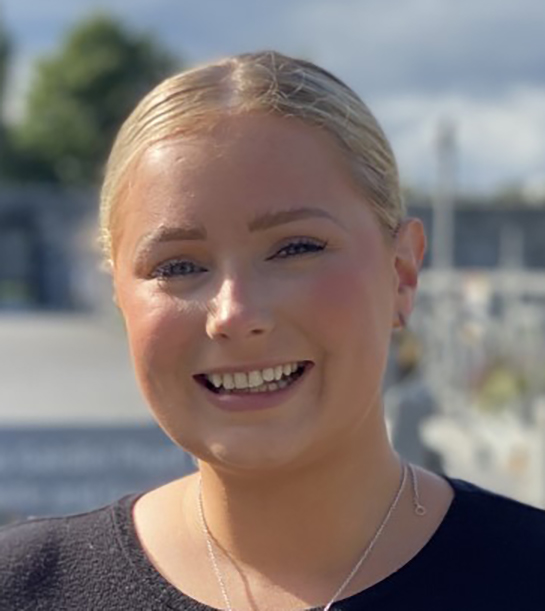
After graduating with a BA in Irish & History at NUIG, I pursued an MA in Journalism. The course’s practical focus built my multimedia portfolio across print, radio, TV & online, while experienced journalists shared invaluable insights and guidance. NUIG’s facilities, including a 4K TV & radio studio, sharpened my broadcasting skills. Managing “The Galway Pulse” gave me real newsroom experience, & highlights included reporting in Strasbourg & working with RTÉ. The MA boosted my career, leading to roles in the European Parliament & now the Irish Independent.
Amy Blaney
Intern, Irish Independent

The master's in journalism at NUIG provided an excellent platform for my preferred career choice of working in the media. It provided me with a diverse skill set which gives me the knowledge and ability to succeed in any area of journalism, including print media, radio, television and online media. The course gave me the opportunity to learn from those who had relevant experience in the media industry while also refining my work to be of a professional standard through their consistent and valuable feedback.
Paul O’Malley
Journalist, Western People
Meet our Employers


Entry Requirements and Fees
Minimum Entry Requirements
Candidates must hold at least a Second Class Honours Level 8 primary degree in a related subject area or hold a primary degree in a related area (which is acceptable to the college) without honours and have three years’ relevant practical experience in the subject area.
Academic entry requirements standardised per country are available here.
English Language Entry Requirements
Applicants whose first language is not English must provide evidence of English language proficiency. An overall IELTS score of 7.0 (or equivalent) is required, with a minimum score of 6.5 in any one component.
More information on English language test equivalency are available here.
Supporting Documents
You will be required to provide supporting documentation as part of your application. You can check here what supporting documents are required for this course.
You can apply online to the University of Galway application portal here.
Please review the entry requirements set out in the section above.
You will be required to upload supporting documentation to your application electronically. See the section above on entry requirements for further information on the supporting documentation required for this course.
Closing Dates
For this programme, there is no specific closing date for receipt of applications. Applications will be accepted on a rolling basis and course quotes will be reviewed continuously throughout the application cycle.
Notes
- You will need an active email account to use the website and you'll be guided through the system, step by step, until you complete the online form.
- Browse the FAQ's section for further guidance.
Fees for Academic Year 2026/27
| Course Type | Year | EU Tuition | Student Contribution | Non-EU Tuition | Levy | Total Fee | Total EU Fee | Total Non-EU Fee |
|---|---|---|---|---|---|---|---|---|
| Masters Full Time | 1 | €10,700 | €20,750 | €140 | €10,840 | €20,890 |
For 26/27 entrants, where the course duration is greater than 1 year, there is an inflationary increase approved of 1.8% per annum for continuing years fees.
Postgraduate students in receipt of a SUSI grant – please note an F4 grant is where SUSI will pay €4,500 towards your tuition (2026/27). You will be liable for the remainder of the total fee. A P1 grant is where SUSI will pay tuition up to a maximum of €6,270. SUSI will not cover the student levy of €140.
Note to non-EU students: learn about the 24-month Stayback Visa here.
Additional Costs
There are some minor additional costs associated with the programme. Students are encouraged to have a reliable laptop for coursework and multimedia assignments. You may also wish to purchase a portable field recorder, a pair of good-quality headphones, and other small accessories. Most practical work can be completed on a good smartphone (such as an iPhone), and the School provides access to specialist kits and equipment as required.
Fieldtrips
There may be minor travel costs attached to optional fieldwork or short-term projects. The School endeavours to cover costs as much as possible and keep contributions from students as low as possible.
Postgraduate Excellence Scholarships
This scholarship is valued at €1,500 for EU students applying for full-time taught master's postgraduate courses. You will be eligible if:
- You have been accepted to a full-time taught master's course at University of Galway,
- You have attained a first class honours (or equivalent) in a Level 8 primary degree.
An application for the scholarship scheme is required (separate to the application for a place on the programme). The application portal for 2025 is now open and available here. Applications will close on the 30th September 2025. Full details available here.
Global Scholarships
University of Galway offers a range of merit-based scholarships to students from a number of countries outside of the EU. Visit here for schemes currently available.
Application Process
Students applying for full time postgraduate programmes from outside of the European Union (EU), You can apply online to the University of Galway application portal here.
Our application portal opens on the 1st October each year for entry the following September.
Further Information
Please visit the postgraduate admissions webpage for further information on closing dates, documentation requirements, application fees and the application process.
Why University of Galway?
World renowned research led university nestled in the vibrant heart of Galway city on Ireland's scenic West Coast.
College of Arts, Social Sciences and Celtic Studies
University of Galway, University Road, Galway, Ireland, H91 TK33


Downloads
Meet Our Alumni
Course Introduction
Training journalists for a changing world
The MA Journalism at University of Galway prepares graduates to become skilled, critical, and creative journalists. Combining practical newsroom training with academic study, the programme equips students to report across print, broadcast, online, and multimedia platforms, ready for a fast-changing media industry.