-
Courses
Courses
Choosing a course is one of the most important decisions you'll ever make! View our courses and see what our students and lecturers have to say about the courses you are interested in at the links below.
-
University Life
University Life
Each year more than 4,000 choose University of Galway as their University of choice. Find out what life at University of Galway is all about here.
-
About University of Galway
About University of Galway
Since 1845, University of Galway has been sharing the highest quality teaching and research with Ireland and the world. Find out what makes our University so special – from our distinguished history to the latest news and campus developments.
-
Colleges & Schools
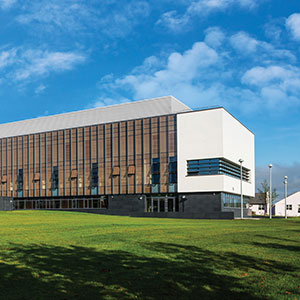
Colleges & Schools
University of Galway has earned international recognition as a research-led university with a commitment to top quality teaching across a range of key areas of expertise.
-
Research & Innovation
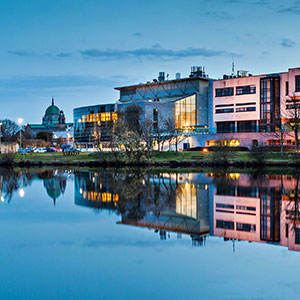
Research & Innovation
University of Galway’s vibrant research community take on some of the most pressing challenges of our times.
-
Business & Industry
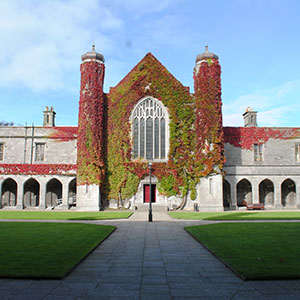
Guiding Breakthrough Research at University of Galway
We explore and facilitate commercial opportunities for the research community at University of Galway, as well as facilitating industry partnership.
-
Alumni & Friends
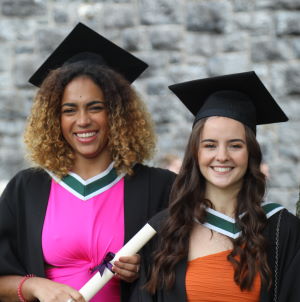
Alumni & Friends
There are 128,000 University of Galway alumni worldwide. Stay connected to your alumni community! Join our social networks and update your details online.
-
Community Engagement
Community Engagement
At University of Galway, we believe that the best learning takes place when you apply what you learn in a real world context. That's why many of our courses include work placements or community projects.








 Accessibility & Language
International Contemporary Literatures and Media (MA)

MA (International Contemporary Literatures and Media)
College of Arts, Social Sciences & Celtic Studies, School of Languages, Literatures and Cultures- Title of Award
- Master of Arts
- Course Code
- 1MIC1(MA) 1MIC2(MA PT)
- Average Intake
- 15
- Delivery
- On Campus
- NFQ
- Level 9
- Next Intake
- September 2026
- Duration
- 1 year, full-time | 2 years, part-time
- ECTS Weighting
- 90
Why Choose This Course?
Course Information
The MA in International Contemporary Literatures and Media is attractive to students from diverse cultural and linguistic backgrounds who have already studied some elements of literature and media and who are keen to further their knowledge in these areas, taking a comparative international approach. This course welcomes applicants with a background in literary and media studies from any linguistic background, who wish to broaden their knowledge, taking this MA which is taught through English. It is suited to recent graduates and to candidates who have acquired professional experience and now wish to advance their studies or develop the foundations for further academic research.
What will I study?
The full-time programme comprises four core modules during the academic year and a choice from a range of options over two 12-week semesters, from which students must choose two. Part-time students will take half of these modules each year.
The course may be taken as a full-time degree taken over a twelve-month period (September to August) OR as a Part-Time Degree taken over a twenty-four month period. The year is divided into two teaching semesters (September to December and January to April). The summer period (year 2 in the Part-Time programme) will be used to complete an 18,000 minor dissertation.
Core modules:
MIC6101 Worlds of Fantasy (Semester 1)
Postapocalyptic or Utopian Computer Games, Fantasy novels and films are currently extremely popular. They invent imaginary worlds that may have a lot in common with the “real” world, or may strongly differ from it. The alternative worlds or futures presented by these media serve different purposes: They may simply be offers to escape from the troubles in the “real” world, or they may have a dystopian character and criticise social or political problems. Fantasy fiction often invites psychological interpretations. The module introduces to the theory of fantasy fiction and analyses exemplary novels and films with different cultural backgrounds. It will also engage with selected computer games and the specific features of this interactive medium.
MIC504 The Art of Reading (Semester 1)
This module explores reading strategies and multiple dimensions of textuality in relation to literature, visual arts, games, as well as what we perceive as “nature”. Students will develop methods and strategies to discuss texts in relation to their aesthetic qualities and their dominant and marginalised narratives, and they will reflect on their own role in the reading process.
MIC6100 Resisting through Culture. Conflicts in Europe and Beyond (Semester 2)
This module explores the transformative power of culture in times of conflict. The first part focuses on the literature that emerged during the post-war division of Europe. Works by authors such as Peter Schneider, Ivan Klíma, Václav Havel and Herta Müller form the focus of analysis. Situating these texts within their socio-political contexts of division and conflict, the module explores how literature and culture can be harnessed to facilitate and express resistance within and against totalitarian systems. The second part addresses more recent conflicts and their literary representation; it shifts the focus to the conflict zones in the Islamic world, the Ukraine and Gaza and analyses texts about strategies of resistance against fascist and other extremist/totalitarian movements.
MIC501 Contemporary Literary Genres (Semester 2)
Can contemporary literatures be classified into genres and sub-genres and is this useful? How do literary genres exist or develop over time, can authors, audiences or interest groups become identified with a genre, is social class associated with specific genres and what is the material context of cultural production? The course will examine definitions of four 20 th -/21st -century genres as they emerge in different social cultural and literary spaces. Themes covered may include: Crime Fiction, Zombie and Vampire Fiction and Film/television, Poetry, French Hip Hop, Testimony. In each of the four areas, important exemplars of the genres will be examined as primary texts in the light of relevant theoretical discourses.
Optional Modules:
Students will be informed of the optional modules at the first meeting in Semester 1.
Curriculum Information
Curriculum information relates to the current academic year (in most cases).Course and module offerings and details may be subject to change.
Glossary of Terms
- Credits
- You must earn a defined number of credits (aka ECTS) to complete each year of your course. You do this by taking all of its required modules as well as the correct number of optional modules to obtain that year's total number of credits.
- Module
- An examinable portion of a subject or course, for which you attend lectures and/or tutorials and carry out assignments. E.g. Algebra and Calculus could be modules within the subject Mathematics. Each module has a unique module code eg. MA140.
- Optional
- A module you may choose to study.
- Required
- A module that you must study if you choose this course (or subject).
- Semester
- Most courses have 2 semesters (aka terms) per year.
Year 1 (90 Credits)
RequiredLLC6100: Graduate Research Skills in Languages and Cultures
LLC6100: Graduate Research Skills in Languages and Cultures
Semester 1 and Semester 2 | Credits: 10
This module has been designed to offer graduate students in the School of Languages, Literatures and Cultures structured guidance and support in the writing of a minor dissertation. The module provides an overview of different research trends and methods within the broader area of languages literatures and cultures, giving students the tools to evaluate existing research and apply these findings in their own academic work.
Through a mixture of workshops, general discussions and one-to-one meetings, this module will familiarise students with the main stages of the dissertation process, i.e., identifying a research gap; selecting a topic; writing their dissertation and preparing for their Viva.
(Language of instruction: English)
Learning Outcomes
- Demonstrate knowledge of different research methods within their area of study, assessing the opportunities and drawbacks presented by them and applying them to the analysis of multimodal texts.
- Design an effective research proposal.
- Use evidence and scholarly sources to support academic arguments and to produce a coherent literature review, after conducting bibliographical research on a specific topic area.
- Present their research project effectively.
- Recognise the fundamentals of research ethics and integrity.
Assessments
- Department-based Assessment (100%)
Teachers & Administrators
Click a name to search for their researcher profile. Note: Only teachers publish research profiles.
Reading List
- "The Map: A Beginners' Guide to Doing Research in Translation Studies" by Jenny Williams and Andrew Chesterman
ISBN: 1-317-64240-6.
Publisher: Routledge - "Research Methodologies in Translation Studies" by Gabriela Saldanha and Sharon O'Brien
ISBN: 9781909485006.
Publisher: Routledge - "Quantitative Research Methods in Translation and Interpreting Studies" by Mellinger, Christopher D. and Thomas A. Hanson
- "Digital Research Methods for Translation Studies" by Dolmaya, Julie McDonough
Publisher: Routledge - "Routledge Handbook of Translation and Methodology" by Federico Zanettin and Christopher Rundle
- "Writing a Translation Commentary" by Penelope Johnson
Publisher: Routledge - "How to Write a Better Minor Thesis" by Paul Gruba and Justin Zobel
ISBN: 9780522866094.
Publisher: Melbourne University - "A Practical Guide to Dissertation and Thesis Writing" by Mark Stephan Felix and Ian Smith
ISBN: 9781527536814.
Publisher: Cambridge Scholars Publishing - "Introduction to Literary Analysis: A Complete Methodology" by Louis Hébert
Publisher: Routledge - "The Researcher's Toolkit:The Complete Guide to Practitioner Research" by David Wilkinson and Dennis Dokter
Publisher: Routledge
Note: Module offerings and details may be subject to change.
RequiredMIC502: Dissertation
MIC502: Dissertation
15 months long | Credits: 30
Assessments
- Research (100%)
Teachers & Administrators
Click a name to search for their researcher profile. Note: Only teachers publish research profiles.
The above information outlines module MIC502: "Dissertation" and is valid from 2018 onwards.Note: Module offerings and details may be subject to change.
RequiredMIC504: The Art of Reading
MIC504: The Art of Reading
Semester 1 | Credits: 10
This module explores reading strategies and multiple dimensions of textuality in relation to literature, visual arts, games, as well as what we perceive as “nature”. Special focus is given to reflection on SDG 5 (Gender Equality) and SDG 15 (Life on Land).
(Language of instruction: English)
Learning Outcomes
- Students will develop methods and strategies to discuss texts in relation to their aesthetic qualities and their dominant and marginalised narratives
- students will reflect on their own role in the reading process
Assessments
- Continuous Assessment (100%)
Teachers & Administrators
Click a name to search for their researcher profile. Note: Only teachers publish research profiles.
- CATHERINE EMERSON 🖂
- TINA-KAREN PUSSE 🖂
- MARION KRAUTHAKER 🖂
- RIÓNA NÍ FHRIGHIL 🖂
- Natalie Nevin 🖂
- Rachel Robinson 🖂
Note: Module offerings and details may be subject to change.
OptionalFR6101: Language, Gender and Power
FR6101: Language, Gender and Power
Semester 1 | Credits: 10
Over the last number of decades, there has been a strong interest in the relationship between language, gender and power both as an academic and a popular topic. This module provides students firstly with an understanding of how language as a social entity intersects with gender and sexuality, and subsequently how power can be disseminated through language. It addresses the use of language to categorise the gender/ sexuality world and to create and display gender/sexual identities. It includes discussions on the constructions and representations of femininity/masculinity, non-binary gender identities, sexual violence, sexual harassment and motherhood/ fatherhood in a range of discourse types. Students explore a selection of texts and examples from a variety of sources including print media, advertising, health promotion and internet media and are introduced to key theoretical frameworks for the analysis of language, gender and power including traditional sociolinguistic approaches, discourse analysis, critical discourse analysis and corpus linguistics.
(Language of instruction: English)
Learning Outcomes
- Think critically about the relationship between language, gender and sexuality
- Reflect on how power relations can be disseminated through language
- Apply the different theoretical and methodological frameworks used for the analysis of language, gender and power in a range of different contexts
- Engage in the process of investigation of language, gender and power related issues through their own selection and analysis of texts
Assessments
- Department-based Assessment (100%)
Teachers & Administrators
Click a name to search for their researcher profile. Note: Only teachers publish research profiles.
Reading List
- "Language and Gender" by Penelope Eckert,Sally McConnell-Ginet
ISBN: 9781107029057.
Publisher: Cambridge University Press - "Language, Society and Power" by Annabelle Mooney,Betsy Evans
ISBN: 9780415786249.
Publisher: Routledge - "Language and Gender" by Mary Talbot
ISBN: 9781509530090.
Publisher: Polity - "Researching Language, Gender and Sexuality" by Helen Sauntson
ISBN: 9781138637368.
Publisher: Routledge
Note: Module offerings and details may be subject to change.
OptionalFM521: Critical Theory I
FM521: Critical Theory I
Semester 1 | Credits: 10
This course aims to provide a critical understanding of the ways in which theories of film have been formulated and applied, relating these theories to their historical and cultural context, and testing out their application to specific texts.
Learning Outcomes
- Demonstrate a specific and comparative knowledge of various theoretical approaches to cinema;
- Analyse specific texts in structural, formal and historical terms;
- Demonstrate an enhanced awareness of film aesthetics and film cultures;
- Work in flexible, creative and independent ways, showing self-direction, self-discipline and reflexivity;
- Demonstrate skills in written, oral and visual communications.
Assessments
- Department-based Assessment (100%)
Teachers & Administrators
Click a name to search for their researcher profile. Note: Only teachers publish research profiles.
Reading List
- "Film art" by David Bordwell, Kristin Thompson
ISBN: 0070064393.
Publisher: McGraw-Hill - "Film theory and criticism" by edited by Leo Braudy, Marshall Cohen
ISBN: 0195365623.
Publisher: Oxford University Press - "Readings and writings" by Peter Wollen
ISBN: 0860910555.
Publisher: Verso - "Hitchcock's films revisited" by Robin Wood
ISBN: 0231126956.
Publisher: Columbia University Press - "Image, music, text" by Roland Barthes; essays selected and translated [from the French] by Stephen Heath
ISBN: 0006861350.
Publisher: Fontana - "Movies and methods" by edited by Bill Nichols
ISBN: 0520031512.
Publisher: University of California Press - "Audio-vision" by Michel Chion; edited and translated by Claudia Gorbman; with a foreword by Walter Murch
ISBN: 0231078986.
Publisher: Columbia University Press
Note: Module offerings and details may be subject to change.
OptionalSH6103: Translation Theory and Practice
SH6103: Translation Theory and Practice
Semester 1 | Credits: 10
This module offers an overview of the development of Translation Studies as a discipline,
examining a number of key theoretical issues. Emphasis will be placed on the significance of
extra-linguistic factors that affect the process of translation, such as culture, power, gender,
politics, or ethics. Students will also gain some practical experience in text analysis and
translation research methods.
(Language of instruction: English)
Learning Outcomes
- Map in broad terms the development of the field of Translation Studies up to the present-day.
- Discuss and evaluate various theoretical approaches to the study of translation, and their relative merits and drawbacks, by giving particular consideration to their relevance for professional translators.
- Develop an appropriate translation strategy based on their analysis of a source text and translation commission.
- Analyse translations critically, making effective use of current scholarship in the discipline.
- Demonstrate advanced academic writing and presentation skills.
Assessments
- Department-based Assessment (100%)
Teachers & Administrators
Click a name to search for their researcher profile. Note: Only teachers publish research profiles.
Reading List
- "Introducing Translation Studies" by Jeremy Munday et al.
ISBN: 9780367370510.
Publisher: Routledge - "The Translation Studies Reader" by Lawrence Venuti
ISBN: 9780367235970.
Publisher: Routledge - "Critical Readings in Translation Studies" by Mona Baker
ISBN: 9780415469555.
Publisher: Routledge - "The Routledge Handbook of Translation Theory and Concepts" by Reine Meylaerts and Kobus Marais
ISBN: 9780367752002.
Publisher: Routledge - "The Routledge Handbook of Translation Studies" by Carmen Millan-Varela and Francesca Bartrina
ISBN: 9781138211469.
Publisher: Routledge - "Translation Tools and Technologies" by Andrew Rothwell et al.
ISBN: 9780367750329.
Publisher: Routledge
Note: Module offerings and details may be subject to change.
OptionalMIC6102: Contemporary Women's Voices from Latin America and Equatorial Guinea
MIC6102: Contemporary Women's Voices from Latin America and Equatorial Guinea
Semester 1 | Credits: 10
Contemporary women's writing from Latin America and Spanish-speaking Africa has won a global readership for its formal experimentation and its engagement with crucial issues of gender violence, femicide, LGBTQ+ rights, and motherhood and reproductive justice. This module studies works by key authors, looking at texts and their contexts, and considering issues of translatability in their journey to become 'world literature'. The module underscores the need to analyse gendered violence as embedded in intersecting structures of racism, colonialism and neoliberal extractivism. Authors studied may include: Melibea Obono, La Bastarda (Equatorial Guinea), Selva Almada, Dead Girls (Argentina), Cristina Rivera Garza, Liliana's Invincible Summer (Mexico), Claudia Piñeiro, Elena Knows (Argentina), Laura Restrepo, The Divine Boys (Colombia), Samanta Schweblin, Fever Dream (Argentina), Liliana Colanzi, You Glow in the Dark (Bolivia).
(Language of instruction: English)
Learning Outcomes
- Critique how texts engage with issues of gender and sexual equality.
- Demonstrate an understanding of the sociopolitical and cultural contexts in which the texts were produced.
- Demonstrate knowledge of theories of gender violence.
- Present independent research orally and in writing on the works studied.
- Explain and discuss genre and form of the texts studied.
Assessments
- Continuous Assessment (100%)
Teachers & Administrators
Click a name to search for their researcher profile. Note: Only teachers publish research profiles.
Reading List
- "La Bastarda" by Melibea Obono
- "Dead Girls" by Selva Almada
- "Liliana's Invincible Summer" by Cristina Rivera Garza
- "Elena Knows" by Claudia Piñeiro
- "The Divine Boys" by Laura Restrepo
- "Fever Dream" by Samanta Schweblin
Note: Module offerings and details may be subject to change.
OptionalMIC504: The Art of Reading
MIC504: The Art of Reading
Semester 1 | Credits: 10
This module explores reading strategies and multiple dimensions of textuality in relation to literature, visual arts, games, as well as what we perceive as “nature”. Special focus is given to reflection on SDG 5 (Gender Equality) and SDG 15 (Life on Land).
(Language of instruction: English)
Learning Outcomes
- Students will develop methods and strategies to discuss texts in relation to their aesthetic qualities and their dominant and marginalised narratives
- students will reflect on their own role in the reading process
Assessments
- Continuous Assessment (100%)
Teachers & Administrators
Click a name to search for their researcher profile. Note: Only teachers publish research profiles.
- CATHERINE EMERSON 🖂
- TINA-KAREN PUSSE 🖂
- MARION KRAUTHAKER 🖂
- RIÓNA NÍ FHRIGHIL 🖂
- Natalie Nevin 🖂
- Rachel Robinson 🖂
Note: Module offerings and details may be subject to change.
OptionalMIC6101: Worlds of Fantasy: Literature, Film, Computer Games
MIC6101: Worlds of Fantasy: Literature, Film, Computer Games
Semester 1 | Credits: 10
Postapocalyptic or Utopian Computer Games, Fantasy novels and films are currently extremely popular. They invent imaginary worlds that may have a lot in common with the “real” world, or may strongly differ from it. The alternative worlds or futures presented by these media serve different purposes: They may simply be offers to escape from the troubles in the “real” world, or they may have a dystopian character and criticise social or political problems. Fantasy fiction often invites psychological interpretations. The module introduces the theory of fantasy fiction and analyses exemplary novels and films with different cultural backgrounds. It will also engage with selected computer games and the specific features of this interactive medium.
(Language of instruction: English)
Learning Outcomes
- Critique selected fantasy texts, films and computer games
- Demonstrate knowledge of theories of fantasy fiction
- Explain and discuss specific aesthetical features of fantasy literature and film
- Analyse the difference between traditional and interactive media with regard to fantasy fiction
Assessments
- Continuous Assessment (100%)
Teachers & Administrators
Click a name to search for their researcher profile. Note: Only teachers publish research profiles.
Reading List
- "The Fantastic: A Structural Approach to a Literary Genre." by Tzvetan Todorov
- "Fantastic Literature: A Critical Reader" by David Sandner (ed.)
- "Selected short stories" by Jorge Luis Borges
- "Last World" by Christoph Ransmayr
- "Kafka on the Shore" by Haruki Murakami
Note: Module offerings and details may be subject to change.
OptionalFM6117: Sport and Film
FM6117: Sport and Film
Semester 2 | Credits: 10
This module will provide students with an overview of the major developments in the depiction of sport in film. Considering fiction, documentary, and newsreels, the module will explore the diverse ways different cultures have depicted sport in film.
(Language of instruction: English)
Learning Outcomes
- Demonstrate the key themes evident in the depiction of sport in film internationally.
- Recognise the diverse approaches to depicting sport in film.
- Evaluate the role sports cinema has played in particular societies.
- Identify the distinctive forms and their attributes (fiction, documentary, newsreels) that have been employed in the depiction of sport.
- Conduct original research and analyse and write up findings.
- Develop and demonstrate skills in written, oral and visual communications.
Assessments
- Department-based Assessment (100%)
Teachers & Administrators
Click a name to search for their researcher profile. Note: Only teachers publish research profiles.
Reading List
- "Sport and Film" by Seán Crosson
ISBN: 978-04155699.
Publisher: Routledge - "The Sports Film: Games People Play" by Bruce Babington
ISBN: 9780231169653.
Publisher: Columbia University Press - "Visual Economies Of/in Motion: Sport and Film" by C. Richard King,David J. Leonard
ISBN: 9780820478524.
Publisher: Peter Lang
Note: Module offerings and details may be subject to change.
OptionalIT6105: Narratives of Migration in the Mediterranean
IT6105: Narratives of Migration in the Mediterranean
Semester 2 | Credits: 10
This module explores narratives of migration in and around the Mediterranean as cultural, ecological and more-than-human phenomena. Moving beyond crisis-driven and human-centred accounts, students will examine how literary texts, films, visual cultures and testimonies narrate mobility across intertwined human, environmental and material histories. Drawing on ecocriticism, environmental humanities, postcolonial studies and migration studies, the module situates Mediterranean migration within longer temporalities of colonialism, climate change, multispecies movement and material circulation. Delivered in hybrid format with contributions from partner institutions, the module encourages students to engage critically and creatively with migration narratives, experimenting with storytelling as both an analytical method and an ethical practice.
(Language of instruction: English)
Learning Outcomes
- Critically analyse literary, filmic and cultural narratives of migration in the Mediterranean using frameworks from migration studies, ecocriticism and environmental humanities.
- Contextualise migration narratives within broader historical, colonial, ecological and geopolitical processes shaping the Mediterranean region.
- Evaluate non-human and multispecies perspectives in representations of mobility, including animals, landscapes, infrastructures and materials.
- Apply interdisciplinary approaches to the study of migration, integrating cultural analysis with environmental and ethical considerations.
- Produce original critical and/or creative work that reflects an informed, reflexive engagement with migration narratives and methodologies.
- Communicate complex ideas effectively to academic and non-academic audiences through written, visual or multimodal formats.
Assessments
- Continuous Assessment (100%)
Teachers & Administrators
Click a name to search for their researcher profile. Note: Only teachers publish research profiles.
Reading List
- "Reframing Migration: Lampedusa, Border Spectacle and the Aesthetic of Subversions" by Federica Mazzara
Publisher: Oxford & New York: Peter Lang
Note: Module offerings and details may be subject to change.
OptionalDJ6161: Platforms, Power and Media Governance
DJ6161: Platforms, Power and Media Governance
Semester 2 | Credits: 10
This module examines how digital platforms have reshaped the organisation of media, the circulation of information, and the exercise of power in contemporary societies. It focuses on the political economy and governance of platforms, including ownership structures, data extraction, algorithmic distribution, and content moderation. Students will analyse how states and supranational actors (including the EU) are responding through regulatory frameworks such as the Digital Services Act and the European Media Freedom Act. The module interrogates the tensions between market logics, public communication, and democratic accountability, and asks what forms of governance are required to sustain a plural and trustworthy public sphere.
(Language of instruction: English)
Learning Outcomes
- Critically analyse the political economy of digital platforms, including ownership structures, data extraction, and revenue models.
- Assess the implications of platform power for media pluralism, journalism, and democratic communication.
- Evaluate how algorithms and content moderation systems shape visibility, access to information, and public discourse.
- Interpret and critique emerging regulatory frameworks (e.g. DSA, EMFA, AI Act) and their effectiveness in addressing platform accountability and public interest obligations.
- Apply theoretical and policy frameworks to contemporary cases to produce evidence-based arguments in written and oral formats.
Assessments
- Continuous Assessment (100%)
Teachers & Administrators
Click a name to search for their researcher profile. Note: Only teachers publish research profiles.
Reading List
- "Custodians of the Internet" by Tarleton Gillespie
ISBN: 9780300173130.
Publisher: Yale University Press - "Digital Platform Regulation" by Terry Flew,Fiona R. Martin
ISBN: 9783030952198.
Publisher: Palgrave Macmillan - "Social Media and the Public Interest" by Philip M. Napoli
ISBN: 9780231184540. - "The Costs of Connection" by Nick Couldry,Ulises A. Mejias
ISBN: 9781503609754.
Publisher: Stanford University Press - "The Age of Surveillance Capitalism" by Shoshana Zuboff
ISBN: 9781781256859.
Note: Module offerings and details may be subject to change.
OptionalIT6103: Language for Environmental Futures II
IT6103: Language for Environmental Futures II
Semester 2 | Credits: 10
This programme is an interdisciplinary training for postgraduate students. It will help future experts in the humanities and social sciences reflect on how multilingual skills and creative approaches can be used to devise innovative solutions to environmental challenges – such as loss of habitat or climate migration. Through hands-on training activities in translation and the arts, postgraduate students from ENLIGHT universities will gain a new interdisciplinary understanding of their role in addressing environmental issues.
(Language of instruction: English)
Learning Outcomes
- reflect on how language policies can influence the discourse on climate change and sustainability. They will reflect on how current language use can maintain and reinforce existing inequalities, and devise ways of building new inclusive conversations about the environment.
- familiarize themselves with creative and artistic techniques as a way of visualizing and reflecting on personal and political involvement with environmental themes.
- employ their translation and intercultural communication skills and apply them to the specific task of addressing environmental issues.
- improve interdisciplinary and international connections with fellow postgraduate students.
- develop independent interdisciplinary research on the social and cultural aspects of climate change
Assessments
- Continuous Assessment (100%)
Teachers & Administrators
Click a name to search for their researcher profile. Note: Only teachers publish research profiles.
Reading List
- "Language and Sustainable Development" by McEntee-Atalianis, Lisa; Tonkin, Humphrey
Publisher: Springer - "Eco-Translation. Translation and Ecology in the Age of the Anthropocene" by Cronin, Micheal
Publisher: Routledge - "A Decolonial Ecology" by Malcom Ferdinand
ISBN: 9781509546237.
Publisher: Polity
Note: Module offerings and details may be subject to change.
OptionalFM6100: Film exhibition, administration and education
FM6100: Film exhibition, administration and education
Semester 1 | Credits: 10
This innovative module provides student with an introduction to important cultural areas increasingly relevant to film studies, film administration, education and curation. Structured around sessions with practitioners from each of these areas, this module provides students with crucial insights into the distinctive requirements and possibilities in each of these spheres and prepares them for potential employment opportunities in these areas.
(Language of instruction: English)
Learning Outcomes
- demonstrate an understanding of historical contexts in the distribution and exhibition of film
- Understand practical and theoretical issues surrounding the distribution and exhibition of digital cinema
- Undertake independent research into current case studies in the marketing, distribution and exhibition of film (incl festivals)
- Demonstrate an understanding of practices around film programming in a range of cinematic and festival contexts
- Develop an awareness and understanding of the work of developing young audiences and filmmakers
- Gain experience in the programming of a film programme
- Gain an understanding of the work and theoretical issues within film preservation and archiving
Assessments
- Department-based Assessment (100%)
Teachers & Administrators
Click a name to search for their researcher profile. Note: Only teachers publish research profiles.
Reading List
- "The death of cinema: History, cultural memory and the digital dark age" by Paolo Cherchi Usai
Publisher: BFI - "Film Festivals: Culture, People, and Power on the Global Screen" by Cindy Hing-Yuk Wong
Publisher: Rutgers University Press
Note: Module offerings and details may be subject to change.
OptionalMIC6100: Resisting through Culture: Conflicts in Europe and Beyond
MIC6100: Resisting through Culture: Conflicts in Europe and Beyond
Semester 2 | Credits: 10
This module explores the transformative power of culture in times of conflict, considering, in particular, the literature that emerged in the latter half of the twentieth century following the post-war division of Europe. Works by Peter Schneider, Ivan Klíma, Václav Havel, Herta Müller and Malala Yousafzai form the focus of analysis. Situating these texts within their socio-political contexts of division and conflict, the module explores how literature and culture can be harnessed to facilitate and express resistance within and against totalitarian systems.
(Language of instruction: English)
Learning Outcomes
- Discuss selected texts by Peter Schneider, Ivan Klíma, Václav Havel, Herta Müller, Aimé Césaire, Frantz Fanon and Édouard Glissant
- Describe the socio-political contexts in which these texts were composed
- Analyse how literature and culture can be used to express resistance within and against totalitarian political systems
- Deliver a presentation based on a close reading of extracts from one of the core texts
- Write an essay on one or more of the core texts
Assessments
- Continuous Assessment (100%)
Teachers & Administrators
Click a name to search for their researcher profile. Note: Only teachers publish research profiles.
Reading List
- "The Wall Jumper" by Peter Schneider
- "The Spirit of Prague and Other Essays" by Ivan Klíma
- "The Land of Green Plums" by Herta Mueller
- "Open Letters: Selected Writings, 1965-1990" by Václav Havel
- "A Tempest, trans. by Philip Crispin" by Aimé Césaire
Publisher: Oberon - "The Wretched of the Earth, transl. by Richard Philcox" by Frantz Fanon
Publisher: Grove Press - "Poetics of Relation, trans. by Betsy Wing" by Édouard Glissant
Publisher: University of Michigan Press
Note: Module offerings and details may be subject to change.
OptionalMIC501: Contemporary Literary Genres
MIC501: Contemporary Literary Genres
Semester 2 | Credits: 10
Can contemporary literatures be classified into genres and sub-genres and is this useful, how do literary genres exist or develop over time, can authors, audiences or interest groups become identified with a genre? The course will examine definitions of four 20th-/21st-century genres as they emerge in different cultural and literary spaces. Themes covered will include: Crime Fiction, narratives of ageing and dementia, speculative fiction and the facets of French Hip Hop. In each of the four areas, important exemplars of the genre will be examined as primary texts in the light of relevant theoretical discourses.
Assessments
- Continuous Assessment (100%)
Teachers & Administrators
Click a name to search for their researcher profile. Note: Only teachers publish research profiles.
- DEIRDRE BYRNES 🖂
- CATHERINE EMERSON 🖂
- TINA-KAREN PUSSE 🖂
- KATHLEEN QUINN 🖂
- Natalie Nevin 🖂
- Rachel Robinson 🖂
- Tamara De Ines Anton 🖂
Note: Module offerings and details may be subject to change.
Global and Non-Anglophone Focus – the programme prioritises literature and media from around the world, offering perspectives beyond the Anglophone/US-centric canon.
No Language Prerequisite – students can engage deeply with non-English texts thanks to expert staff and advanced translation methodologies.
World-Class Faculty – taught by internationally recognised scholars in fields such as Postcolonial Studies, Environmental Humanities, Translation Theory, Cultural Ageing, Memory Studies, and Latin American Studies.
Diverse and Interdisciplinary Approach – combines literature, film, and media studies, allowing students to explore culture in multiple forms.
Flexible Assessment Methods – a mix of essays, supervised research projects, creative assignments, and group work, reflecting real-world and academic practices.
Pathway to Further Research – excellent preparation for PhD-level work in International Cultural Studies or related fields.
International Perspective with Local Access – students gain a truly global understanding while studying in Ireland, benefiting from expert supervision and research networks.
The MA in International Contemporary Literatures and Media provides a strong foundation for a variety of career paths. For those interested in further academic study, it serves as an excellent gateway our own PhD in International Cultural Studies.
Graduates also thrive beyond academia. Our alumni are currently making their mark in publishing, teaching, and research, as well as in roles with multinational companies, international offices at universities, cultural organisations, NGOs, and media industries - all positions that benefit from the programme’s emphasis on intercultural awareness, critical thinking, and adaptability. The skills you gain are equally relevant to careers in communications, cultural consultancy, arts administration, and global project management, reflecting the truly versatile and international perspective this MA offers.
How will I learn?
Learning takes place in small group seminars and workshops designed to encourage independent thinking and collaborative exchange. You will engage closely with texts, films, and media, while also benefiting from expert supervision on research projects. The programme fosters creativity, critical reflection, and intercultural awareness, ensuring that you develop both scholarly depth and practical versatility.
How will I be assessed?
Assessment is varied and stimulating, reflecting the diverse skills you will acquire. Alongside traditional essays and end-of-term projects, you will complete supervised research projects, creative assessments, and individual assignments that test your ability to think critically and communicate effectively. While the emphasis is on individual achievement, you will also take part in collaborative group projects, preparing you for the demands of intercultural and professional environments.
The programme is led by internationally recognised scholars whose research has shaped debates in fields such as Environmental Humanities, Cultural Ageing Studies, Translation Theory, Crime Literature, Postcolonial Theory and Literature, Memory Studies, and Latin American Studies. Their expertise and international standing ensure that students are taught and supervised by leaders at the forefront of contemporary literary and cultural studies.
Course queries:
tina-karen.pusse@universityofgalway.ie
kate.quinn@universityofgalway.ie
Programme Director(s):
Dr Tina-Karen Pusse
Associate Professor in German Studies
Dr Kate Quinn
Head of Spanish and Latin American Studies
School of Languages, Literatures and Cultures
College of Arts, Social Sciences and Celtic Studies
Q: Do I need proficiency in a language other than English to register for this course?
A: No, all texts in other languages will be read in translation. It is our team of teachers who will bring in the language proficiencies needed to make you aware of intercultural mismatches, translation challenges or the wider cultural contexts of those texts. However, if you are proficient in either German, Spanish, French, Irish, or Italian you have a wider choice of literature in your dissertation module. Supervision support is also available for texts in Chinese, Ukrainian, Swiss German.
Q: Can I apply for this course if I don’t have a prior degree in Literature or Cultural Studies?
A: Yes, if your degree is in a cognate discipline such as philosophy, film studies, languages. If your degree is in other areas, please submit a strong motivation letter that outlines your interest and expertise in literature. In those cases, we will get in touch with applicants to assess their fit with this programme.
Q: What if my IELTS result is not at the required level?
A: If your result is close, we recommend a course with the English Language Centre at University of Galway prior to the start of programme. However while we can make a conditional offer subject to you reaching the required language level on time, this is at your own risk.
- Critical Thinking & Analytical Skills – the ability to examine complex cultural, political, and social phenomena from multiple perspectives.
- Advanced Research Skills – locating, evaluating, and synthesising diverse sources of information.
- Intercultural Communication – engaging with and adapting to diverse cultural contexts, audiences, and viewpoints.
- Translation Awareness & Linguistic Sensitivity – understanding how language shapes meaning and culture, even when working in translation.
- Effective Communication – presenting arguments persuasively in writing, public speaking, and across media platforms.
- Adaptability & Problem-Solving – applying theoretical knowledge to real-world issues in global and intercultural contexts.
- Project Management – designing, organising, and delivering independent research or group projects to deadlines.
- Empathy & Cultural Literacy – developing awareness of and sensitivity to cultural differences and global perspectives.
Accreditations & Awards


Meet our Employers
Entry Requirements and Fees
Minimum Entry Requirements
Candidates must hold at least a Second Class Honours Level 8 primary degree in a related subject area.
Related subject areas are literature studies (within any language), cultural studies, film studies, comparative literature. Exceptions can be made if students don’t have a primary degree in those areas but have successfully taken modules in these areas as part of a different degree, or have professional experience adjacent to these areas (for example in publishing, teaching, or translation).
Academic entry requirements standardised per country are available here.
English Language Entry Requirements
For applicants whose first language is not English, the minimum English language requirement for entry to this course is an overall IELTS score of 6.5, with no less than 6.0 in any component.
More information on English language test equivalency are available here.
Supporting Documents
You will be required to provide supporting documentation as part of your application. You can check here what supporting documents are required for this course. If your degree is in a non-related subject area, please ad a strong motivation letter that outlines your practical experience.
You can apply online to the University of Galway application portal here.
Please review the entry requirements set out in the section above.
You will be required to upload supporting documentation to your application electronically. See the section above on entry requirements for further information on the supporting documentation required for this course.
Closing Dates
For this programme, there is no specific closing date for receipt of applications. Applications will be accepted on a rolling basis and course quotes will be reviewed continuously throughout the application cycle.
Notes
- You will need an active email account to use the website and you'll be guided through the system, step by step, until you complete the online form.
- Browse the FAQ's section for further guidance.
Fees for Academic Year 2026/27
| Course Type | Year | EU Tuition | Student Contribution | Non-EU Tuition | Levy | Total Fee | Total EU Fee | Total Non-EU Fee |
|---|---|---|---|---|---|---|---|---|
| Masters Full Time | 1 | €7,900 | €19,300 | €140 | €8,040 | €19,440 | ||
| Masters Part Time | 1 | €4,000 | €70 | €4,070 |
For 26/27 entrants, where the course duration is greater than 1 year, there is an inflationary increase approved of 1.8% per annum for continuing years fees.
Postgraduate students in receipt of a SUSI grant – please note an F4 grant is where SUSI will pay €4,500 towards your tuition (2026/27). You will be liable for the remainder of the total fee. A P1 grant is where SUSI will pay tuition up to a maximum of €6,270. SUSI will not cover the student levy of €140.
Note to non-EU students: learn about the 24-month Stayback Visa here.
Additional Costs:
Apart from fees, some books (primary literature) will have to be purchased, secondary literature will be available through the library and will be made available digitally.
Postgraduate Excellence Scholarships
This scholarship is valued at €1,500 for EU students applying for full-time taught master's postgraduate courses. You will be eligible if:
- You have been accepted to a full-time taught master's course at University of Galway,
- You have attained a first class honours (or equivalent) in a Level 8 primary degree.
An application for the scholarship scheme is required (separate to the application for a place on the programme). The application portal for 2025 is now open and available here. Applications will close on the 30th September 2025. Full details available here.
Global Scholarships
University of Galway offers a range of merit-based scholarships to students from a number of countries outside of the EU. Visit here for schemes currently available.
Application Process
Students applying for full time postgraduate programmes from outside of the European Union (EU), You can apply online to the University of Galway application portal here.
Our application portal opens on the 1st October each year for entry the following September.
Further Information
Please visit the postgraduate admissions webpage for further information on closing dates, documentation requirements, application fees and the application process.
Why University of Galway?
World renowned research led university nestled in the vibrant heart of Galway city on Ireland's scenic West Coast.
College of Arts, Social Sciences and Celtic Studies
University of Galway, University Road, Galway, Ireland, H91 TK33


Downloads
Meet Our Alumni
Course Introduction
We prepare our graduates to become attentive global citizens: linguistically aware, sensitive and empathetic to cultural differences, and equipped with the tools to navigate an interconnected world. Through rigorous training in critical thinking and textual analysis, you will learn to communicate your ideas effectively - whether in writing, speaking, or across diverse media and to adapt your message to different audiences in intercultural settings.