-
Courses
Courses
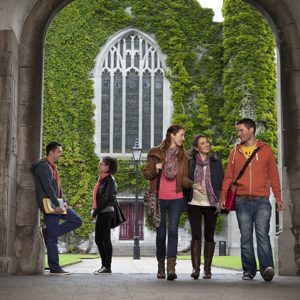
Choosing a course is one of the most important decisions you'll ever make! View our courses and see what our students and lecturers have to say about the courses you are interested in at the links below.
-
University Life

University Life
Each year more than 4,000 choose University of Galway as their University of choice. Find out what life at University of Galway is all about here.
-
About University of Galway
About University of Galway
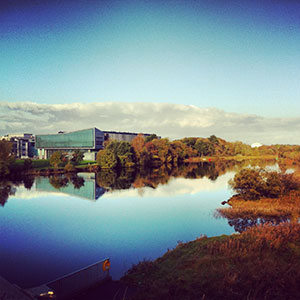
Since 1845, University of Galway has been sharing the highest quality teaching and research with Ireland and the world. Find out what makes our University so special – from our distinguished history to the latest news and campus developments.
-
Colleges & Schools
Colleges & Schools
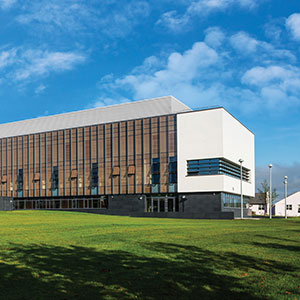
University of Galway has earned international recognition as a research-led university with a commitment to top quality teaching across a range of key areas of expertise.
-
Research & Innovation
Research & Innovation
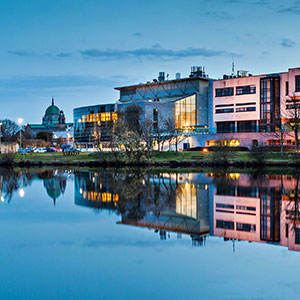
University of Galway’s vibrant research community take on some of the most pressing challenges of our times.
-
Business & Industry
Guiding Breakthrough Research at University of Galway
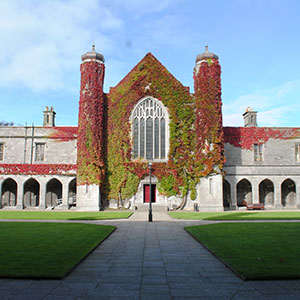
We explore and facilitate commercial opportunities for the research community at University of Galway, as well as facilitating industry partnership.
-
Alumni & Friends
Alumni & Friends
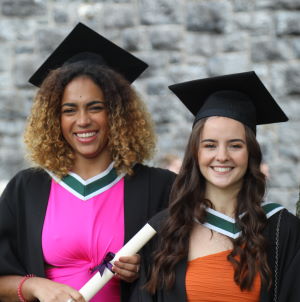
There are 128,000 University of Galway alumni worldwide. Stay connected to your alumni community! Join our social networks and update your details online.
-
Community Engagement
Community Engagement
At University of Galway, we believe that the best learning takes place when you apply what you learn in a real world context. That's why many of our courses include work placements or community projects.








 Accessibility & Language
International Business Foundation Programme
.jpg)
International Foundation Business Programme
, Shannon College of Hotel Management- Average Intake
- 6
- Delivery
- On Campus
- NFQ
- Level 6
- Award Type
- Minor
- Next Intake
- September 2026
- Duration
- 1 year Full-Time
- ECTS Weighting
- 60 ECTS
Why Choose This Course?
Course Information
This two-semester International Foundation Programme is designed to help you build your English language ability, develop academic skills, and gain subject knowledge aligned with your future degree.
You can choose from four tailored routes, depending on your English level, academic background, and future goals.
Each route is designed to suit different starting points and career goals. The English Route is ideal if you want to improve your English while gaining a strong introduction to business. The Non-English Route is for students who already have a good level of English and want to focus more on academic, research, and business skills. The Accounting Route with English combines English development with specialised preparation for accounting and finance degrees. The Arts Route is suited to students interested in humanities and social sciences, offering a pathway into a wide range of arts-related degree programmes.
| Route |
Semester 1 |
Semester 2 |
| English Route |
English for Life |
English for Life |
| Non-English Route |
Introduction to Business Skills |
Academic English 2 |
| Accounting Route (with English) |
English for Life |
English for Life |
| Arts / Humanities Route |
English for Life |
English for Life |
Curriculum Information
Curriculum information relates to the current academic year (in most cases).Course and module offerings and details may be subject to change.
Glossary of Terms
- Credits
- You must earn a defined number of credits (aka ECTS) to complete each year of your course. You do this by taking all of its required modules as well as the correct number of optional modules to obtain that year's total number of credits.
- Module
- An examinable portion of a subject or course, for which you attend lectures and/or tutorials and carry out assignments. E.g. Algebra and Calculus could be modules within the subject Mathematics. Each module has a unique module code eg. MA140.
- Optional
- A module you may choose to study.
- Required
- A module that you must study if you choose this course (or subject).
- Semester
- Most courses have 2 semesters (aka terms) per year.
Year 1 (60 Credits)
OptionalSC1120: Introduction to Management Accounting
SC1120: Introduction to Management Accounting
Semester 1 | Credits: 5
The course aims to provide a comprehensive introduction to the principles upon which management accounting is based which will serve as a foundation to further courses in this area.
(Language of instruction: English)
Learning Outcomes
- Have developed an understanding of the basic principles and concepts of costing.
- Appreciate the range of costing principles and practices applicable to food and beverage.
- Recognise the importance of being able to accurately calculate cost for the hotel industry – in particular in the kitchen, bar and banqueting.
- Demonstrate the ability to prepare budget financial forecasts for the industry.
- Apply costing information in basic decision-making scenarios such as pricing and establishing breakeven levels.
Assessments
- Continuous Assessment (25%)
- Department-based Assessment (75%)
Teachers & Administrators
Click a name to search for their researcher profile. Note: Only teachers publish research profiles.
The above information outlines module SC1120: "Introduction to Management Accounting" and is valid from 2026 onwards.Note: Module offerings and details may be subject to change.
OptionalSC0202: English for Life
SC0202: English for Life
Semester 1 and Semester 2 | Credits: 0
The aim of this course is to improve students overall level of English.
(Language of instruction: English)
Learning Outcomes
- Have developed their proficiency in the four language skills (speaking, listening, writing and reading) from an intermediate level (CEFR B1) to an upper-intermediate level (CEFR B2).
- Have built upon their existing English grammar and be able to use more complex grammatical structures.
- Have developed social and communication skills to live and study in Ireland.
- Be able to hold a discussion through English with a B2 level of fluency and pronounce most common words accurately.
Assessments
- Continuous Assessment (60%)
- Department-based Assessment (40%)
Teachers & Administrators
Click a name to search for their researcher profile. Note: Only teachers publish research profiles.
The above information outlines module SC0202: "English for Life" and is valid from 2025 onwards.Note: Module offerings and details may be subject to change.
OptionalSC0211: Applied Hotel Project
SC0211: Applied Hotel Project
Semester 1 and Semester 2 | Credits: 10
The aim of this module is to introduce the students to self-directed research.
The objective is to develop the students academic research and writing skills and to increase their knowledge of the hotel industry.
(Language of instruction: English)
Learning Outcomes
- Have an understanding of how to plan a research project.
- Be able to conduct primary and secondary research.
- Write analysis of primary research.
- Present research to an audience.
- Complete a research project.
Assessments
- Continuous Assessment (100%)
Teachers & Administrators
Click a name to search for their researcher profile. Note: Only teachers publish research profiles.
The above information outlines module SC0211: "Applied Hotel Project" and is valid from 2025 onwards.Note: Module offerings and details may be subject to change.
OptionalSC0212: Introduction to Intercultural Communication
SC0212: Introduction to Intercultural Communication
Semester 1 | Credits: 5
The aim of this course is to introduce students to the idea of culture and the basic concepts of Intercultural Communication.
(Language of instruction: English)
Learning Outcomes
- Have an understanding of the concept of culture and intercultural communication theories.
- Understand the relationship between language and culture and how that impacts on intercultural communication.
- Be aware of their own intercultural communication skills.
- Describe linguistic and non-verbal aspects of the Irish culture and their own culture.
- Recognise cultural features in texts, fiction and in the media.
Assessments
- Continuous Assessment (50%)
- Department-based Assessment (50%)
Teachers & Administrators
Click a name to search for their researcher profile. Note: Only teachers publish research profiles.
The above information outlines module SC0212: "Introduction to Intercultural Communication" and is valid from 2025 onwards.Note: Module offerings and details may be subject to change.
OptionalSC0201: English for Business 1
SC0201: English for Business 1
Semester 1 | Credits: 0
The aim of this course is to prepare students with the specialised language to study on a degree course in business.
(Language of instruction: English)
Learning Outcomes
- Have built up a basic vocabulary in the area of business which will help students in their further studies and future employment.
- Be able to write and format basic business documents, for example, business letters and memos.
- Have developed their speaking skills to handle various workplace situations including: introductions, opening meetings, and using the telephone.
- Be able to give a well-structured presentation.
- Be able to apply what they have learned practically in a business environment.
Assessments
- Continuous Assessment (40%)
- Department-based Assessment (60%)
Teachers & Administrators
Click a name to search for their researcher profile. Note: Only teachers publish research profiles.
The above information outlines module SC0201: "English for Business 1" and is valid from 2025 onwards.Note: Module offerings and details may be subject to change.
OptionalSC0200: Academic English 1
SC0200: Academic English 1
Semester 1 | Credits: 0
The aim of this course is to equip students with the academic skills required to study in third level education.
(Language of instruction: English)
Learning Outcomes
- Have started to develop critical thinking skills.
- Be able to construct a clear and concise essay.
- Know what plagiarism is and how to cite and reference publications.
- Have expanded their academic vocabulary to B1 level.
- Be able to ask questions in lectures.
- Be able to deliver an academic presentation.
- Be able to describe graphic information, trends and indications.
- Have developed their grammatical accuracy.
Assessments
- Continuous Assessment (60%)
- Department-based Assessment (40%)
Teachers & Administrators
Click a name to search for their researcher profile. Note: Only teachers publish research profiles.
The above information outlines module SC0200: "Academic English 1" and is valid from 2025 onwards.Note: Module offerings and details may be subject to change.
OptionalSC0203: Introduction to Business and Management
SC0203: Introduction to Business and Management
Semester 1 | Credits: 0
To provide a basic understanding of business and management for those students who aim to undertake university studies involving the study of business.
(Language of instruction: English)
Learning Outcomes
- Understand the role of management and different styles of management.
- Appreciate the business environment.
- Describe different type of business structure.
- Appreciate the importance of different business functions (marketing, human resources, finance)
Assessments
- Continuous Assessment (50%)
- Department-based Assessment (50%)
Teachers & Administrators
Click a name to search for their researcher profile. Note: Only teachers publish research profiles.
The above information outlines module SC0203: "Introduction to Business and Management" and is valid from 2025 onwards.Note: Module offerings and details may be subject to change.
OptionalSC0204: Mathematics
SC0204: Mathematics
Semester 2 | Credits: 0
To introduce students to basic concepts in mathematics and statistics.
(Language of instruction: English)
Learning Outcomes
- Understand arithmetic and algebra.
- Graph, differentiate and integrate simple functions.
- Solve simple algebraic equations and inequalities.
- Construct different forms and interpret data from tables, bar graphs, and line graphs.
- Have a basic understanding of probability, conditional and random variables.
- Appreciate the importance of statistics.
- Appreciate the basic fundamentals of financial mathematics.
Assessments
- Continuous Assessment (35%)
- Department-based Assessment (65%)
Teachers & Administrators
Click a name to search for their researcher profile. Note: Only teachers publish research profiles.
The above information outlines module SC0204: "Mathematics" and is valid from 2026 onwards.Note: Module offerings and details may be subject to change.
OptionalSC0214: Introduction to Business Skills
SC0214: Introduction to Business Skills
Semester 1 | Credits: 5
The aim of this module is to introduce students to the process and application of business skills. The module will explore skills ranging from job applications, staff training, networking and skills development.
(Language of instruction: English)
Learning Outcomes
- Develop an understanding of business communication theories and barriers to communication.
- Gain an understanding and appreciation of business communication.
- Explore the importance of emotional intelligence in the workplace.
- Understand the importance of providing and taking part in staff training.
- Learn the importance of presentation and social interaction skills.
- Learn how to give and receive effective feedback.
Assessments
- Continuous Assessment (100%)
Teachers & Administrators
Click a name to search for their researcher profile. Note: Only teachers publish research profiles.
The above information outlines module SC0214: "Introduction to Business Skills" and is valid from 2025 onwards.Note: Module offerings and details may be subject to change.
OptionalSC0215: Introduction to Research Methods
SC0215: Introduction to Research Methods
Semester 1 | Credits: 5
(Language of instruction: English)
Learning Outcomes
- Be familiar with the meaning of research and be comfortable with explaining and defining research terms.
- Develop an understanding of the role of research in academic and business application.
- Have an understanding of the difference between primary and secondary research.
- Have an appreciation of different data collection techniques.
- Recognise the ethics and principles of research.
- Understand and be able to apply the principals involved in constructing an effective questionnaire.
Assessments
- Continuous Assessment (100%)
Teachers & Administrators
Click a name to search for their researcher profile. Note: Only teachers publish research profiles.
The above information outlines module SC0215: "Introduction to Research Methods" and is valid from 2025 onwards.Note: Module offerings and details may be subject to change.
OptionalSC0209: Introduction to Accounting
SC0209: Introduction to Accounting
Semester 1 | Credits: 0
To introduce students to different accounting and finance concepts. To ensure that students have the basic knowledge of financial and management accounting. It demonstrates some of the basic accounting concepts and procedures used in the preparation of financial statements and to develop an appreciation of the role of management accounting in business. To enable students to pursue business related university studies.
(Language of instruction: English)
Learning Outcomes
- Understand the nature and role of accounting information.
- Classify users of accounting information and how each user might use this information.
- Understand the principles of double entry bookkeeping.
- Apply knowledge of the basic financial statements.
- Understand the role of management accounting.
- Classify different cost classifications.
- Understand the relationship between cost, volume and profit.
- Appreciate how a business may finance its activities.
Assessments
- Continuous Assessment (50%)
- Department-based Assessment (50%)
Teachers & Administrators
Click a name to search for their researcher profile. Note: Only teachers publish research profiles.
The above information outlines module SC0209: "Introduction to Accounting" and is valid from 2026 onwards.Note: Module offerings and details may be subject to change.
OptionalSC1119: Introduction to Financial Accounting
SC1119: Introduction to Financial Accounting
Semester 2 | Credits: 5
The course aims to provide a comprehensive introduction to the principles upon which financial accounting is based which will serve as an understanding and analysis of financial statements and will serve as a solid foundation to further courses in this area.
(Language of instruction: English)
Learning Outcomes
- Recognise the importance of recording, handling and summarising financial accounting data.
- Describe and apply the fundamental accounting concepts.
- Understand the basic principles of double entry.
- Prepare the final accounts of a sole trader and limited company.
- Provide an interpretation of a business’s financial performance.
Assessments
- Continuous Assessment (25%)
- Department-based Assessment (75%)
Teachers & Administrators
Click a name to search for their researcher profile. Note: Only teachers publish research profiles.
The above information outlines module SC1119: "Introduction to Financial Accounting" and is valid from 2026 onwards.Note: Module offerings and details may be subject to change.
OptionalSC0206: Academic English 2
SC0206: Academic English 2
Semester 2 | Credits: 5
The aim of this course is to further equip students with the academic skills required to study in third level education.
(Language of instruction: English)
Learning Outcomes
- Have identified their learning style(s) and learned strategies to aid in study and taking exams.
- Be able to follow the key content of a lecture.
- Have effective note-taking skills.
- Have continued to develop critical thinking skills.
- Be able to construct a clear and concise paragraph.
- Developed strategies for reading academic texts.
- Have a good foundation of academic vocabulary.
- Be able to participate in an in-class discussion.
Assessments
- Continuous Assessment (50%)
- Department-based Assessment (50%)
Teachers & Administrators
Click a name to search for their researcher profile. Note: Only teachers publish research profiles.
The above information outlines module SC0206: "Academic English 2" and is valid from 2025 onwards.Note: Module offerings and details may be subject to change.
OptionalSC0207: English for Business 2
SC0207: English for Business 2
Semester 2 | Credits: 0
The aim of this course is to prepare students with the specialised language to study on a degree course in business.
(Language of instruction: English)
Learning Outcomes
- Have further developed their vocabulary in the area of business which will help students in their further studies and future employment.
- Be able to write and format more advanced business documents, for example, emails and curriculum vitaes.
- Have developed their speaking skills to handle various workplace situations including: being interviewed, responding to feedback and asking for clarification.
- Be able to write and format a business report.
- Be able to apply what they have learned practically in a business environment.
Assessments
- Continuous Assessment (40%)
- Department-based Assessment (60%)
Teachers & Administrators
Click a name to search for their researcher profile. Note: Only teachers publish research profiles.
The above information outlines module SC0207: "English for Business 2" and is valid from 2025 onwards.Note: Module offerings and details may be subject to change.
OptionalSC0208: Economics
SC0208: Economics
Semester 2 | Credits: 0
To provide a basic understanding of micro and macro-economics for those students who undertake university studies involving the study of business.
(Language of instruction: English)
Learning Outcomes
- Understand the role of micro economics in business.
- Appreciate the characteristics of different market structures.
- Understand different macro-economic concepts.
- Appreciate money and impact of Inflation.
- Knowledge of the economy and drivers of economic growth.
Assessments
- Continuous Assessment (35%)
- Department-based Assessment (65%)
Teachers & Administrators
Click a name to search for their researcher profile. Note: Only teachers publish research profiles.
The above information outlines module SC0208: "Economics" and is valid from 2025 onwards.Note: Module offerings and details may be subject to change.
OptionalSC0210: Personal Development
SC0210: Personal Development
Semester 2 | Credits: 0
The aim of this course is to introduce student to self-reflection, self-awareness and self-development.
(Language of instruction: English)
Learning Outcomes
- Have an understanding of the concept of personal development.
- Understand the relationship between self-responsibility and motivation to succeed as a learner.
- Be aware of their own skills in terms of time management and academic self-regulation.
- Prepare a CV and partake in an interview situation.
- Be able to recognise the concept of emotional intelligence and the role of clear, concise communication in day-to-day interactions.
Assessments
- Continuous Assessment (100%)
Teachers & Administrators
Click a name to search for their researcher profile. Note: Only teachers publish research profiles.
The above information outlines module SC0210: "Personal Development" and is valid from 2025 onwards.Note: Module offerings and details may be subject to change.
OptionalSC0213: Irish Culture and Hospitality
SC0213: Irish Culture and Hospitality
Semester 1 | Credits: 5
The aim of this module is to immerse students in Irish Culture and Hospitality. The module entails a deep dive into the history and culture of Ireland and on successful completion of the module students should have an understanding of the true Irish welcome of “cead mile failte”. The module will challenge students to expand their world view, while developing empathy for other cultures and people.
(Language of instruction: English)
Learning Outcomes
- Gain an understanding and appreciation for Irish history and culture.
- Develop cultural communication skills and gain an understanding of cultural difference using critical reflection.
- Understand international perspectives, global awareness and understanding of global issues by comparing and contrasting the students own culture with the Irish culture.
- Learn to build relationship, partnership, and rapport with students from other cultures including collaborative learning and intercultural communication.
- Transformative learning through experiential immersion including active learning through engagement, translating theory to practice through immersion.
Assessments
- Continuous Assessment (100%)
Teachers & Administrators
Click a name to search for their researcher profile. Note: Only teachers publish research profiles.
The above information outlines module SC0213: "Irish Culture and Hospitality" and is valid from 2025 onwards.Note: Module offerings and details may be subject to change.
- Four tailored study routes to match your academic goals
- Pathway to degree programmes with a conditional offer from the start
- Strong focus on English and academic skills development
- Specialist pathways in Business, Accounting, and Arts & Humanities
- Integrated personal development and communication skills
- Small class sizes with personalised support
- Direct access to University of Galway facilities and student life
- Opportunities to connect with future lecturers during your studies
- Applied learning through projects and practical assessments
- Cultural experiences and Irish immersion beyond the classroom
- Supportive, multicultural learning environment
- Smooth transition into undergraduate study
The International Foundation Programme at Shannon College is designed to prepare you for progression into undergraduate study and future career success. By building strong English proficiency, academic knowledge, and practical skills, the programme equips you with the confidence to thrive at university and beyond.
Depending on your chosen route, you can progress to degrees in business, accounting, finance, humanities, or social sciences, opening doors to a wide range of global career opportunities. Graduates go on to careers in areas such as business management, marketing, finance, education, public service, and international organisations after they complete their degree.
With a strong academic foundation, intercultural awareness, and professional skills, you will be well prepared to succeed in today’s competitive global workplace.
Take a look at your chosen degree course page to explore the specific career opportunities available after graduation.
As part of the International Foundation Programme, you will experience studying in Ireland as an international student while preparing for your degree at the University of Galway. Based at Shannon College, you will enjoy a welcoming, multicultural environment and the opportunity to immerse yourself in Irish culture.
Throughout the programme, you will take part in cultural activities and excursions, helping you explore Ireland, build friendships, and develop global awareness. Studying abroad not only enhances your academic journey but also builds independence, confidence, and valuable life experience that will support your future studies and career.
The International Foundation Business Programme at Shannon College is a Level 6 accredited qualification on Ireland’s National Framework of Qualifications (NFQ). The qualification is awarded by the University of Galway, which ensures high academic standards and makes the transition to your undergraduate degree at the University of Galway smooth and straightforward, as students are already familiar with university expectations, systems, and supports.
Global Recognition
The University of Galway is recognised internationally for its excellence in teaching and research, consistently ranking among the top universities in Ireland and global.
- Interactive Classes: Small group activities, discussions, and presentations keep learning dynamic and engaging.
- Project-Based Learning: Apply your skills to real-world tasks, research projects, and case studies.
- Practical Skills Development: From teamwork and communication to business simulations, financial exercises, and humanities-based analysis, you will develop skills you can use right away.
- Personalised Support: Teachers provide guidance and feedback tailored to your learning style and progress.
Assessment Methods
Across all routes, assessment is designed to support your learning and progression:
- Written Assignments & Essays: Demonstrate understanding, critical thinking, and research skills.
- Presentations: Build confidence in communicating ideas clearly to your peers and teachers.
- Projects & Case Studies: Apply knowledge to solve practical problems in business, research, accounting, or humanities contexts.
- Quizzes & Exams: Test knowledge of core concepts in English, mathematics, accounting, economics, and social sciences.
- Continuous Assessment: Participation, teamwork, and reflective tasks help track your progress throughout the programme.
Route Assessment Focus
- English Route: Focus on developing English communication and academic skills through presentations, essays, and language tasks, alongside practical business exercises.
- Non-English Route: Emphasis on applied learning, including research projects, academic writing, and problem-solving in business, economics, and mathematics.
- Accounting Route with English: Combines English development with accounting and business assessments, including financial exercises, case studies, exams, and presentations.
- Arts Route: Focus on critical thinking, academic writing, and analysis within social sciences and humanities, supported by presentations, essays, and project-based work.
Why Our Approach Works
- Encourages active participation and confidence in learning
- Combines practical experience with academic knowledge
- Supports growth in communication, teamwork, and problem-solving
- Prepares you for future study and career paths with a strong academic foundation
Celebrating 75 Years

In 2026, we celebrate 75 years of hospitality education. Founded in 1951 by Dr Brendan O’Regan, Shannon College of Hotel Management has grown from an ambitious idea in the Shannon region to become a world-renowned school as part of University of Galway which has a distinctive place in Irish and global hospitality education.
We hosted an event on May 13th 2026 to mark this milestone and welcomed over 150 alumni, partners and friends back to Shannon College. We were especially glad to welcome Dr Brendan O’Regan’s family as well as former staff members. Our students who have finished college for the year volunteered to come back and help out on this very special occasion which made it extra special.
The event was centered around the launch of a new ambitious vision for the future of Shannon College, including an outline of plans for a new purpose-built, state-of-the-art learning building and the launch of a new undergraduate degree – Bachelor of Business Studies (BBS) in Global Luxury and Experience Management.
Read all about both of these exciting developments in this brochure - Shannon-75th-Anniversary-Booklet.pdf
As part of our celebrations, we hosted 2 panels. The first panel was titled ‘Down Memory Lane‘ and included graduates and a current student. Daniel McLoughlin (Class of 2012), Kate O’Connell (1980) and current Year 3 student Erin Brady. It was moderated by Tracy Hegarty (Class of 1990, Deputy Head of Shannon College) and was a great conversation of chatting about their different experiences as students – so much has changed but the core remains the same. Lots of laughter and the audience certainly got a feel for life as a SCHM student from 1980 to 2026!
The celebrations then moved into the Forte Auditorium where Head of Shannon College. Adrian Sylver welcomed all attendees and opened the session. The President of University of Galway, Professor David Burn, then spoke and shared the vision for the future of Shannon College, including an outline of plans for a new purpose-built, state-of-the-art learning building. He also launched of a new undergraduate degree – Bachelor of Business Studies (BBS) in Global Luxury and Experience Management.
Following his exciting speech, we welcomed a Panel of Alumni – all working in the luxury sector. Nicky Logue (1995), Christine Murphy (1998) and Ruth Scanlan (2001). Andrew Langford (2002 and Head of Placement Studies) moderated the session and all 3 spoke about their careers, the impact Shannon College has had (and continues to have) and their endorsement of the new degree just launched.
The session was closed by Professor Alma McCarthy, Executive Dean of the College of Business Public Policy and Law in the University of Galway and all attendees then made their way to the atrium where the students were serving delicious light bites and bubbles.
Former Head of Shannon College Dr Phillip J. Smyth proposed a toast to mark the occasion and the oldest graduate attending – Liam Silke (Class of 1964) cut the cake along with 2 Year 4 students – Hannah O’Flanagan and Laura Shanahan.
It is an incredibly exciting time for Shannon College of Hotel Management, and we are so grateful to everyone who joined us on the day to celebrate both our legacy and the beginning of an even brighter future.
A special thank you to our students who volunteered their time and energy to help prepare and deliver the event. Our students are the true reflection of why Shannon graduates continue to succeed across the world.
Thank you also to our dedicated staff for your enthusiasm and commitment, and finally, to all our guests who travelled near and far to celebrate this milestone with us.
Here’s to the next chapter.
For course enquiries, please contact a member of our Marketing Team.
Sarah O’Mahony
Marketing Manager
E. sarah.omahony@universityofgalway.ie
T:00353 91 497 211
Emma Daly
School Liaison Officer
E. edaly@universityofgalway.ie
T:00353 91 497 216
Joan Markham
Admissions Officer
E. joan.markham@universityofgalway.ie
T:00353 91 497 212
What are the routes available, and how do I choose?
- English Route – Ideal if you want to improve your English while learning business and intercultural skills.
- Non-English Route – Best if you already have strong English and want to focus on business, research, and academic modules.
- Accounting with English Route – Perfect if you want to combine English improvement with accounting and finance skills.
- Arts Route – Suited to students interested in humanities and social sciences, with a focus on critical thinking and academic development.
Tip: Choose the route that matches your English level and your future study or career goals.
What will I study in Semester 1 & 2?
- English Route: English for Life, English for Specific Purpose, Academic English, Business & Management, Accounting, Intercultural Communication, Economics, Personal Development, Maths.
- Non-English Route: Business & Management, Business Skills, Research, Intercultural Communication, Irish Culture, Accounting, Applied Project, Economics, Personal Development, Maths.
- Accounting with English Route: English for Life, English for Specific Purpose, Academic English, Management & Financial Accounting, Intercultural Communication, Economics, Maths.
- Arts Route: English for Life, English for Specific Purpose, Academic English, Introduction to Social Science, Introduction to Humanities, Intercultural Communication, Personal Development.
Tip: Each route gradually builds your skills in English, academic study, and your chosen subject area.
How will I be taught?
- Small, interactive classes
- Group discussions, projects, and presentations
- Practical exercises in business, accounting, and humanities
- Personalised guidance and support from experienced teachers
- Modules that connect learning with real-life experiences
How will I be assessed?
- Written assignments and essays
- Presentations and group projects
- Quizzes, exams, and case studies
- Continuous assessment including teamwork and participation
Assessments are designed to support your learning, not just test it.
Will this course help me get ready for university or a career?
Yes! All routes are designed to give you:
- Strong English and communication skills
- Academic skills for study success
- Practical, transferable skills in business, accounting, or humanities
- Confidence to progress to your degree programme
Can I make friends and experience Irish culture while studying?
Absolutely!
- Study in a multicultural classroom with students from around the world
- Modules like Irish Culture and Intercultural Communication build global awareness
- Take part in cultural activities and excursions across Ireland
What support is available if I need help?
- Friendly teachers offering one-to-one guidance
- Extra support in English, Maths, and academic skills
- Help with research, writing, and projects
- Advice on progression to degree programmes and careers
- Personal development support for confidence, teamwork, and leadership
Accreditations & Awards
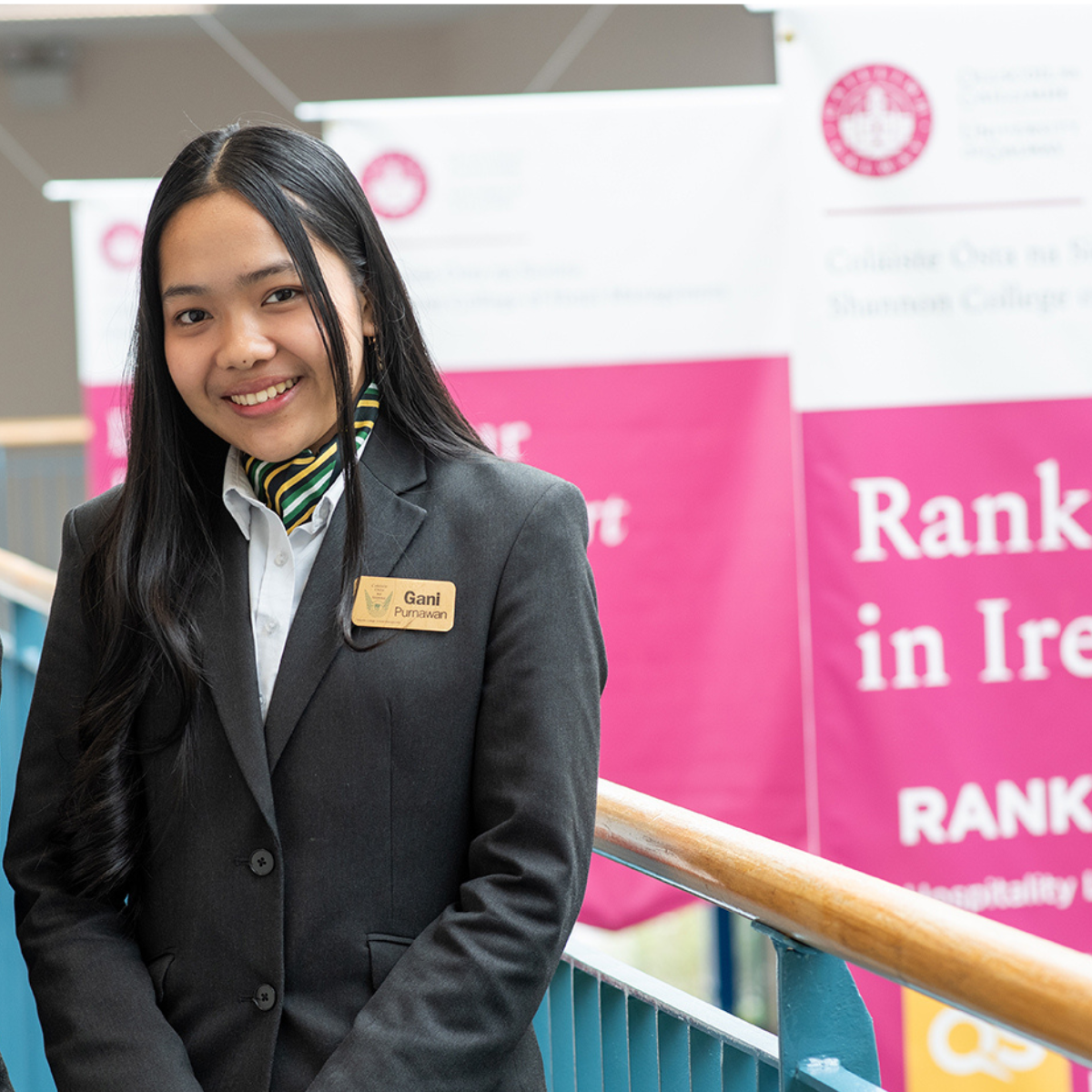
My time at Shannon has been truly special. The lecturers are incredibly helpful and supportive, and the college has a warm, welcoming atmosphere that made me feel at home from the very beginning. The programme gave me a strong foundation in business and prepared me well for the Bachelor of Business in Hotel Management. I’ve had the chance to explore beautiful places, try new foods, and fully experience Irish culture. Shannon is more than just a college, it’s a place where you learn, grow, and truly feel like you belong.
Gani Purnawan
Graduate

My Foundation year at Shannon College was unforgettable. I improved my English, gained business knowledge, made international friends and found a second family.
Vaness Nguyen Ngoc Thanh
Year 4 Student – BBS in International Hotel Management
.png)
My foundation year, has honestly been such a meaningful, unforgettable time for me. School-wise, all my tutors were super patient and always happy to lend a hand. My English improved loads, and I got to study totally new subjects I’d never touched before, like Accounting. It’s given me such a solid grounding for my future degree.
Yuxin Du
Year 1 Student – BBS in International Hotel Management
Meet our Employers
Entry Requirements and Fees
An International Foundation Programme (IFP) is a preparatory course designed for international students who do not yet meet the academic, English language, or subject-specific entry requirements for direct admission to an undergraduate degree in Ireland.
In summary: An International Foundation Programme acts as a pathway to degree studies in Ireland, helping international students transition smoothly into undergraduate education and meet university entry requirements.
Academic : Satisfactory Highschool results.
English Language requirement : IELSTS : 5.0 or equivalent with no band less than 4.5
Step 1:
To begin, please submit your application for the International Foundation Programme through the University of Galway online applications system here.
You will find this programme listed under:
Academic Level : Bachelors
College / Interest Type : Shannon College of Hotel Management
All application details and supporting documents should be uploaded directly to the online applications system. The system will guide you through each stage of the application process. Once your Foundation application has been submitted, you can then apply for your degree programme for the following academic year using the application fee waiver code provided.
Step 2: Apply for Your Degree Programme
Following successful completion of the application for the International Foundation Programme, you can apply for your chosen degree programme through the same online applications system.
Using your existing account, submit an application for the undergraduate degree programme you intend to progress to following the Foundation Programme. All application details and supporting documents should be uploaded directly to the online applications system. The application fee waiver code provided after your Foundation Programme application should be used when submitting your degree application.
The following degree programmes are available as progression options from the International Foundation Programme:
Shannon College of Hotel Management
- Bachelor of Business Studies in International Hotel Management
- Bachelor of Commerce in International Hotel Management
- Bachelor of Business Studies in Global Luxury & Experience Management (New)
J.E. Cairnes School of Business & Economics
- Bachelor of Commerce
- Bachelor of Commerce (Global Experience)
- Bachelor of Commerce (Accounting)
- Bachelor of Science (Business Information Systems)
School of Law
- Law (BCL)
- Law (BCL) and Business
- Law (BCL) and Human Rights
- Law (BCL), Criminology and Criminal Justice
College of Arts, Social Sciences & Celtic Studies
- Bachelor of Arts (Joint Honours)
- Bachelor of Arts (Child, Youth and Family: Policy and Practice)
- Bachelor of Arts (Drama, Theatre, and Performance Studies)
- Bachelor of Arts (English and Creative Writing)
- Bachelor of Arts (Film & Digital Media)
- Bachelor of Arts (Global Experience)
- Bachelor of Arts (Global Languages)
- Bachelor of Arts (Global Media)
- Bachelor of Arts (History)
- Bachelor of Arts (Journalism)
- Bachelor of Arts (Music)
- Bachelor of Arts Children’s Studies
- Bachelor of Arts with Human Rights
- Bachelor of Science (Psychology)
- Bachelor of Science (Social Science)
- Bachelor of Science (Geography and Geosystems)
- Government (Politics, Economics and Law)
- Bachelor of Arts (Cumarsáid agus Gaeilge)
- Bachelor of Arts (Gaeilge agus Léann an Aistriúcháin)
Please note that progression to a degree programme is subject to successful completion of the International Foundation Programme and the achievement of any programme-specific progression requirements.
Fees for Academic Year 2026/27
| Course Type | Year | EU Tuition | Student Contribution | Non-EU Tuition | Levy | Total Fee | Total EU Fee | Total Non-EU Fee |
|---|---|---|---|---|---|---|---|---|
| UG Cert | 1 | €13,700 | €140 | €13,840 |
Programme Fee
The tuition fee for the International Foundation Programme is €13,700.
Uniform
Students enrolled on the International Foundation Programme are required to wear the College uniform for classes. The cost of the uniform for the 2026 academic year was €143. Please note that this fee is subject to change for future intakes.
While scholarships are not available for the Foundation Programme, students can explore a wide range of scholarship opportunities at the degree level within the University of Galway. Each year, the University offers an extensive selection of scholarships across its undergraduate programmes, recognising academic excellence and providing valuable financial support.
English Language requirement : IELSTS : 5.0 or equivalent with no band less than 4.5
Following successful completion of the Foundation Programme at Shannon College, you can progress directly to a wide range of undergraduate degree programmes at the University of Galway.
Whether your ambition lies in hospitality and luxury management, business and economics, law, or the arts and social sciences, there is a pathway to match your goals.
With this broad range of options, the Foundation Programme opens the door to a flexible and rewarding academic journey, helping you shape a future aligned with your interests and career ambitions.
Why University of Galway?
World renowned research led university nestled in the vibrant heart of Galway city on Ireland's scenic West Coast.
Contact the Shannon College of Hotel Management
Shannon International Airport , Shannon , Co Clare , Ireland V14 DP03


Downloads

Meet Our Alumni
Introduction
The International Foundation Programme is designed for students who are excited to begin their university journey but may not yet meet the academic or English language entry requirements for their chosen degree. This programme helps you build the skills, confidence and knowledge you need to succeed at university level.
By completing this Level 6 foundation programme, you’ll have the opportunity to progress to undergraduate degrees at the University of Galway, as well as a wide range of other institutions in Ireland and around the world. For many international students, a foundation programme is an important first step toward studying at an Irish university.
.png)