
Find a course:

University of Galway

Ranked Ireland's #1 university and top 3 in Europe for sustainable development, we're committed to research-led excellence in teaching and learning and to shaping a better world.

Find out more about our extensive range of undergraduate and postgraduate courses and learn about our vibrant research community below.


Research

Research

University of Galway's vibrant research community take on some of the most pressing challenges of our time.

Read more

Undergraduate

Undergraduate

Shaping the world and inspiring leaders since 1845. View any of our 50+ undergraduate degree courses.

Read more

Postgraduate

Postgraduate

University of Galway offers 200+ postgraduate courses including higher diplomas and masters degrees.

Read more

Latest University News

1 April 2026

University of Galway welcomes Council of State appointees

A law professor and former president of University of Galway are among new appointees to the Council of State by President of Ireland Catherine Connolly.   Professor Donncha O’Connell of the School of Law is one of seven nominees alongside Ciarán Ó hÓgartaigh, who was president of the University between 2018 and 2024.    The Council of State is the constitutional body that advises the President on the exercise of certain powers such as the referral of Bills to the Supreme Court under Article 26 of the Constitution.    President of University of Galway, Professor David Burn, said: “My congratulations to all of the President Catherine Connolly’s nominees, in particular our Professor O’Connell and one of my predecessors in the role of President, Ciarán Ó hÓgartaigh. It is a great tribute to the esteem in which they are held as individuals and also to University of Galway. I wish them well in supporting and advising the President.”   Professor O’Connell joined the staff of University of Galway in 1993 and became an Established Professor in 2013. A native of Swinford, Co Mayo, he has served terms as Dean of the Faculty of Law and Head of the School of Law.    He also served two terms as a Commissioner of the Law Reform Commission and was a member of the Commission on the Future of Policing in Ireland and a board member of the Legal Aid Board. More recently, he was a member of the Independent Review Group to consider the Offences Against the State Acts.    He has served on the boards of a number of human rights organisations including, INTERIGHTS, FLAC and Amnesty International – Ireland, and was, while on leave of absence from the University, the first full-time Director of the Irish Council for Civil Liberties (ICCL). He was the Irish member of the EU Network of Independent Experts on Fundamental Rights and, later, the Senior Irish member of FRALEX, the legal expert group that advised the EU Fundamental Rights Agency based in Vienna.   He also served for over nine years on the board of the internationally-acclaimed Druid Theatre Company.    Ciarán Ó hÓgartaigh is a former Professor of Accounting and Dean of the business schools at UCD. A Galway native and an alumnus, he was appointed president of University of Galway in 2018 where he led a new strategic vision for a university with values, and a university for the public good. He was also Chairperson of Universities Ireland, encouraging co-operation between the universities on the island of Ireland. He has a PhD from the University of Leeds and was a Fulbright Scholar at Northeastern University in Boston.   Mr Ó hÓgartaigh is on the board of the National Library of Ireland, on the Council of the Economic and Social Research Institute and on the editorial board of Studies. Scríobhann sé alt as Gaeilge ó am go chéile don Irish Times.   Professor O’Connell is one of a number of University of Galway staff to have served on the Council of State while working at the University. They include: the late Professor Emer Colleran who was appointed by President Mary Robinson; Professor Ruth Curtis who was appointed by President Mary McAleese; and Professors Gearóid Ó Tuathaigh and Gerard Quinn who were appointed by President Michael D Higgins. The former chair of Údarás na hOllscoile, Judge Catherine McGuinness, also served on the Council of State of Presidents Patrick Hillery and Michael D Higgins.    Ends    

Read more

31 March 2026

University of Galway Business Summit explores AI in future world of work

 Industry and academic leaders came together at the University of Galway’s fourth annual Business Summit to tackle the challenges and opportunities of AI and explore its evolving impact on the world of work.  Organised by the University’s J.E. Cairnes School of Business and Economics, the Business Summit forms part of the School’s signature series, Thinking Beyond: Thought Leadership for the Public Good.  The summit was attended by more than 400 people from dozens of companies in the Greater Galway region.  Speakers highlighted how AI is reshaping business models and addressed emerging challenges in regulation, skills development and innovation, with discussions emphasising the need to broaden access to AI technologies so organisations of all sizes can benefit.  Keynote speakers included University of Galway Bachelor of Commerce graduates Majella Mungovan, Vice-President of Financial Operations at Meta, and John Clancy, co-founder and CEO of Galvia AI.  The programme featured a panel on scaling internationally in regulated sectors such as healthcare, MedTech and finance, with contributions from Joe Power of Medtronic, and graduates Deirdre Giblin of Datavant Ireland and Deloitte Partner Nicola Flannery.  A panel featuring two investors in AI ventures – former cast member of Dragons’ Den, Norah Casey, and General Partner at Act Venture Capital, John O’Sullivan - as well as University of Galway’s Professor of Economics, Alan Ahearne, explored emerging opportunities for AI-driven ventures.   Other speakers included Fergal O’Connor, CEO and Founder, Buymedia; Professor in Business Information Systems, Kieran Conboy; and Karen Ronan, CEO of Galway Chamber of Commerce.   Throughout the event, industry leaders and University of Galway researchers shared practical insights on AI’s real-world impact and its role in driving organisational and economic transformation.              Majella Mungovan, Vice President of Financial Operations at Meta, said: “I was proud to return to my alma mater to share insights from our AI journey at Meta, and to hear from leaders from industry and academia. The University of Galway Business Summit provides a valuable forum for discussion and helps shape Ireland’s future business landscape.”              Professor Karena Yan, Dean of J.E. Cairnes School of Business and Economics, University of Galway, said: “We are proud to bring together influential industry leaders and world‑class academics for the University of Galway Business Summit 2026, where the real business implications of AI are examined up close. In a landscape defined by uncertainty and opportunity, the Summit delivers evidence-based‑ insights that decision‑makers can act on today.”             Professor David Burn, President of University of Galway, said: “The University of Galway Business Summit provides an important forum for leaders from global industry and academia to engage with the key challenges facing business and society today. In a period of technological change, it is essential that sustainable practices and ethical business models progress alongside innovation. The insights shared at this summit are critical as we navigate both the risks and opportunities presented by developments in AI. I would like to thank all our attendees, speakers, supporters and partners for their contribution to this year’s event.”   The Business Summit was supported by AIB as lead supporter, Galway Chamber and itag as partners, and Data2Sustain, Platform94 and European Digital Innovation Hubs Network as supporters.   For more information visit: universityofgalway.ie/thinkingbeyond/businesssummit   Ends

Read more

30 March 2026

New research shows smarter use of wood can help cool the planet

International study shows combination of manufactured wood products and bioenergy with carbon capture can play a critical role in climate neutrality A major new international research study has demonstrated an effective way to use wood to achieve long-term global cooling.  Led by researchers at the University of Galway, the study examined the combination of using low-value wood for manufacturing before it is converted into fuel for clean energy generation with carbon capture and storage once those products reach the end of their life.  The researchers revealed that this strategy of combining forestry with “cascading” use of wood products can play a critical role in achieving climate neutrality targets and provides more resilient and long-term climate benefits than either directly burning harvested wood for energy or leaving forests unharvested.  The research has been published here in Nature’s Communications Earth & Environment.  Dr George Bishop, lead scientist on the study, based at University of Galway, said: "National climate neutrality targets cannot be met without large-scale carbon dioxide removal. Bioenergy with Carbon Capture and Storage (BECCS) provides one of the few scalable ways to deliver permanent carbon removal while also producing renewable energy. Our research shows that cascading wood use into Bioenergy with Carbon Capture and Storage is a robust climate change mitigation option that consistently delivers long-term temperature reduction.”  The research is particularly significant for countries in the EU, including Ireland, which have legally-binding commitments to reach climate neutrality by 2050 – meaning that any greenhouse gases released must either be eliminated or balanced by an equal amount removed from the atmosphere.  One of the biggest challenges comes from sectors where deep emissions cuts are technically difficult and costly, such as agriculture - Ireland’s largest source of emissions - as well as aviation and heavy industry.  Bioenergy with Carbon Capture and Storage (BECCS) has been identified as a potential solution to this challenge. As trees grow, they absorb carbon dioxide from the atmosphere and store it in their biomass. When forests are harvested, some wood becomes low-value leftovers that are often burned for bioenergy, releasing the carbon back into the air. With BECCS, this CO₂ can be captured and permanently stored deep underground – effectively removing the greenhouse gas from the atmosphere forever.  However, large-scale deployment of BECCS infrastructure is expected to take decades.  The research team outline an opportunity: rather than burning low-value wood immediately, these materials can first be used to manufacture products such as particleboard. This offers dual wins: it generates immediate climate benefits by replacing carbon-intensive materials like plastics, and “buys time” for BECCS deployment.  At the end of their service life, these wood products can still be used for bioenergy – but this time in a BECCS facility which has had time to be deployed. At the same time, sustainably managed forests regrow to replace harvested trees, continuing to draw carbon dioxide from the air, acting as a carbon vacuum.  The study demonstrates that this combined cycle creates a durable carbon removal pathway with a significant long-term cooling effect, supporting climate-neutrality goals in Ireland and globally.  Professor David Styles, co-author and Professor in Agri-sustainability, University of Galway, said: "The implication for policy is clear: to meet ambitious climate targets, governments must prioritise the development of permanent carbon dioxide capture and storage technologies and incentivise circular use of wood to prolong its lifespan as a carbon store. By integrating sustainable forest management with circular and cascading wood strategies and BECCS, the global community can ensure a more durable and resilient path towards climate stabilisation.”  Dr James Gaffey, co-author and Project Lead at Munster Technological University, said: "The results of this study highlight the need for greater investment in carbon capture and storage infrastructure in parallel with cascading circular bioeconomy and renewable energy developments. The results are relevant for Ireland and for other EU member states and the approach will help them to meet their climate obligations and avoid future risks of penalties.”  The research also highlighted an interesting analysis of the comparison between active forest management and leaving forests unharvested. While unharvested forests provide strong near-term cooling, their carbon sink strength diminishes as trees mature, and carbon stored in living forests is increasingly vulnerable to climate-driven disturbances such as wildfires, pests, and disease.  Dr Bishop added: “If we transfer carbon from forests to geological stores via a cascade of multiple wood uses we enhance the longevity and resilience of carbon dioxide removal from the atmosphere. Our sophisticated modelling shows that cascading wood use into Bioenergy with Carbon Capture and Storage eventually surpasses the climate benefits of unharvested forests.”  The research was supported by Ireland’s Department of Agriculture, Food and the Marine through the INFORMBIO project, and was a collaborative study involving experts from the University of Galway, MTU, and IEA Bioenergy BECCUS Inter-task members from Chalmers University of Technology, Sweden; KTH Royal Institute of Technology, Sweden; University of New England, Australia; Bangor University, Wales; DBFZ, Germany; VTT Technical Research Centre of Finland; and other leading institutions.  Ends    

Read more

Leading Research Globally

The purpose of our research and innovation is to advance the public good. Our people are creative in their thinking and collaborative in their approach. Our place is a distinct and vibrant region deeply connected internationally and open to the world. Read more


Prospective Students

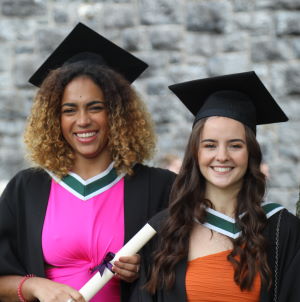
Whether you are an undergraduate or a postgraduate, we want you to be part of our dynamic university community, learning from world-class academics, gaining new skills, and building a career that will sustain your passions into the future. Browse our range of full-time and part-time undergraduate and postgraduate courses.

Key Facts

#1

in Ireland for Sustainable Development (THE World Rankings)

5th

in the EU for our commitment to sustainability

284

in the world according to QS World University Rankings

30

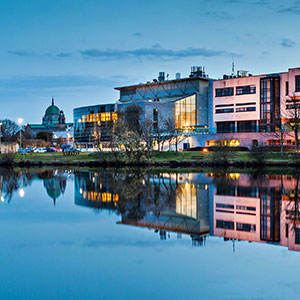
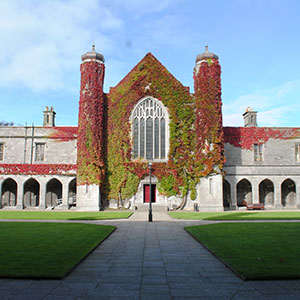
Ranked in the Top 30 most beautiful campuses in Europe

79%

of our courses have work placement and/ or study abroad opportunities

378m

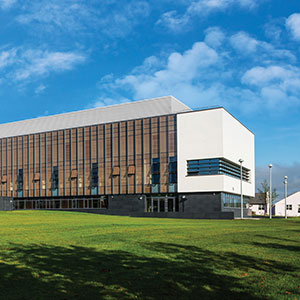
invested in new buildings and facilities on campus since 2010

110

Our university student body is made up of students from 110 countries

80m

approximately €80m annual research expenditure

tag imagetag image