-
Courses
Courses
Choosing a course is one of the most important decisions you'll ever make! View our courses and see what our students and lecturers have to say about the courses you are interested in at the links below.
-
University Life

University Life
Each year more than 4,000 choose University of Galway as their University of choice. Find out what life at University of Galway is all about here.
-
About University of Galway
About University of Galway
Since 1845, University of Galway has been sharing the highest quality teaching and research with Ireland and the world. Find out what makes our University so special – from our distinguished history to the latest news and campus developments.
-
Colleges & Schools
Colleges & Schools
University of Galway has earned international recognition as a research-led university with a commitment to top quality teaching across a range of key areas of expertise.
-
Research & Innovation
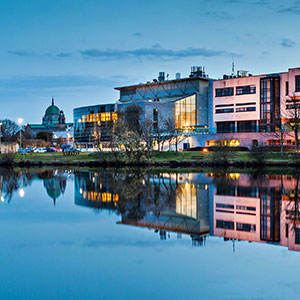
Research & Innovation
University of Galway’s vibrant research community take on some of the most pressing challenges of our times.
-
Business & Industry
Guiding Breakthrough Research at University of Galway
We explore and facilitate commercial opportunities for the research community at University of Galway, as well as facilitating industry partnership.
-
Alumni & Friends
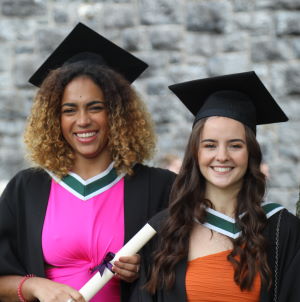
Alumni & Friends
There are 128,000 University of Galway alumni worldwide. Stay connected to your alumni community! Join our social networks and update your details online.
-
Community Engagement
Community Engagement
At University of Galway, we believe that the best learning takes place when you apply what you learn in a real world context. That's why many of our courses include work placements or community projects.








 Accessibility & Language
January University of Galway partner in all-island programme to deliver cleaner air
University of Galway partner in all-island programme to deliver cleaner air
Jillian Gilmore, Department of Finance; Minister for Public Expenditure, Infrastructure, Public Service Reform and Digitalisation, Jack Chambers T.D.; Gina McIntyre, Chief Executive of SEUPB; and Dr Caitriona Strain, General Manager of ERNACT, pictured with project partners at the launch of the Peace-Air (Partnership for Evidence and Action on Clean Air) all-island initiative that includes University of Galway. Photo: ERNACT
Jan
19
2026
Posted: 12:39 GMT
University of Galway is one of 10 partners in the €6.5 million PEACE-Air project which aims to reduce emissions from solid fuels, road transport and agriculture.
PEACE-Air (Partnership for Evidence and Action on Clean Air) is an all-island initiative working to improve air quality and protect public health across the Republic of Ireland and Northern Ireland through evidence-based policy, collaboration and innovation.
University of Galway will lead research on air pollution from solid fuel burning with Queen’s University Belfast, to address the common challenge of delivering clean air to improve the health of citizens and the environment.
The project focuses on generating robust evidence, supporting policy development and enabling practical actions that lead to cleaner air and better health outcomes for communities.
The project was launched at ATU Donegal, marking the beginning of a major cross-border initiative supported by PEACEPLUS, a programme managed by the Special EU Programmes Body (SEUPB).
PEACE-Air will address three major sources of air pollution: solid fuel burning, transport emissions, and agricultural ammonia - through a structured programme of scientific research, behavioural insights, community outreach and policy support.
The project brings together local authorities, universities, environmental agencies, health organisations and community groups from both jurisdictions, ensuring that its work is grounded in shared priorities and accessible evidence.
Minister for Public Expenditure, Infrastructure, Public Service Reform and Digitalisation, Jack Chambers T.D., attended the launch and said: “I welcome the launch of the PEACE-Air project. Funded by the PEACEPLUS programme, PEACE-Air harnesses unique scientific and research capacity to address the shared cross-border challenge of air pollution. The work of PEACE-Air will help inform strategies to protect the natural environment and ensure clean air for people and communities across the island of Ireland. With a focus on strategic cross-border engagement, PEACE-Air exemplifies the positive public health and environmental impacts that can be achieved through effective North South collaboration.”
A team from the Centre for Climate and Air Pollution Studies, Ryan Institute and School of Natural Sciences at University of Galway will lead the PEACE-Air research on Air Pollution from Solid Fuel Burning, Indoor Air Quality and Community Engagement.
Professor Jurgita Ovadnevaite, Director of the Centre for Climate and Air Pollution Studies, University of Galway, said: “We are delighted to lead the solid fuels research project of this cross-border initiative that aims to tackle air pollution through strategic engagement, scientific research, and coordinated cross-border action to reduce emissions from solid fuel burning, road transport, and agriculture.
“Air pollution does not respect boundaries and pollutants generated in one jurisdiction can negatively impact a neighbouring jurisdiction. However, the issues around air pollution are addressed by each jurisdiction separately and currently there is no cross-border clean air forum for local government, environment agencies, health agencies, policy makers and research scientists. Through the PEACE-Air project, development of joint strategies and aligned policies to reduce air pollution would bring greater efficacy in results.”
Particulate matter (PM) is the key air pollutant that affects human health and mortality. Research conducted over the last decade has shown that the burning of solid fuels (coal, peat and wood) for home heating is the major source of PM in towns and cities across Ireland, especially during winter months. The seasonal dependence of PM pollution in Northern Ireland also indicates that residential solid fuel burning is a significant problem. In both jurisdictions, the pollution hot spots are in deprived areas which largely use coal or peat for heating, where fuel poverty is a significant issue.
Road transport, and diesel vehicles in particular, are also a major source of PM in urban areas. Transport-related air pollution also includes nitrogen dioxide which is strongly linked with respiratory problems such as asthma. The other major common source of air pollution in Northern Ireland and Ireland is ammonia emissions from agricultural activity which contributes to secondary PM but also negatively impacts on biodiversity and ecosystem health.
Gina McIntyre, Chief Executive of SEUPB, said: “Air pollution is a shared challenge that knows no borders. PEACE-Air will be the first cross-border collaboration of its kind to tackle this challenge.
“This funding demonstrates PEACEPLUS in action, bringing experts together to work on delivering positive change which will benefit the lives of so many people across our programme area by protecting and enhancing our natural environment.”
Dr Caitriona Strain, General Manager of ERNACT, said: “ERNACT is proud to lead the PEACE-Air partnership and to support a project that places robust evidence, collaboration, and practical action at the centre of efforts to improve air quality across the island. Air pollution is a shared challenge that does not recognise borders, and PEACE-Air provides a unique opportunity to bring together research excellence, public authorities, and communities to inform policy and deliver real, long-term benefits for public health, the environment, and regional cooperation. This project will leave a lasting legacy through the development of a cross-border Strategy and Action Plan for Clean Air, grounded in science and shaped by those most affected.”
The PEACE-Air partnership consists of 10 core partners, including ERNACT (lead partner), Donegal County Council, Armagh City, Banbridge & Craigavon Borough Council, Queen’s University Belfast, University College Cork, TU Dublin, University of Galway, Ulster University, Trinity College Dublin, and the Institute of Public Health. Seven associate partners, including the EPA, NIEA, Asthma & Lung UK, the Irish Heart Foundation, and the Environmental Health Association of Ireland, will support delivery and contribute their specialist expertise.
Further information can be found on www.peace-air.eu.
Ends