-
Courses
Courses
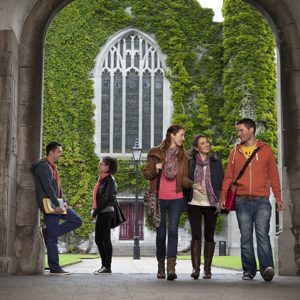
Choosing a course is one of the most important decisions you'll ever make! View our courses and see what our students and lecturers have to say about the courses you are interested in at the links below.
-
University Life
University Life
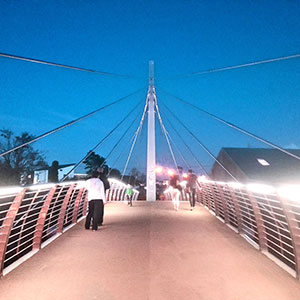
Each year more than 4,000 choose University of Galway as their University of choice. Find out what life at University of Galway is all about here.
-
About University of Galway
About University of Galway
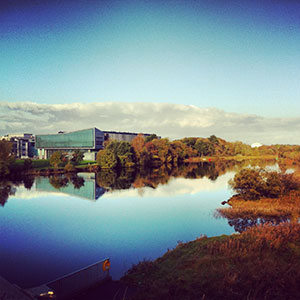
Since 1845, University of Galway has been sharing the highest quality teaching and research with Ireland and the world. Find out what makes our University so special – from our distinguished history to the latest news and campus developments.
-
Colleges & Schools
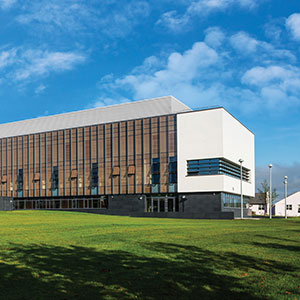
Colleges & Schools
University of Galway has earned international recognition as a research-led university with a commitment to top quality teaching across a range of key areas of expertise.
-
Research & Innovation
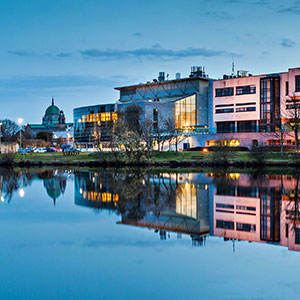
Research & Innovation
University of Galway’s vibrant research community take on some of the most pressing challenges of our times.
-
Business & Industry
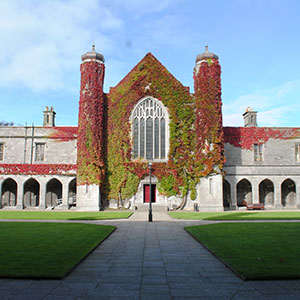
Guiding Breakthrough Research at University of Galway
We explore and facilitate commercial opportunities for the research community at University of Galway, as well as facilitating industry partnership.
-
Alumni & Friends
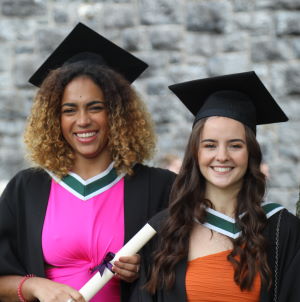
Alumni & Friends
There are 128,000 University of Galway alumni worldwide. Stay connected to your alumni community! Join our social networks and update your details online.
-
Community Engagement
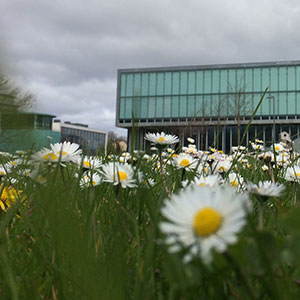
Community Engagement
At University of Galway, we believe that the best learning takes place when you apply what you learn in a real world context. That's why many of our courses include work placements or community projects.








 Accessibility & Language
December Researchers unlock secrets of spinal disc degeneration
Researchers unlock secrets of spinal disc degeneration
Friday, 12 December 2025

Dr Kieran Joyce and Professor Abhay Pandit, CÚRAM - Research Ireland Centre for Medical Devices at University of Galway. Credit: Claire Riordan, CÚRAM
New research into the arrangement of sugar chains or ‘glycans’ in the cells of the spine has shed light for the first time on the critical role it plays in the complex process of disc degeneration.
Researchers at CÚRAM - Research Ireland Centre for Medical Devices at University of Galway, together with a team of international colleagues, carried out a comprehensive investigation into the different characteristics of glycans in healthy and degenerated intervertebral discs.
It is the first time that the whole human disc glycome in the spine - the entire set of sugar chains that modify human proteins and lipids - have been analysed in this way.
Intervertebral disc (IVD) degeneration is a major cause of low back pain, a significant global health issue. While glycosylation is critical for cellular signalling and inflammation, its malfunction can lead to diseases and its role in IVD degeneration has remained poorly understood until the research was conducted.
Dr Kieran Joyce, first author of the paper, said: “From this research, we now know which sugars are expressed in the degenerated or diseased disc states, so we can design therapies to target this.
“We observed distinct alterations in glycan expression, notably an overabundance of sialic acid on the surface of the cells in degenerated discs and decreased branching, which are associated with IVD degeneration. These observed differences have implications for regulating inflammatory responses and other cellular activities.”
Professor Abhay Pandit, Scientific Director of CÚRAM and senior author of the research paper, said: “Our findings suggest that there is therapeutic potential in using biomaterial systems to intervene and alter the way proteins and glycans attach to each other to reduce inflammation associated with IVD degeneration. This research significantly advances our knowledge of the glycomic mechanisms underlying IVD degeneration and opens new avenues for developing therapies to restore disc physiology.”
The finding of the research have been published in Advanced Science and can be accessed at https://advanced.onlinelibrary.wiley.com/doi/10.1002/advs.202506669?af=R.
The project was carried out by CÚRAM researchers at University of Galway in collaboration with colleagues at Maynooth University, University College Dublin, the National Institute for Bioprocessing Research and Training (NIBRT), the Medical University of South Carolina and the Institute of Chemical Technologies and Analytics in Austria.
Ends
Keywords: Press.
Author: Marketing and Communications Office, NUI Galway
« Back
Related news
8 January 2026
Arctic Ocean’s natural archive unlocks secrets of climate change
7 January 2026
University of Galway announces research partnerships in China
6 January 2026
University of Galway information evening for mature students and adult learners
5 January 2026
BioInnovate highlights importance of women-led, needs-driven innovation
29 December 2025
Researchers reshaping sex and gender inclusion in medical research